Drivers who find themselves in the midst of lightning strikes should pull over to a safe place, turn on their hazard lights, close all the windows, and avoid touching metal.
by Staff
February 5, 2018
2 min to read
Screen shot courtesy of Relaxing White Noise via YouTube
While driving through a thunderstorm, the spectacle of nearby lightning strikes might tempt some drivers to exit their vehicle and try their hand at documentary-style videography using their cell phone. But keep this in mind: In 2016, 39 people in the U.S. lost their lives because of lightning strikes, according to the National Weather Service, and plenty more suffered injuries.
Ad Loading...
Fortunately, lightning fatalities fell sharply in 2017, totaling 16. But the fact remains that lightning poses serious injury risks and should never be taken lightly. Drivers who find themselves in the midst of lightning strikes should pull over to a safe place, turn on their hazard lights, close all the windows, and avoid touching metal. That means resisting the urge to hold a cellphone or touch the radio.
Safety experts recommend that vehicle occupants fold their hands in their lap while waiting for the storm to pass. Most vehicles are relatively safe during these weather events. During a lightning strike, most of the electrical current will probably flow from the vehicle’s metal cage into the ground below. The vehicle acts as a Faraday cage of sorts.
Serious damage, however, might occur if portions of the current flow through the vehicle’s electrical systems and metal parts such as the radio, cell phone charger, navigation system, door handles, food pedals, steering column and steering wheel, according to the Weather Channel.
To view a Ford video offering advice on what to do when lightning interrupts a road trip, you can click on the photo or link below the headline.
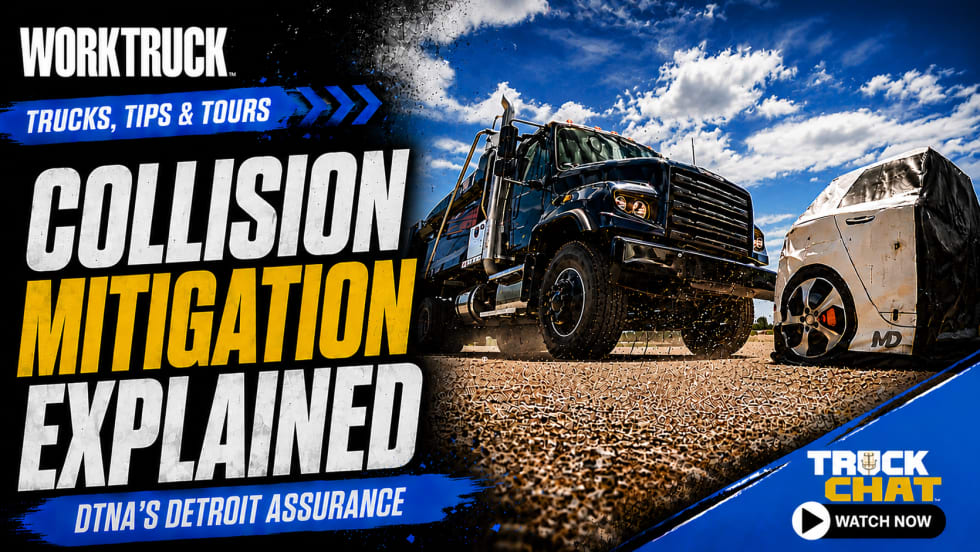
Do you want to see what it is like to experience Detroit Assurance’s Active Brake Assist? In this video, Work Truck will put you in the cab to see how it all works and then hear more details from DTNA’s Mike Young.
Violence risks do not stop at the driver’s door. Learn five practical steps fleets can take to spot threats early and protect workers before loss occurs.
Fleet leaders don't need more data, they need clearer visibility into what the data is saying. This case study explores how one utility replaced speeding-event counts with a single metric — miles driven in violation — to strengthen safety and significantly reduce speeding violations.
If you have Altec, Ford, General Motors, Harbinger, Hyundai, Mack Trucks, or Volvo Trucks vehicles in your fleet, you should check these important recalls issued by the National Highway Safety Administration.
DOT says not so fast on marijuana. Even with federal reclassification efforts, commercial drivers in safety-sensitive roles remain subject to marijuana testing and prohibitions.