




Upfit Specs Can Reduce Workers Comp Claims
Workers’ comp claims resulting from use of upfitted equipment is on the rise. Poor upfitting decisions often result in expensive litigation to defend against alleged negligence.

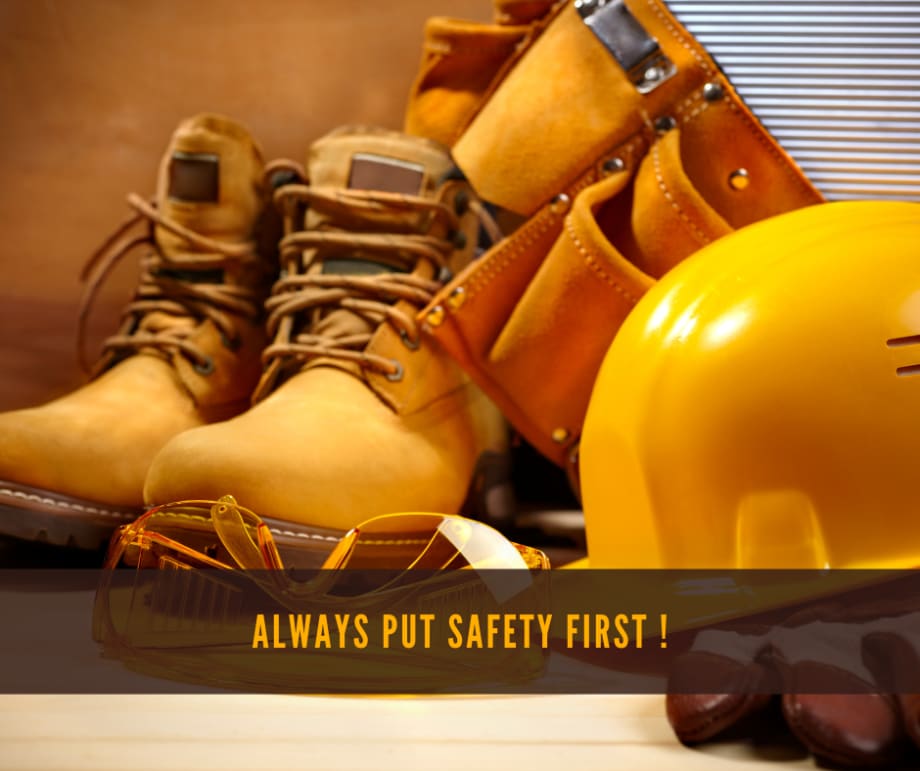
It is important to thoroughly train all employees handling equipment in its operation and safe use.
Photo: Canva
Workers’ comp claims resulting from using upfitted equipment are on the rise. Poor upfitting decisions often result in expensive litigation to defend against alleged negligence. The average workers’ comp cost for a pushing/pulling injury is $10,175, while the average cost for a lifting/bending incident is $8,989.
“A variety of upfitting options are available to fleets to help reduce the risk of injury to employees, ranging from hydraulic self-unloading ladder racks to newer low-profile chassis,” said Mike Corchin, manager of truck business development for Wheels Inc.
When selecting upfit equipment, review vehicle requests and ask drivers follow-up questions to verify the equipment ordered is suitable for the job.
“Make sure the vehicle is engineered up-front for the job it is required to do,” said Mike Sturges, national truck sales manager – Southern Zone for ARI. “If applications require crane installation on service bodies, the chassis GVWR should be sufficient for the application. Under-engineering can lead to unnecessary safety risks to drivers.”
EQUIPMENT CONSIDERATIONS
Liftgates. A liftgate reduces the risk of back injury by allowing workers to easily maneuver, load, and unload heavy products in and out of trucks and trailers. “If liftgates are not currently in use, give them serious consideration,” said Ken Gillies, manager, truck operations ordering for GE Commercial Finance Fleet Services. “They can actually speed delivery with increased safety in many applications.”
Hydraulic Drop-Down Ladder Rack. Many fleets specify drop-down style ladder racks for vans. This helps minimize possible back problems that could arise from removing a 24-foot extension ladder from the roof of a van.
Slide-Out Bed. Pickups equipped with commercial-style caps are specified with bed sliders, so the driver doesn’t have to bend or twist to remove a heavy object from the vehicle bed. “Fleets are also adding flip-up side doors on commercial-style caps to allow quick access to tools and equipment,” said Steve Swedberg, truck engineering, for Emkay.
Rear Step Bumper and Grab Handles. Analyze ease of rear entry and egress from service and van bodies. More fleets are adding step bumpers and grab handles to facilitate getting in and out of a service body bed. To minimize slips, fleets are opting for an open strut-style rear bumper to allow snow or rain to fall through the openings.
Side Steps on Pickups. “Another important consideration is side steps on pickups to get into cross bed toolboxes,” said Jeff Robley, national truck sales manager – Western zone for ARI.
Safety Tread Step. “A driver-side fuel tank with open safety tread step is preferable to closed running board steps, especially in areas where snow can create slippery conditions for the driver,” says Ron Ice, truck specifications engineer for PHH Arval. Other recautions include anti-slip coatings. “If there’s any chance a driver is going to walk on a surface or use it as a step, it must not be smooth. Anti-slip coating or surface treatment is needed. Any operating area exposed to snow or ice conditions needs traction areas with large openings to prevent buildup,” said Gillies.
Side Door Access. Walk-ins or dry freight bodies with side door access steps enable the driver to work inside the body protected from the elements,” said Bob Shipp, national truck sales manager – Northern zone for ARI. “They can exit the body with the load already staged. This type of truck also provides security for the driver and the product.”
Roll-Up Doors. A cargo body with a roll-up door needs a pull-down that can be reached from the ground, said Gillies.
Pull-Out Ramps. These ramps expedite the removal of product loaded on a dolly. “We suggest ventilated style pull-out ramps that stop snow and rain from collecting on the ramp. It falls through the vents on the ramp deck,” said Shipp.
Mirrors. “Many fleets now spec heated mirrors and convex spot mirrors, optional equipment which improve visibility,” said Ice of PHH Arval.
OPERATOR SAFETY, NOT COST
It is important to thoroughly train all employees handling equipment in its operation and safe use.
“The fleet manager should work closely with drivers to analyze their normal work processes. They may identify actions that can lead to injury, such as repeatedly having to climb into the rear of a service body truck for parts or equipment,” said Wayne Reynolds, operations manager, truck and vehicle upfitting for LeasePlan USA.
Develop written guidelines covering equipment usage. Field managers should regularly inspect equipment to ensure its safe working condition. The guidelines should require employees to report any equipment failure or damage and stipulate punitive consequences for not following maintenance checklist procedures.
“Ease of use and operator safety are fundamental concerns for all fleet managers. Consultation with the end user to include site visits to their location helps to understand how the vehicle and equipment is utilized,” said Bill Byron, senior truck specialist for Donlen. “Site visits provide the opportunity to determine what does or doesn’t work well, and helps identify opportunities to minimize/eliminate injuries and improve ease of use. Employees are a company’s most valuable resource. As such, cost should not be the primary factor when operator safety is concerned.”
More Upfitting
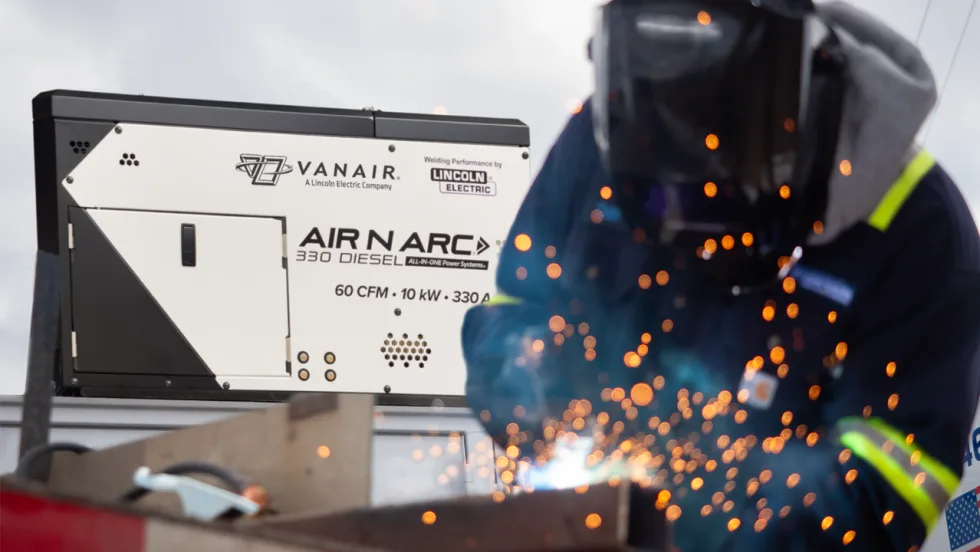
Multitasking: Vanair’s Air N Arc 330 Diesel 60 CFM All-In-One Power System
The Air N Arc 330 Diesel 60 CFM from Vanair consolidates a welder, generator, rotary screw air compressor, battery booster, battery charger, and EV charger into a single 750-pound enclosure driven by one 24.8-horsepower Kubota diesel engine.
Read More →
Buyers Products Awarded Sourcewell Cooperative Purchasing Contract for Snow & Ice Equipment
Buyers Products has been awarded a Sourcewell contract for a wide range of winter maintenance equipment and accessories, including snowplows, municipal plow systems, wing plows, spreaders, and more.
Read More →
Hilltip Introduces the SnowStriker SFT Flex Expandable Box Plow
Hilltip’s new SnowStriker SFT Flex expandable box plow features hydraulically extendable sections that allow operators to adapt the clearing width to changing conditions and applications on the go.
Read More →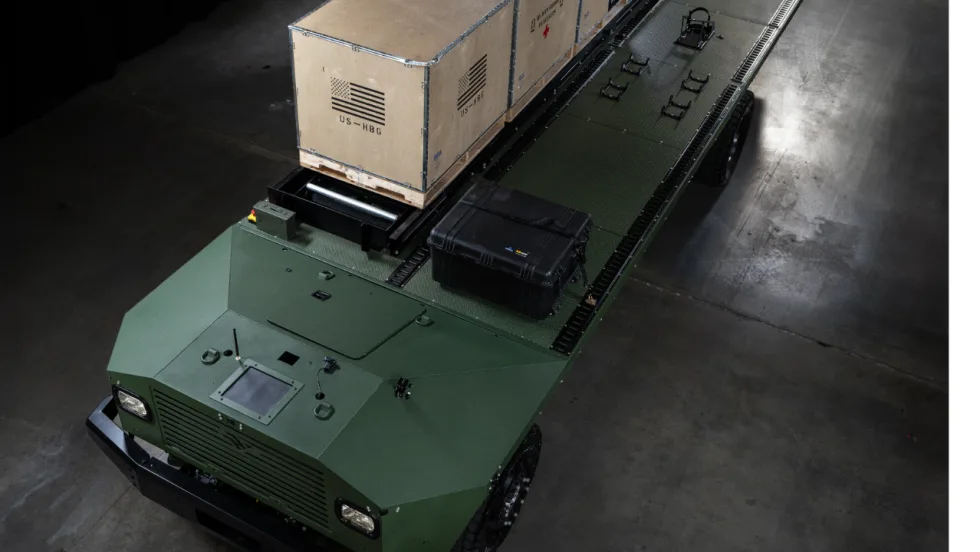
Harbinger Part of Effort to Deliver Autonomous Logistics Capabilities for U.S. Army
American Rheinmetall received an 18-month U.S. Army contract to deliver autonomous, hybrid-powered uncrewed ground vehicles. Harbinger is providing the truck platform for those vehicles.
Read More →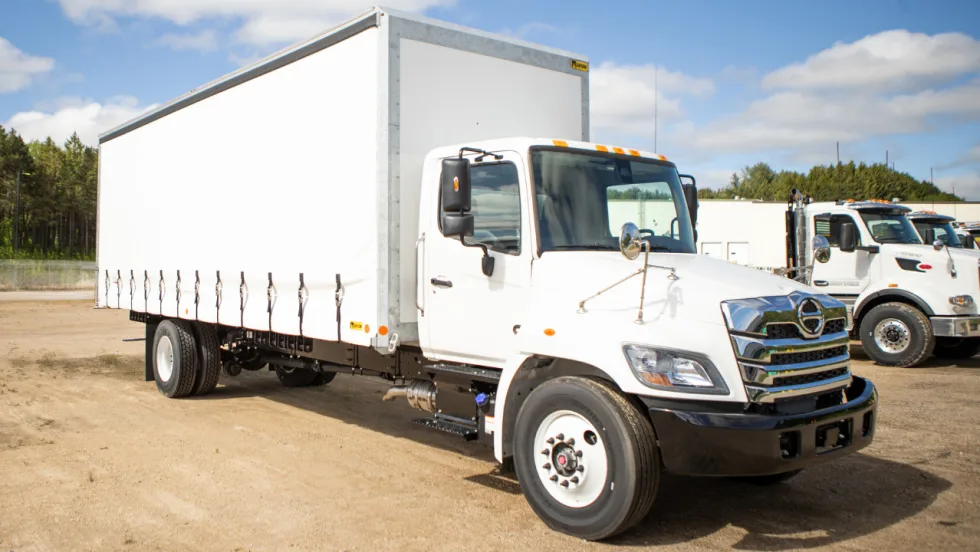
Thinking Outside of the Box: Choosing the Right Truck Body for Your Fleet
Choosing the right truck body can have a major impact on loading efficiency, cargo protection, downtime, and long-term operating costs. Here’s how dry vans, platforms, and curtainsiders compare, plus what fleets should consider before spec’ing their next truck.
Read More →
Fourth Annual Upfit Package of the Year Awards Open for 2027 Entries: One Month Left!
Think your upfit deserves industry recognition? Enter the 2027 Work Truck Upfit Package of the Year Awards before the Sept. 30 deadline. There is less than a month left to get your submissions in!
Read More →
Reading Truck Equipment & Masterack Unite as One of North America's Largest Commercial Vehicle Upfit Networks
Reading Truck Equipment and Masterack have integrated operations to create one of North America's largest and most comprehensive commercial vehicle upfit organizations.
Read More →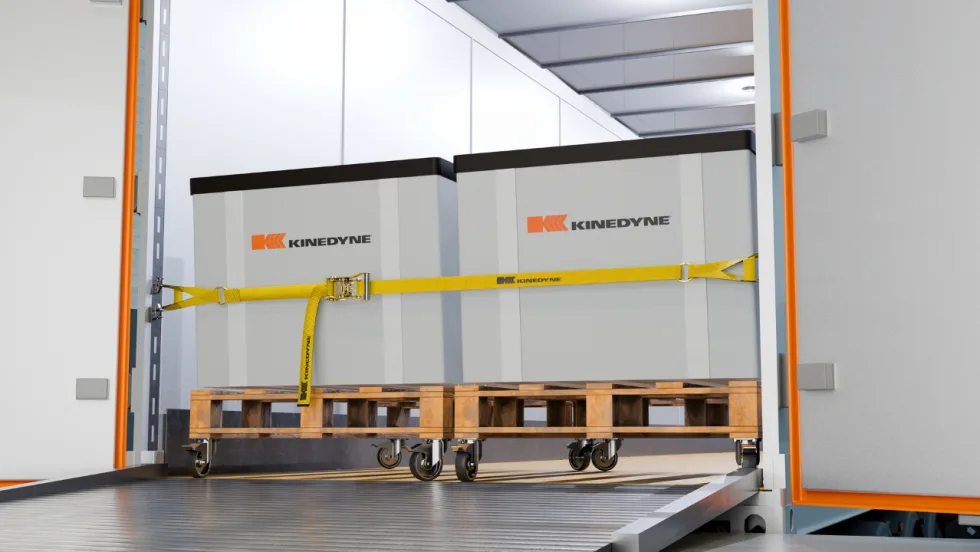
Kinedyne Launches Heavy Duty Logistic Shoring Strap
Kinedyne’s new Heavy Duty Logistic Shoring Strap features a patent-pending four-point design to deliver greater cargo stability, increased strength, and easier handling for rolling and shifting freight.
Read More →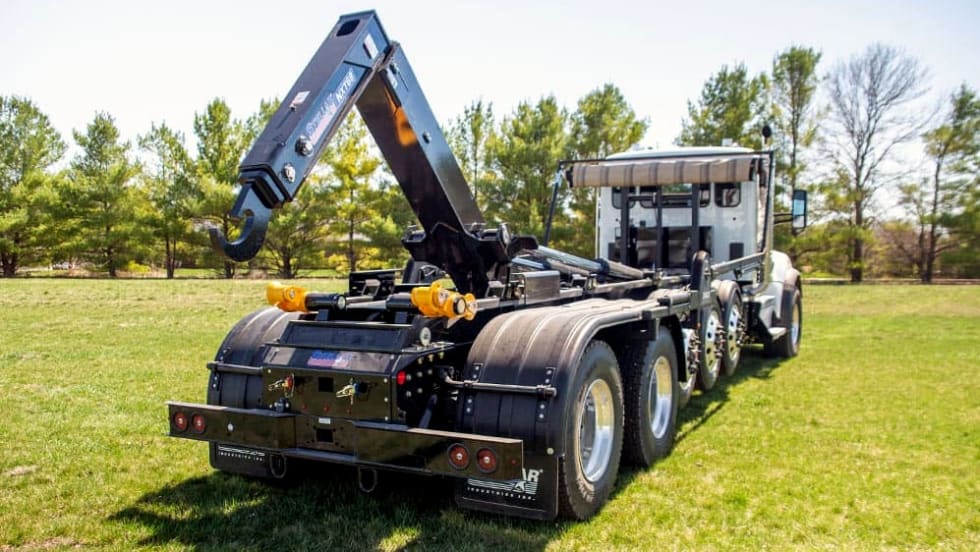
Hooklift Bumper Design from Stellar Showcases Strength & Versatility
Stellar Industries’ new bumper for the NZT Series Hooklifts come in two capacity options: the 20K, designed for Class 3 – 6 chassis with a 20,000-pound pull capacity, and the 90K, built for Class 7 and 8 chassis with a 90,000-pound pull capacity.
Read More →
Maxon Lift Awarded the Wabash Platinum Award for Supply Chain Performance
Maxon Lift, a liftgate manufacturer since 1957, received the Wabash Platinum Award for supply chain performance in 2025. Each year, Wabash presents awards to top suppliers for excellence in supply chain performance.
Read More →