





Stay Prepared: Check Out the Disaster Preparation & Response Guide Today!
TomTom Traffic Index 2025 Shows U.S. Congestion Climbing
TomTom’s 2025 Traffic Index shows U.S. congestion rising. LA is most congested, while NYC remains the slowest city for travel speeds.
January 21, 2026
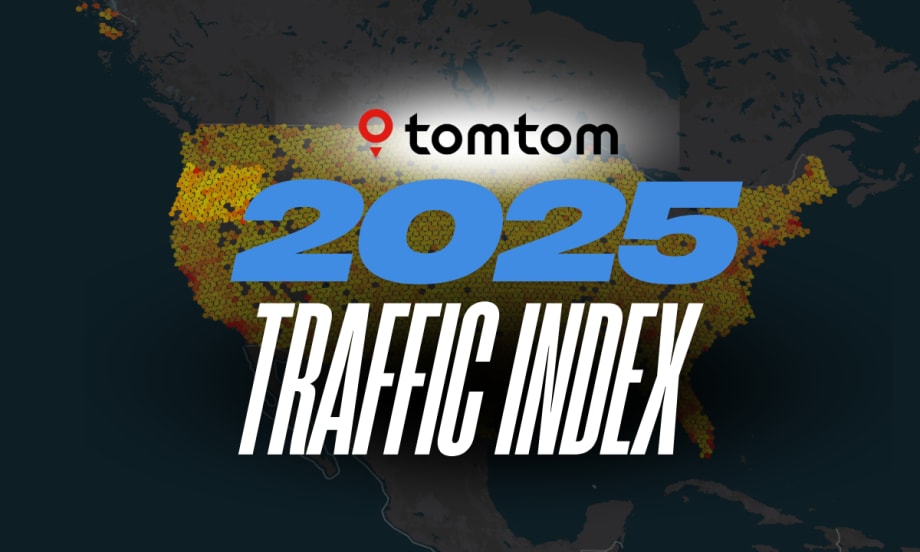
The 2025 TomTom Traffic Index highlights rising congestion across U.S. cities, with Los Angeles ranking as the most congested and New York remaining the slowest for average travel speeds.
Credit: Work Truck | TomTom
5 min to read
Urban congestion in the U.S. continues to rise, even as the country remains among the least congested globally. The 15th annual TomTom Traffic Index, based on 2025 mobility data, shows that American drivers experienced higher congestion levels year over year, with major metro areas once again shouldering the biggest delays.
While the United States ranked 54th worldwide with an average congestion level of 19%, congestion inside U.S. cities increased by four percentage points compared to the prior year. For fleets operating in dense metros, the story isn’t about national averages. It’s about where delays stack up, when they hit hardest, and how long drivers are stuck in them.
Los Angeles Tops Congestion List, New York Still the Slowest City
Los Angeles ranked as the most congested city in the U.S. in 2025, posting an average congestion level of nearly 60%. Honolulu and San Francisco followed closely behind.
New York City, meanwhile, held onto its title as the slowest city in America for the second consecutive year. Based on a six-mile commute during peak hours, drivers in New York lost an average of 120 hours to traffic in 2025. Los Angeles drivers weren’t far behind, losing 80 hours annually.
Atlanta recorded the largest year-over-year increase in congestion among the top 10 cities, while Boston saw a notable decline.
Top 10 U.S. Cities with the Highest Congestion Levels (2025)
Rank | City | Avg Congestion Level | YoY Change | Avg Speed | Distance in 15 Min | Time Lost per Year* |
|---|---|---|---|---|---|---|
1 | Los Angeles, CA | 60% | +1.7 pts | 24 mph | 6.0 mi | 80 hrs |
2 | Honolulu, HI | 51% | +1.4 pts | 17.8 mph | 4.4 mi | 85 hrs |
3 | San Francisco, CA | 50% | +2.2 pts | 12.6 mph | 3.1 mi | 112 hrs |
4 | New York City, NY | 50% | Flat | 11.8 mph | 3.0 mi | 120 hrs |
5 | Miami, FL | 47% | +0.5 pts | 21.0 mph | 5.3 mi | 70 hrs |
6 | Chicago, IL | 46% | +0.9 pts | 19.6 mph | 4.9 mi | 76 hrs |
7 | Seattle, WA | 45% | +2.5 pts | 21.8 mph | 5.5 mi | 66 hrs |
8 | Atlanta, GA | 44% | +4.0 pts | 27.9 mph | 7.0 mi | 59 hrs |
9 | Boston, MA | 42% | -3.0 pts | 17.8 mph | 4.4 mi | 83 hrs |
10 | Tampa, FL | 41.5% | +1.5 pts | 29.8 mph | 7.4 mi | 55 hrs |
*Based on a 6-mile commute during morning and evening peak hours.
Congestion Is Rising, Even Without a Traditional Rush Hour
One of the clearest takeaways from the 2025 data is that congestion is no longer confined to predictable commute windows. Morning traffic is less concentrated between 7–9 a.m., spilling later into the morning, while evening congestion now builds earlier and lingers longer, from mid-afternoon through early evening.
Tuesday through Thursday emerged as the most congested weekdays, reflecting hybrid work schedules that cluster in-office days midweek. Tech-heavy metros like San Francisco, Seattle, Boston, and Denver showed the most pronounced midweek surges, while many other large metros exceeded pre-2019 congestion levels, especially during evening hours.
For fleets, that shift matters. A flatter but longer peak means more exposure to delays across delivery windows, service routes, and driver schedules.
Congestion Pricing Shows Measurable Impact in New York
Although New York City’s overall congestion level remained flat year over year, TomTom data points to measurable improvements tied to the city’s first year of congestion pricing.
Major corridors saw congestion drop by four percentage points, with sharper declines in Brooklyn and Jersey City. Bridge performance improved citywide, and peak-period traffic eased during late morning and afternoon hours. New York City DOT also reported safety improvements inside the congestion zone, including fewer crashes and injuries.
For fleet operators, the takeaway isn’t just fewer delays on specific routes. It’s early evidence that policy-driven traffic management can influence reliability on core access corridors.
Extreme Weather Adds a New Layer of Risk
Weather-related disruptions continued to play an increasingly significant role in U.S. congestion. According to the report, weather now accounts for 15% of non-recurring congestion nationwide. Events like floods in California, Texas, and the Pacific Northwest caused sudden speed drops, prolonged detours, and lingering impacts well beyond the disaster window.
In Texas, congestion surged more than 20% during summer flooding events, with average speeds still trailing the prior year months later. For fleets, that points to a bigger challenge than one bad day. Infrastructure damage and slow recovery can reshape routes and timelines long after storms pass.
Top Four U.S. Cities with the Slowest Average Speeds in 2025
TomTom ranks New York as the slowest in the U.S., followed by San Francisco, Philadelphia, and Honolulu. Metrics below reflect city center results for 2025.
Rank | City | Avg Travel Time (10 km) | Change vs 2024 | Avg Speed During Rush Hour | Change vs 2024 | Time Lost in Rush Hour (Annual) | Change vs 2024 |
|---|---|---|---|---|---|---|---|
1 | New York, NY | 31:35 | -0:20 | 15.7 km/h (9.8 mph) | Similar | 125 hrs | -2:33 |
2 | San Francisco, CA | 29:42 | +1:48 | 16.6 km/h (10.3 mph) | -1.0 km/h | 116 hrs | +10:13 |
3 | Philadelphia, PA | 21:35 | +0:49 | 23.3 km/h (14.5 mph) | -1.0 km/h | 72 hrs | +6:23 |
4 | Honolulu, HI | 20:59 | +0:13 | 23.3 km/h (14.5 mph) | Similar | 88 hrs | +1:16 |
What the 2025 Traffic Index Means for Fleets
The 2025 TomTom Traffic Index reinforces a familiar reality for U.S. fleet managers. Congestion isn’t just increasing, it’s spreading across more hours of the day and becoming less predictable. Add in policy changes, hybrid work patterns, and extreme weather, and route planning is now a moving target.
Access to real-time traffic data, adaptive routing tools, and flexible scheduling strategies is becoming less of a nice-to-have and more of a baseline requirement for fleets operating in urban environments.
The full TomTom Traffic Index, including city-level and hourly data, is available at TomTom’s Traffic Index website.
More Safety

How Detroit Assurance with Active Brake Assist Works
Do you want to see what it is like to experience Detroit Assurance’s Active Brake Assist? In this video, Work Truck will put you in the cab to see how it all works and then hear more details from DTNA’s Mike Young.
Read More →
Get Left of Loss: A 5-Step Workplace Prevention Framework for Fleet Operators
Violence risks do not stop at the driver’s door. Learn five practical steps fleets can take to spot threats early and protect workers before loss occurs.
Read More →
Sponsored•July 17, 2026
How Better Visibility Cut Speeding Violations by 48%
Fleet leaders don't need more data, they need clearer visibility into what the data is saying. This case study explores how one utility replaced speeding-event counts with a single metric — miles driven in violation — to strengthen safety and significantly reduce speeding violations.
Read More →
13 Safe Driving Tips for Commercial Vehicle Drivers
Make sure you are spending time on the road safely with these important tips.
Read More →
Recalls You Need to Know About in July 2026
If you have Altec, Ford, General Motors, Harbinger, Hyundai, Mack Trucks, or Volvo Trucks vehicles in your fleet, you should check these important recalls issued by the National Highway Safety Administration.
Read More →
How Telematics Is Transforming Fleet Risk from Insight to Action
What if you could spot risky driving before it leads to a crash? See how telematics is still changing fleet safety today.
Read More →
DOT Rules Remain Firmly Lit on Marijuana
DOT says not so fast on marijuana. Even with federal reclassification efforts, commercial drivers in safety-sensitive roles remain subject to marijuana testing and prohibitions.
Read More →
Lytx Adds Fleet Management Enhancements to LytxOne Platform
Lytx has added new features to LytxOne to bring safety, operational insight, asset visibility, and compliance into a unified, all-in-one platform.
Read More →
A Fourth of July Cargo Theft Reality Check for Fleet Managers
The Fourth of July creates prime conditions for cargo theft. Here's what fleet managers should review now to protect loads, drivers and operations.
Read More →
What is DataQs and Why Should Fleets Care?
Watch to learn how FMCSA's DataQs system helps fleets challenge inaccurate safety data, protect CSA scores, and improve compliance records.
Read More →