




US Postal Service Goes Electric with Ford E-Transit Vans and Charging Stations
The USPS outlined its plans for a more sustainable future through the electrification of its nationwide fleet, including the purchase of 9,250 Ford E-Transit vans by the end of 2024.

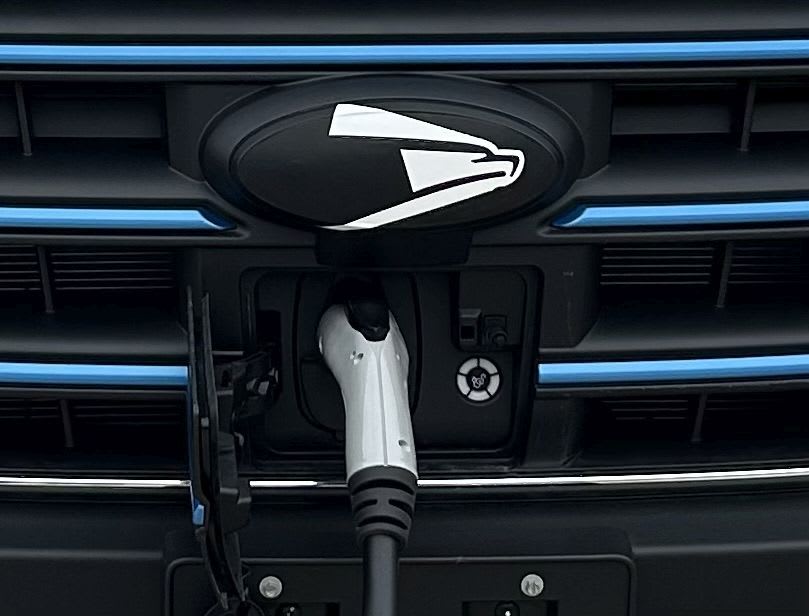
The United States Postal Service announced that it will begin deploying electric delivery trucks in Georgia, with plans to expand to other locations across the country throughout the year.
Photo: Ford
A special ceremony was held by the United States Postal Service during a press event in Atlanta to commemorate the first step in the electrification of its delivery fleet. The event displayed the newly equipped South Atlanta Sorting and Delivery Center, which included a first look at its Ford E-Transit parcel delivery van and EV charging stations.
As of September 2024, the Ford E-Transit is now shipping!
Louis DeJoy, Postmaster General, and other White House officials shared the progress on infrastructure readiness and fleet electrification from a previous announcement, outlining the USPS's plans for a more sustainable future through the electrification of its nationwide fleet. This includes purchasing 9,250 Ford E-Transit vans by the end of 2024.
Ford Motor Company issued the following statement in response to the news:
“Congratulations to the United States Postal Service on electrifying its South Atlanta Sorting and Delivery Center, signaling a big step forward in their plan to deliver a more sustainable future with electric vehicles and charging. Our dedicated Ford Pro and E-Transit team are proud to play a role in helping to electrify the largest federal fleet in the country,” said Jim Farley, Ford president and CEO.
The United States Postal Service announced that it will begin deploying electric delivery trucks in Georgia, with plans to expand to other locations across the country throughout the year. These vehicles are equipped with air conditioning and advanced safety technology, and are designed to meet modern operational requirements.
U.S. Postal Service Focuses on Electrification
Charging stations like the ones at the South Atlanta Sorting Station will be installed at hundreds of new S&DCs nationwide throughout the year and will power the nation’s largest EV fleet. Electrification and modernization of the Postal Service’s delivery fleet is part of the organization’s $40 billion investment strategy to upgrade and improve the USPS processing, transportation, and delivery networks.
“The improvements we need to achieve in sustainability are an integral outgrowth of the broader modernization efforts we have undertaken through our 10-year Delivering for America plan,” said Postmaster General Louis DeJoy. “As we transform our operating processes and invest in new automation, technologies, and upgraded facilities and vehicles, we will generate significant efficiencies that reduce our costs, slash our carbon footprint, and minimize waste. We are grateful for the support of Congress and the Biden Administration through Inflation Reduction Act funding, which helped enable the electrification in evidence here today.”
As part of its 10-year Delivering for America (DFA) plan, the Postal Service expects to convert approximately 400 selected sites into S&DCs nationwide. These centers — which provide faster and more reliable mail and package delivery over a greater geographic area — will serve as the local hubs to deploy EVs along local carrier routes. As of January 2024, the Postal Service has opened 29 S&DCs nationwide.
The Postal Service’s first 14,000 EV chargers will be manufactured by three suppliers: Siemens, Rexel/ChargePoint, and Blink.
Looking Back at the Growth of the E-Transit
The Ford E-Transit was purpose-built for Ford Pro commercial customers starting in 2022. The E-Transit is meant for fleets, featuring eight different configurations, including three roof heights and three body lengths, plus cutaway and chassis cab versions to fulfill multiple applications.
More Green Fleet

Fleet Forward Conference Introduces One-Day Passes for 2026
New one-day registration gives fleet professionals the flexibility to attend Tuesday, Wednesday, or Thursday, with passes available for $199 through Sept. 18.
Read More →
CALSTART Rebrands as Catalyst Mobility, Will Combine with Forth in 2027
CALSTART has rebranded as Catalyst Mobility and will combine with Forth at the start of 2027. The new organization said it is poised to become one of the world's largest, strongest, and most impactful clean transportation nonprofits.
Read More →
Electric Truck and Charging Programs to Boost Sustainability at NY & NJ Ports
Together, the Port Authority of New York and New Jersey and CALSTART will electrify drayage and terminal operations serving the East Coast’s busiest container port. A pair of incentive programs totaling $45 million has launched to accelerate adoption of zero-emission drayage trucks and terminal tractors.
Read More →

The Smart Way to Build a Mixed-Energy Fleet Isn’t About Picking a Side
Mixed-energy fleets aren’t about picking a winning fuel. Sarah Booth of WEX explains how vehicle data, duty cycles, charging strategy, and real-world costs can help fleets choose the right energy source for each job.
Read More →
Xos Hub Surpasses One Gigawatt-Hour of Energy Delivered in the Field
A single Xos Hub has surpassed one gigawatt-hour of energy across more than 33,600 charging sessions in the field, demonstrating performance that supports Xos' expansion across new products and markets.
Read More →
Carrier Transicold Launches All-Electric Vector 8200 TRU for Diesel-Free On-Site Cold Storage
Carrier Transicold’s first engineless multi-temperature TRU helps fresh- and frozen-food fleets add supplemental cold storage capacity during seasonal peaks.
Read More →
Narro Trucks Introduces Electric Utility Vehicle
Narro Trucks officially launched its operations on Aug. 20 and hosted a ride and drive to showcase its electric truck, which will be produced in Virginia.
Read More →
Samsung SDI Takes Full Control of GM Battery JV as Indiana Plant Pivots to Energy Storage
Samsung SDI is taking full control of its Indiana battery plant with GM, marking a major shift from the EV-focused joint venture Charged Fleet first covered in 2023.
Read More →
NWSA Taps CALSTART to Administer Zero-Emission Drayage Assistance Program
CALSTART will provide free technical assistance services to drayage fleets serving the Ports of Seattle and Tacoma and looking to transition to cleaner technologies and help decarbonize freight hubs.
Read More →
EV Fleet Reality Check: What Operators Wish They Knew Before Electrifying Their Work Vans
Electric work truck upfits bring new compatibility questions. Learn how parts availability, OEM guidance, power demands, and route planning can affect fleet performance.
Read More →