





Learn More: Kenworth T880 Produces $540K Donation for Scholarships
Southern Counties Express Completes Kenworth T680 Fuel Cell EV Demo
Southern Counties Express drivers reported the T680 FCEV is a lot quieter than a diesel.
February 9, 2022
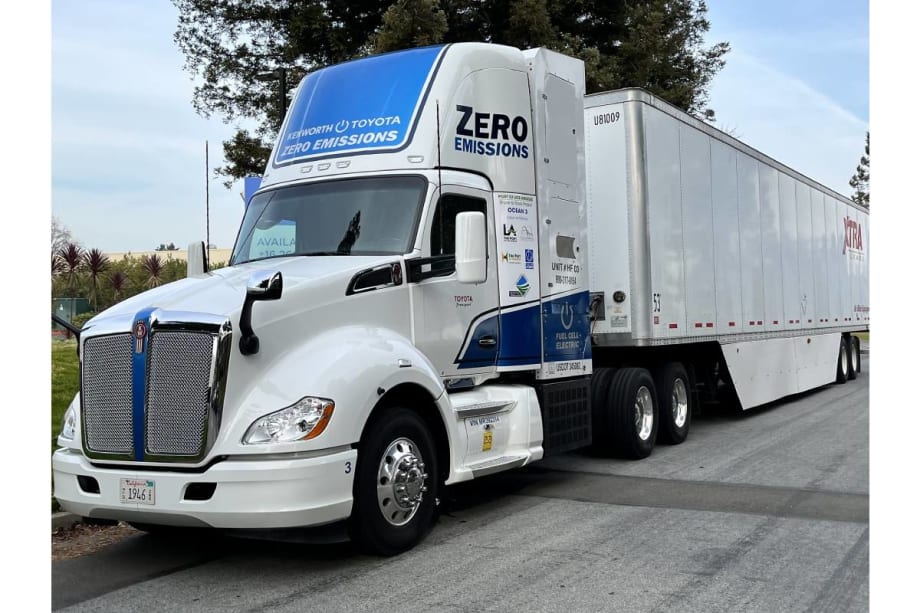
Southern Counties Express drivers reported the T680 FCEV is a lot quieter than a diesel.
Photo: Kenworth
3 min to read
Southern Counties Express (SCE) has sucessfully operated a zero emissions Kenworth T680 fuel cell electric vehicle (FCEV) – powered by hydrogen – in real-world drayage activities at the Port of Los Angeles and surrounding area. That was the first of 10 T680 FCEVs delivered last year by Kenworth under the $82.5 million Shore-to-Store (S2S) project led by the Port of Los Angeles. The project is part of California Climate Investments, a statewide initiative that puts billions of Cap-and-Trade dollars to work reducing greenhouse gas emissions, strengthening the economy, and improving public health and the environment particularly in disadvantaged communities.
The demonstration project moved forward in 2021 with a $41.1 million grant from the California Air Resources Board’s Zero- and Near-Zero Emissions Freight Facilities (ZANZEFF) program. In addition to Kenworth and Southern Counties Express, major partners include Toyota Motor North America, Shell Oil Products U.S., Toyota Logistics Services, Total Transportation Systems Inc. (TTSI), UPS, South Coast Air Quality Management District (AQMD), and the Port of Hueneme.
Kenworth designed and built the Class 8 T680 FCEVs, which are equipped with Toyota’s fuel cell electric system. Southern Counties Express recently concluded its demonstration project activities with the T680 FCEV.
Servicing the Ports of Los Angeles and Long Beach and surrounding area for more than 25 years, Southern Counties Express offers full-service harbor drayage, transloading, warehousing, and project cargo services to major companies across a number of industries.
“The Kenworth T680 FCEV was regularly in operation from Monday to Friday, and occasionally during weekends. It was used only on the morning shift, which usually starts at 5 a.m. and runs until 3 p.m.,” said Ivan Hernandez, dispatch supervisor for Rancho Dominguez, California-based SCE, a provider of transportation, drayage services, trucking logistics, and warehousing.
According to Hernandez, the T680 FCEV had two main runs. “The first was to and from the BNSF Railway yard in Commerce, California, then to a customer warehouse in Rancho Dominguez. The second was to and from the same customer’s warehouse to the terminals at the Ports of Los Angeles and Long Beach,” Hernandez noted. “We put in about 3,600 miles on the truck during the demonstration project.”
Southern Counties Express drivers reported the T680 FCEV is a lot quieter than a diesel. It has great torque, comfortable Kenworth cab, good visibility, and other driver-friendly features.
The T680 FCEVs are an important element of the Kenworth Driving To Zero Emissions program. The major effort also features Kenworth T680E, K270E, and K370E battery electric vehicles – available for order – and designed for local pickup and delivery, drayage, and short regional haul applications. Built on proven platforms with superior visibility, reliability, maneuverability, and driver comfort, the T680E Class 8, K270E, and K370E medium-duty models combine state-of-the-art zero emissions powertrains with comprehensive Paccar charging solutions and infrastructure support to drive to zero emissions with confidence.
More Green Fleet

Fleet Forward Conference Introduces One-Day Passes for 2026
New one-day registration gives fleet professionals the flexibility to attend Tuesday, Wednesday, or Thursday, with passes available for $199 through Sept. 18.
Read More →
CALSTART Rebrands as Catalyst Mobility, Will Combine with Forth in 2027
CALSTART has rebranded as Catalyst Mobility and will combine with Forth at the start of 2027. The new organization said it is poised to become one of the world's largest, strongest, and most impactful clean transportation nonprofits.
Read More →
Electric Truck and Charging Programs to Boost Sustainability at NY & NJ Ports
Together, the Port Authority of New York and New Jersey and CALSTART will electrify drayage and terminal operations serving the East Coast’s busiest container port. A pair of incentive programs totaling $45 million has launched to accelerate adoption of zero-emission drayage trucks and terminal tractors.
Read More →
Xos Hub Surpasses One Gigawatt-Hour of Energy Delivered in the Field
A single Xos Hub has surpassed one gigawatt-hour of energy across more than 33,600 charging sessions in the field, demonstrating performance that supports Xos' expansion across new products and markets.
Read More →
Carrier Transicold Launches All-Electric Vector 8200 TRU for Diesel-Free On-Site Cold Storage
Carrier Transicold’s first engineless multi-temperature TRU helps fresh- and frozen-food fleets add supplemental cold storage capacity during seasonal peaks.
Read More →
Narro Trucks Introduces Electric Utility Vehicle
Narro Trucks officially launched its operations on Aug. 20 and hosted a ride and drive to showcase its electric truck, which will be produced in Virginia.
Read More →
Samsung SDI Takes Full Control of GM Battery JV as Indiana Plant Pivots to Energy Storage
Samsung SDI is taking full control of its Indiana battery plant with GM, marking a major shift from the EV-focused joint venture Charged Fleet first covered in 2023.
Read More →
NWSA Taps CALSTART to Administer Zero-Emission Drayage Assistance Program
CALSTART will provide free technical assistance services to drayage fleets serving the Ports of Seattle and Tacoma and looking to transition to cleaner technologies and help decarbonize freight hubs.
Read More →
EV Fleet Reality Check: What Operators Wish They Knew Before Electrifying Their Work Vans
Electric work truck upfits bring new compatibility questions. Learn how parts availability, OEM guidance, power demands, and route planning can affect fleet performance.
Read More →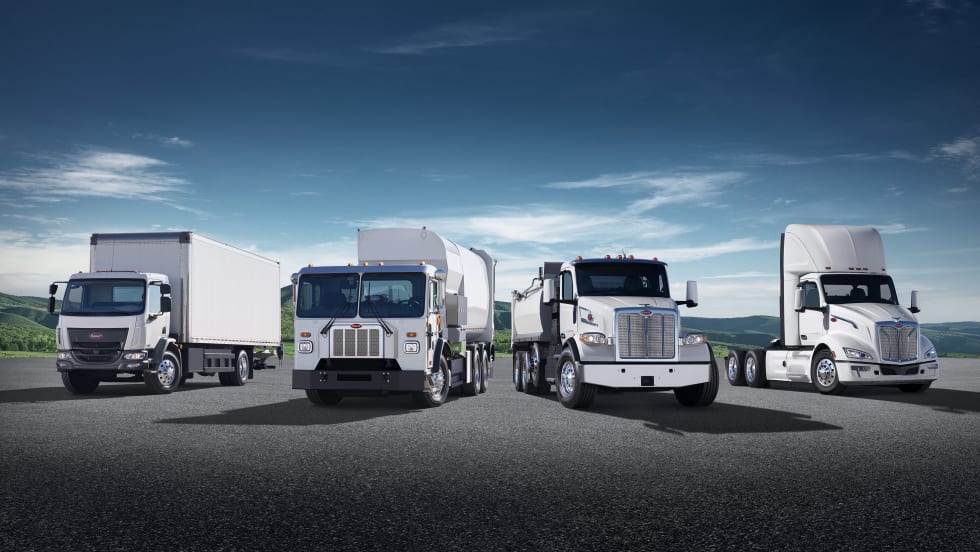
Peterbilt Expands Sourcewell Partnership with Electric Vehicle Lineup
Peterbilt Motors Company’s cooperative purchasing agreement with Sourcewell and its Canadian partner, Canoe Procurement Group, now includes including Peterbilt's battery-electric vehicle lineup.
Read More →