





Learn More: How Developments in Tire Technology Streamline Safety
Goodyear Develops 70% Sustainable-Material Tire
The company has made significant progress toward its goal of a 100% sustainable-material tire by 2030.
January 6, 2022
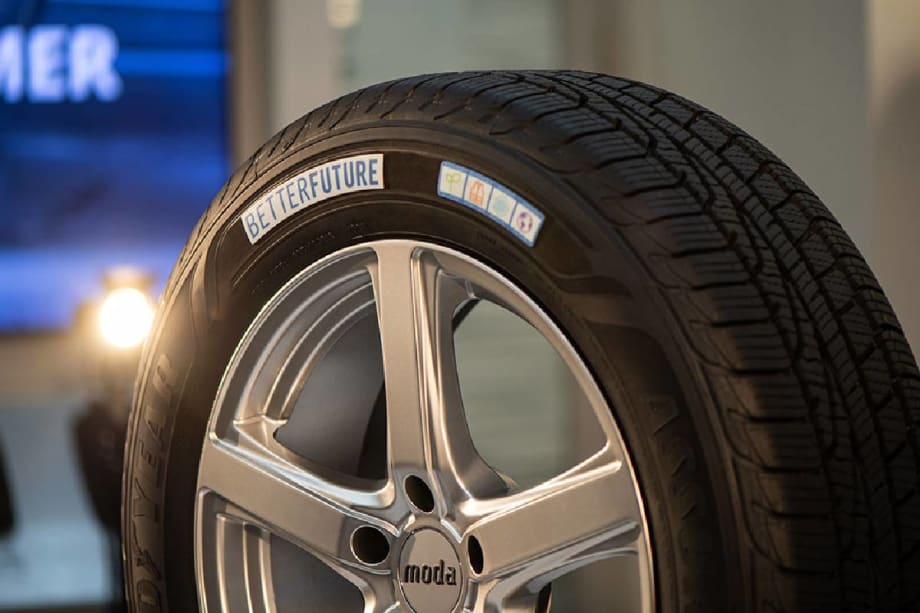
The company has made significant progress toward its goal of a 100% sustainable-material tire by 2030.
Photo: Goodyear
2 min to read
The Goodyear Tire & Rubber Company has announced the release of a demonstration tire with 70% sustainable-material content.
“We set an ambitious goal in 2020 to create a tire made 100% from sustainable materials in 10 years, and our scientists and engineers have made great progress toward that goal,” said Chris Helsel, senior vice president, global operations and chief technology officer.
The 70% sustainable-material tire includes 13 featured ingredients across nine different tire components, including those described below. Company performance indicators have shown the component properties to deliver strong overall tire performance.
Carbon black is included in tires for compound reinforcement and to help increase their life and has traditionally been made by burning various types of petroleum products. Goodyear’s new tire features three different carbon blacks produced from methane, carbon dioxide, and plant-based oil. Initial life cycle assessments demonstrate either reduced carbon emissions compared with current methods of carbon black production or the use of bio-based or waste feedstock sources.
The use of soybean oil in tires helps keep a tire’s rubber compound pliable in changing temperatures. Soybean oil is a bio-based resource that reduces Goodyear’s use of petroleum-based products. While nearly 100% of soy protein is used in food/animal feed applications, a significant surplus of oil is left over and available for use in industrial applications.
Silica is an ingredient often used in tires to help improve grip and reduce fuel consumption. Goodyear’s new tire contains a unique variety of silica produced from rice husk ash, a byproduct of rice processing that is often discarded and put into landfills. A high-quality silica has been produced from this waste ash.
Polyester is recycled from plastic bottles and other plastic waste by reverting the polyester into its base chemicals and reforming them into technical grade polyester feasible for tire cords.
The 70% sustainable-material tire has been produced as a demonstration tire.
More Operations
Where’s My Truck: Inside the Fleet Logistics Work Nobody Sees
Shades of Fleet video thumbnail featuring Lauren Fletcher beside the text “The People Behind the Process, Keeping Fleets Moving,” with fleet vehicles and logistics imagery in the background.
Read More →
Work Truck Seeks Fleet and Industry Insights on 2026 Trends and 2027 Forecasts
Work Truck is seeking insights from fleet leaders and industry partners on the trends that shaped 2026 and what commercial fleets should prepare for in 2027. Participate today!
Read More →
It's 10 p.m... Do You Know Who Has Access to Your Fleet?
Preventing cargo theft requires investment in technology, operational processes, and employee training. In an industry with tight margins, it can be difficult to justify investments whose value is measured by incidents that might never occur.
Read More →From Our Partners
Basic Tracking vs Next Generation Fleet Technology
Sponsored by AT&T Business

5 Facts Every Fleet Manager Should Know About Embedded Telematics
Sponsored by Stellantis/Mobilisights
How AI Video Telematics Boosts Driver Safety and Helps to Avoid Unnecessary Costs
Sponsored by Verizon Connect

Charting the 8 Bottom-Line Benefits of Workforce Optimization
Sponsored by Verizon Connect


GeoFencing Adds to Your Truck Security Arsenal
Geofencing is a familiar fleet tool today, but its early adoption marked a major shift in vehicle tracking, route monitoring, and the debate over employee privacy.
Read More →
Truckers’ Strike Rumors, New GM Engines, and Hidden Idling Costs Lead This Week’s News
Truckers’ strike rumors, GM’s new 2027 engines, hidden idling costs, racing lessons, IRP rules, and more headline this week’s Truck Chat Weekly Cheat Sheet.
Read More →
Shades of Fleet Wants to Hear From You About Building a Culture of Care
Fleet leaders, we want to hear from you. Share how empathy, trust, and creating space for people can strengthen your team, improve performance, and support retention.
Read More →
What Racing Can Teach Work Truck Fleets About the Work Nobody Sees
Race car driver and mechanical engineer Isaac Johnson shares practical lessons on preparation, relationships, setbacks, and building teams that perform when it counts.
Read More →
New Fleet Guides, Hidden Truck Wear, and Driver Fit Lead This Month
Our latest Truck Chat recap covers new Fleet Guides, hidden idling costs, driver fit, lighter-truck registration rules, and year-round technician appreciation.
Read More →
Work Truck Takes Fleet Rivalry Downhill to Support Skilled Trades
Team Fletcher claimed a head-to-head win and second overall as Work Truck and Automotive Fleet helped raise $22,000 for the Hourglass Foundation.
Read More →
From Ledger Books to AI Patti Earley Shares 40 Years of Fleet Lessons
Patti Earley, CAFM, shares what four decades in fleet have taught her about using data, building relationships, and listening to the people behind the vehicles.
Read More →