




Related: State of the Fleet Industry: State of Last-Mile Delivery Fleets
How E-Commerce Surge Is Changing Delivery Vehicle Design and Deployment
The shift in major volume from B2B to B2C deliveries, record e-commerce volume, transport of the coronavirus vaccine, vehicle production capacity, and chassis supply will be factors affecting parcel delivery fleets in 2021, says Chad Heminover, president, Shyft Fleet Vehicles & Services.
by Staff
December 22, 2020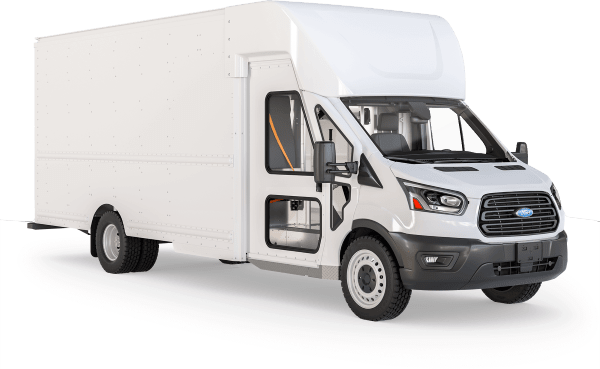
The Shyft Group’s new Velocity F2, a Class 2 delivery van built on a Ford Transit chassis, was designed for multiple-stop routes and urban deliveries. With a GVWR of 9,950 lbs. it falls outside of DOT requirements, therefore it doesn’t require a professional driver’s license.
Photo via Shyft Group.
5 min to read
The coronavirus pandemic has accelerated the shift from physical stores to online shopping by four to six years, according to August data from IBM’s U.S. Retail Index. Meanwhile, brick-and-mortar store sales are expected to decline by more than 60% for the full year 2020.
The parcel delivery market is reacting accordingly. At UPS, business-to-consumer shipments increased 33.4% year over year in the third quarter, now representing 61% of the parcel delivery giant’s total volume. Conversely, business-to-business average daily volume at UPS was down 7.8%.
Of course, all you need to do is look out your home office window at the never-ending flow of delivery vans to understand how the pandemic has changed the transaction of goods and services. “The parcel delivery companies were traditionally mostly B2B,” says Chad Heminover, president, Shyft Fleet Vehicles & Services. “They would make one stop at a retail mall and be able to empty that truck in one stop.”
The migration from business to home deliveries has changed the design, production, and use of the commercial vehicles that get those goods to their destinations. “We believe that vehicle needs are shifting to a smaller class versus the traditional walk-in van,” Heminover says.
This change isn’t necessarily at the expense of the larger vehicle market for deliveries, however, as the overall e-commerce market is still expected to grow exponentially faster than retail in the next few years. “We're going to be pretty much at our factory capacity next year,” he says.
The Shyft Group, which produces walk-in vans, truck bodies, and cargo van upfits, across GVWR Classes 1-6 under its Utilimaster brand, will see an increased production mix of traditional larger walk-in vans and the company’s new, smaller Velocity vans in 2021.
E-Commerce Trends
In the wake of the most disruptive year in generations, how do delivery fleets plan their vehicle needs without the benefit of true year-over-year comparisons? Understanding unprecedented volume is a start.
Since the beginning of the pandemic in March, the large parcel delivery companies experienced volumes that have matched a normal peak season, even as volume for the 2020 peak season is trending over 2019 — which shattered prior records. Pandemic-related demand will continue into the first quarter, which will intensify even further with the rollout of the COVID-19 vaccine.
Both UPS and FedEx are partners in the federal government’s Operation Warp Speed (OWS) vaccine program and are giving priority to vaccine shipments. This also includes the supplies needed to administer the inoculations, along with dry ice packing needed to keeping Pfizer’s vaccine at minus 94°F.
As UPS and FedEx are giving priority to vaccine shipments, the OWS logistics challenge will consume the next two quarters. Initial vaccine transportation has already started to 636 initial locations nationwide. Pfizer will deliver some 25 million doses by Dec. 31 — and that’s just the beginning.
Parcel delivery companies are assessing their vehicle needs now to be able to fleet up from January to October, long before peak season. “They’re are all of the mindset that in 2021 they're going to need more vehicles than what they have currently in their fleets,” Heminover says.
For The Shyft Group’s part, Heminover says the company has been increasing production capacity, which is made possible through flexible manufacturing capabilities in which a facility traditionally used to build truck bodies would be converted to build walk-in vans.
For bodybuilders and upfitters, one question moving forward is whether the major OEMs have the chassis supply to support the continued growth of parcel demand. “I am somewhat concerned that the OEMs will have enough capacity to meet the demands of the market,” Heminover says.
Another issue for parcel delivery companies, he says, is whether they have enough capacity at their distribution centers to process the high volume of parcels.

Photo via Shyft Group.
Vehicle Types
The Shyft Group’s new Velocity F2 model line, introduced in October, was designed to meet the e-commerce trend from B2B to B2C. The Velocity F2, a Class 2 delivery van built on a Ford Transit chassis, has a GVWR of 9,950 lbs. that allows it to fall outside of DOT requirements. It therefore doesn’t require a professional driver’s license, which gives delivery fleets the flexibility to activate a larger driver pool, Heminover says.
The gas-powered F2 is ideal for multiple-stop routes and urban deliveries, he says. “It's a little smaller and has the comfort of a consumer vehicle, but the cargo capacity (600-700 cu. ft.) is close to that of a larger traditional walk-in van.”
Heminover says the Velocity line adds safety and ergonomics features to a commercial vehicle market that has lagged behind passenger cars. The Velocity was engineered with a lower step-in height, adjustable seat heights, additional grab handles, and a 360-degree camera.
For heavier loads, the Velocity line expands above 10,000 lbs. GVWR into the Class 3 Velocity F3, also built on a Ford Transit, and the Velocity M3, built on a diesel-powered Mercedes Sprinter chassis.
In June, Spartan Motors rebranded to The Shyft Group, following the divestiture of its Emergency Response business. As well as first-to-last mile delivery fleets, Shyft’s customers vocational trades, utility and infrastructure segments, as well as federal, state, and local government entities.
The Shyft Group owns about half the U.S. walk-in van market and has smaller shares of the van body and truck upfit markets.
EV Plans
This year, Utilimaster produced two working prototypes of new electric vehicles built on the company’s Velocity walk-in van chassis platforms, which are currently undergoing route testing in customer fleets.
Yet Heminover sees the commercial EV sector taking time to develop, citing the added infrastructure requirements to charge commercial EVs. He contends the breakthrough for electric commercial vehicles could come in 2022 when the large OEMs like Ford will have EV models such as the electric F-150 and e-Transit in wider availability.
Heminover is skeptical of many of today’s EV startups. “The parcel delivery companies need to make sure that they partner with an EV company that has the financial wherewithal to support the product from a long-term perspective,” he says.
“Electric vehicles are coming, it’s just a matter of how soon the market will be ready and will the infrastructure be in place,” he adds. “All the major OEMs will play in this space, which is what the market has been asking for.”
Originally posted on Automotive Fleet
Subscribe to Our Newsletter
More Operations

It's 10 p.m... Do You Know Who Has Access to Your Fleet?
Preventing cargo theft requires investment in technology, operational processes, and employee training. In an industry with tight margins, it can be difficult to justify investments whose value is measured by incidents that might never occur.
Read More →
Truckers’ Strike Rumors, New GM Engines, and Hidden Idling Costs Lead This Week’s News
Truckers’ strike rumors, GM’s new 2027 engines, hidden idling costs, racing lessons, IRP rules, and more headline this week’s Truck Chat Weekly Cheat Sheet.
Read More →
Shades of Fleet Wants to Hear From You About Building a Culture of Care
Fleet leaders, we want to hear from you. Share how empathy, trust, and creating space for people can strengthen your team, improve performance, and support retention.
Read More →From Our Partners
Basic Tracking vs Next Generation Fleet Technology
Sponsored by AT&T Business

5 Facts Every Fleet Manager Should Know About Embedded Telematics
Sponsored by Stellantis/Mobilisights
How AI Video Telematics Boosts Driver Safety and Helps to Avoid Unnecessary Costs
Sponsored by Verizon Connect

Charting the 8 Bottom-Line Benefits of Workforce Optimization
Sponsored by Verizon Connect


What Racing Can Teach Work Truck Fleets About the Work Nobody Sees
Race car driver and mechanical engineer Isaac Johnson shares practical lessons on preparation, relationships, setbacks, and building teams that perform when it counts.
Read More →
New Fleet Guides, Hidden Truck Wear, and Driver Fit Lead This Month
Our latest Truck Chat recap covers new Fleet Guides, hidden idling costs, driver fit, lighter-truck registration rules, and year-round technician appreciation.
Read More →
Work Truck Takes Fleet Rivalry Downhill to Support Skilled Trades
Team Fletcher claimed a head-to-head win and second overall as Work Truck and Automotive Fleet helped raise $22,000 for the Hourglass Foundation.
Read More →
From Ledger Books to AI Patti Earley Shares 40 Years of Fleet Lessons
Patti Earley, CAFM, shares what four decades in fleet have taught her about using data, building relationships, and listening to the people behind the vehicles.
Read More →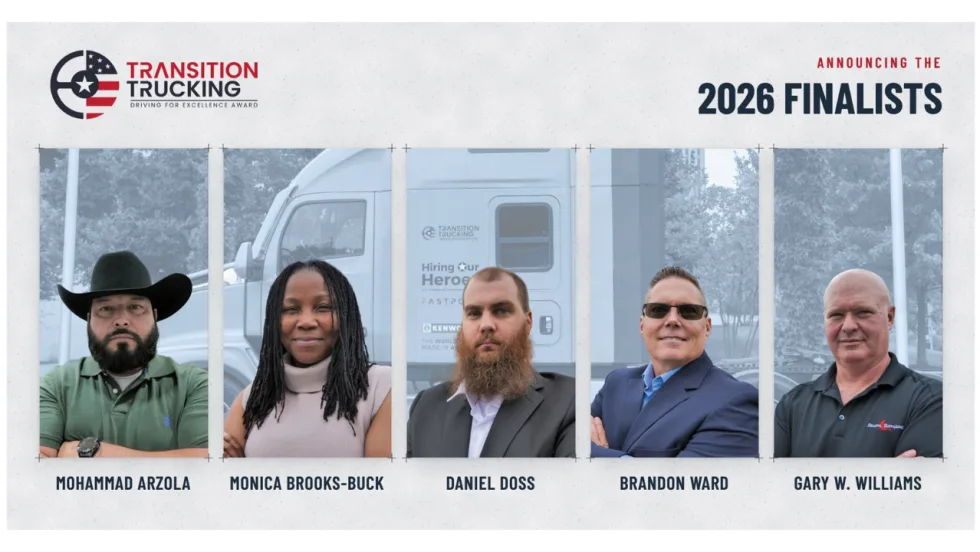
Finalists Announced for 2026 Transition Trucking: Driving for Excellence Award
Kenworth Truck Company, Fastport, and the U.S. Chamber of Commerce Foundation's Hiring Our Heroes program have announced the five finalists for the 2026 Transition Trucking: Driving for Excellence Award.
Read More →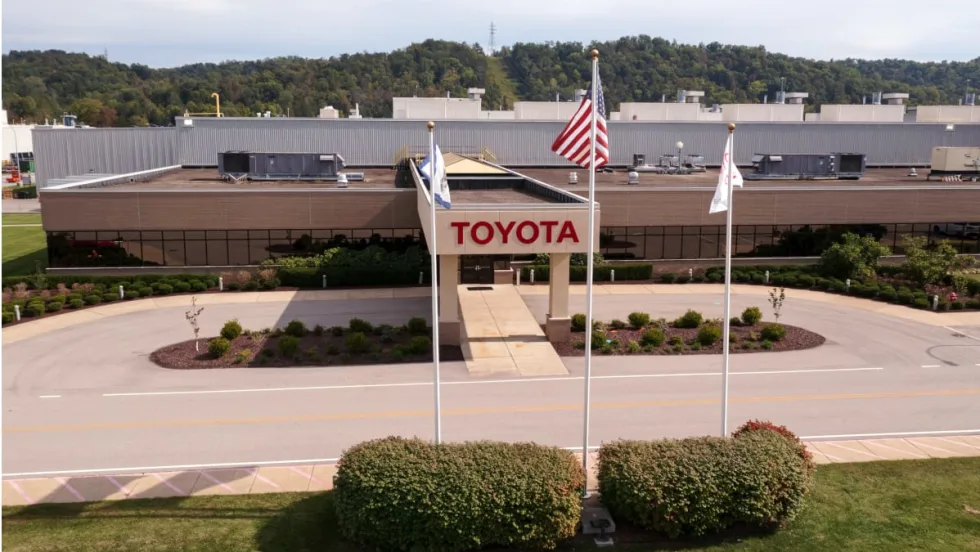
Toyota West Virginia Celebrates Three Decades of Manufacturing in the Mountain State
Toyota West Virginia celebrated 30 years of manufacturing. Toyota assembles both engines and drivetrain components in West Virginia to support its North American operations.
Read More →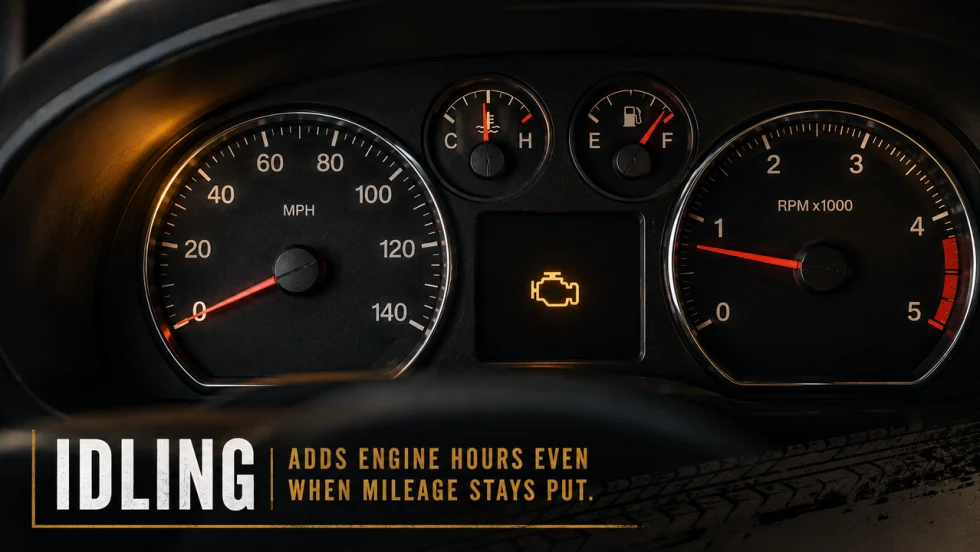
The Hidden Cost of Idling
A low-mileage truck can still be one of the fleet’s hardest-working and most worn assets. Engine hours, idle time, and duty cycle reveal what the odometer misses.
Read More →