


 MENU
MENU SEARCHMENUSEARCH
Loading data...

The National Highway Traffic Safety Administration (NHTSA) has launched a public awareness campaign to stop alcohol- and drug-impaired driving. The campaign, which includes television, radio, and digital ads, will run nationwide through Sept. 3, the Labor Day holiday weekend.
Read More →







A new device developed by Oakland-based Hound Labs can detect whether a driver has smoked marijuana in the last two hours — a peak impairment timeframe.
Read More →The national president of Mothers Against Drunk Driving has acknowledged that drugged driving is a growing problem but said alcohol-impaired driving remains the number one cause of roadway fatalities nationwide in recent testimony before a U.S. House subcommittee.
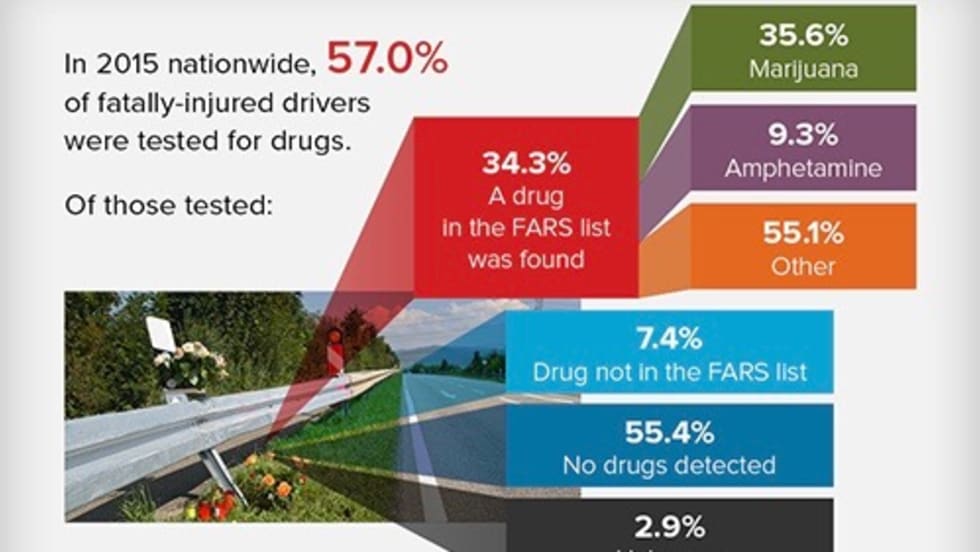
Read More →Marijuana has become the leading drug found in fatally injured drivers, and its usage has spiked largely because nine states have legalized it for recreational use, according to a new report form Government Highway Safety Association.
Read More →The National Safety Council estimates that more than 660 people could lose their lives on U.S. roads during the upcoming Christmas and New Year's holiday periods.
Read More →The Department of Transportation plans to add four prescription opioids – hydrocodone, hydromorphone, oxymorphone and oxycodone – to the existing DOT drug-testing panel for screening truck drivers and other "safety-sensitive" transportation workers. This final rule is to take effect on Jan. 1.
Read More →The prevalence of prescription opioid use has led to a rise in opioid-linked driver fatalities, a new study from Columbia University finds.
Read More →A new government report explores the downstream effects of state laws legalizing marijuana use and offers advice to states likely to change their laws in the future.
Read More →Three states that have legalized recreational cannabis see a 3% overall increase in collision claim frequencies, according to the Highway Loss Data Institute.
Read More →A new report highlights the problem’s complexity and the need for states to implement best practices.
Read More →