




Learn More: What Does the Future of ADAS Look Like?
Kyocera Unveils Innovations for ADAS Systems
Kyocera Corporation has announced a portfolio of innovations in development that promise to raise ADAS technology to new levels in the long-term quest toward fully autonomous vehicles.
October 19, 2021
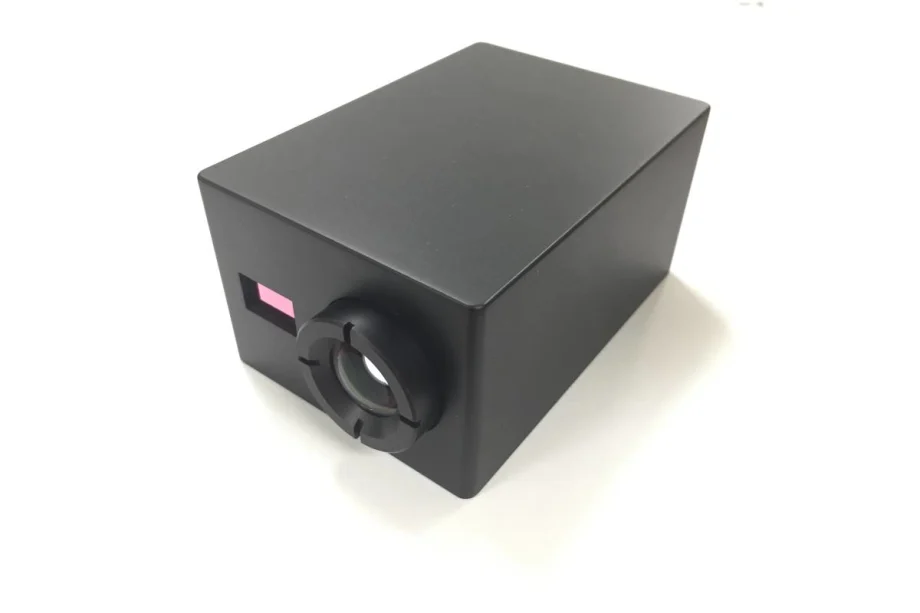
Kyocera Corporation has announced a portfolio of innovations in development that promise to raise ADAS technology to new levels in the long-term quest toward fully autonomous vehicles.
Photo: Kyocera
5 min to read
Advanced Driver-Assistance Systems (ADAS) are making travel safer and easier for millions of car owners worldwide. Kyocera Corporation has announced a portfolio of innovations in development that promise to raise ADAS technology to new levels in the long-term quest toward fully autonomous vehicles.
The central ADAS challenge lies in replicating a human driver’s ability to interpret visual data. The human eye is a miracle of bioengineering — and our brain not only combines the two different signals from our left and right eyes, but also interprets the result faster and more accurately than all but the most powerful computers. ADAS engineers strive to replicate this through digital sensing and processing. A dilemma quickly arises, however, as obtaining better data generally requires more sensors — until the vehicle’s microprocessors simply cannot integrate all the data in real time.
Kyocera is developing new solutions that apply convergence, miniaturization, and solid-state conversion for multifunctional sensors that can simplify ADAS design and help contain processing requirements. The company’s latest ADAS innovations represent an integration of technologies in advanced materials, components, devices, and communications infrastructure.
Cameras and LiDAR
Because cameras and LiDAR each offer unique benefits, they are often employed in combination. Cameras are ideal for detecting the color and shape of an object; LiDAR excels in measuring distance and creating highly accurate 3D images. However, digital imaging from two units that don’t share the same optical axis exhibits a deviation error known as parallax. A computer can theoretically integrate two data channels to correct parallax error, but the resulting time lag creates an obstacle to any application requiring highly accurate, real-time information, such as driving.
Features
Camera and LiDAR: Kyocera’s Camera-LiDAR fusion sensor combines a camera with LiDAR to provide highly accurate images in real time. Because both devices use the same lens, the camera and LiDAR signals have identical optical axes, resulting in high-resolution 3D images with no parallax deviation.
Delay-free data: Ideal for automotive use. With a single unit, the process of integrating camera and LiDAR data is greatly simplified, allowing timely and accurate object detection with no delay to improve driving safety.
Durability is maximized by Kyocera’s ceramic technology: While other LiDAR systems have used a motor to rotate a mirror continuously as they scan an image, mechanical assemblies introduce reliability issues amid the shock and vibration of normal driving. Kyocera has developed a solid-state solution using a micro-electromechanical system (MEMS) mirror that eliminates the conventional rotating assembly, based on advanced ceramic technology Kyocera developed as the world leader in ceramic semiconductor packaging.
Development status
Kyocera’s Camera-LiDAR fusion sensor is currently under development and targeted for release by March 2025. It is expected to be used both in vehicles and in various other fields.
Millimeter-Wave Radar
Radar is based on the same concept as LiDAR, but uses radio waves instead of light to measure distance, speed, and angle by calculating time and frequency differences in the returning signal. One key feature of radar is its accuracy is not easily degraded by weather or backlighting.
Because millimeter-wave radar is widely used in ADAS applications, many vehicle platforms incorporate multiple radar sensors for various purposes. For example, individual radar sensors are commonly installed for front view, blind-spot, collision detection, parking-assist, exit detection, and/or fully-automatic parking, among others. As a result, ADAS system complexity and processing requirements are continually rising.
Features
Miniaturization achieved using 79GHz band: By using the 79GHz band, Kyocera has succeeded in miniaturizing antenna volume and area, resulting in a compact module form factor measuring 48 × 59 × 21mm.
Highly accurate distance measurement: Millimeter-wave radar range accuracy depends on the bandwidth of the frequencies used. Kyocera’s multifunctional millimeter-wave radar module takes full advantage of its high bandwidth — 77GHz to 81GHz, with 4GHz width. As a result, it can deliver highly precise distance measurements, accurate to within just 5cm (about 2 in.).
Multi-function radar support: Kyocera’s technology supports multi-function radar applications, which can independently set multiple detection modes with different detection distances and directions. This function brings new value to millimeter-wave radar through beam-forming technology. In general, conventional millimeter-wave radar senses the same spot at regular intervals (for example, 50ms, 100ms, etc.). In contrast, Kyocera’s high-speed switching allows for simultaneous sensing of multiple areas. As a result, a single module can offer blind-spot detection, free-space detection, and/or other sensing functions simultaneously.
Reduced system cost and complexity: With Kyocera’s millimeter-wave technology, functions currently requiring multiple sensors can be integrated through high-speed switching into a single radar module. This allows the total number of radar sensors to be reduced, contributing to lower cost and simpler design. In principle, modules providing three different sensing functions could allow a system of 12 single-function sensors to be replaced with a future system of just four multifunctional modules.
Kyocera's Two Technologies for Multi-functional Millimeter-wave Radar
Kyocera’s millimeter-wave radar innovation takes advantage of “adaptive-array” antenna technology, which the company developed for commercial telecommunications network infrastructure. This beam-forming transmit and receive technology allows fast and accurate estimation of the receive angle of multiple signals, and arbitrary setting of both transmit and receive timing. As a result, mutual interference with other millimeter-wave radar signals can be reduced or eliminated.
Additionally, Kyocera’s high-frequency organic substrate materials help ensure low loss and high efficiency in waveguides (feeder lines) and microstrip antennas. By custom-optimizing millimeter-wave antennas for specific applications, multiple functions can be integrated efficiently and effectively.
Status of Development
Kyocera is currently developing a multifunctional millimeter-wave radar module that utilizes 60GHz radar in addition to conventional 77GHz and 79GHz radar. Since the 60GHz band can be used both indoors and in vehicles, it is expected to have a variety of applications. A timetable for availability will be announced.
More Products

Milwaukee Introduces BOLT Personal Voltage Detector for Enhanced Jobsite Safety
Milwaukee Tool’s new BOLT Personal Voltage Detector features a wide detection field and clearer voltage alerts to help users quickly identify the presence of voltage.
Read More →
DICA Introduces Solid-Core, Lifetime-Guaranteed Wheel Chocks
DICA’s new engineered wheel chocks eliminate common failure points found in hollow, brittle, low-quality, or improvised alternatives. Common applications include heavy-duty trucks, construction equipment, utility and service vehicles, trailers, and fleet maintenance operations.
Read More →
Ex-Guard Launches Ex-Guard MAX Front-End Protection System
Ex-Guard has launched Ex-Guard MAX, Its most advanced front-end protection system yet. It sets a new safety benchmark with industry-first Front Underrun Mitigation System and exclusive Steer Tire Defender 3.0 protection.
Read More →
Smart Eye Introduces AI One: A Single Compact DMS
Smart Eye’s AI One is a complete Driver Monitoring System built into a compact, self-contained unit. By combining all core components into a single unit, AI One removes the need for external ECUs and extensive cabling.
Read More →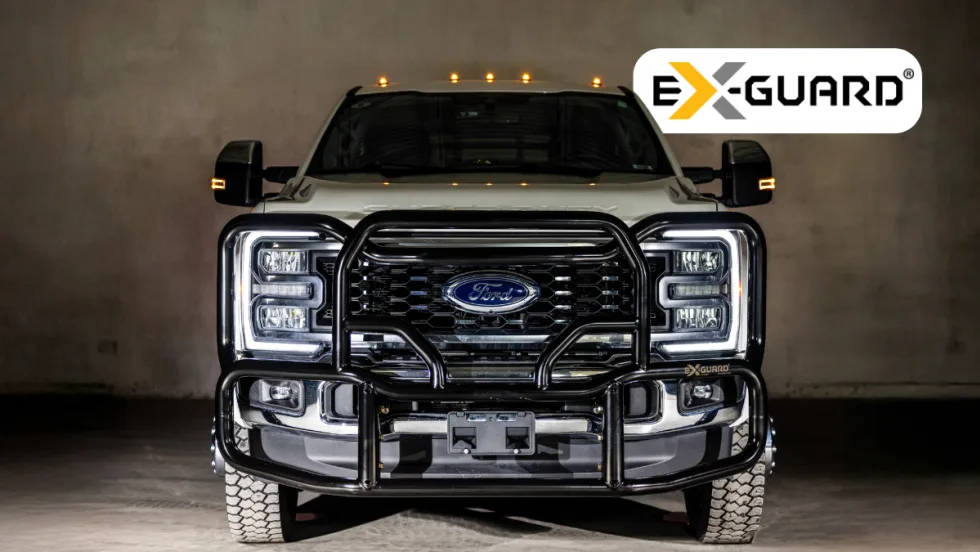
Ex-Guard Expands Grille Guard Protection to Pickups & Vans
Ex-Guard, the company that has provided grille guards to Class 8 trucks for two decades, has expanded its line with the introduction of FX and HX Series guards for Class 2-8 vehicles. Both new grille guards were showcased during NTEA Work Truck Week 2025.
Read More →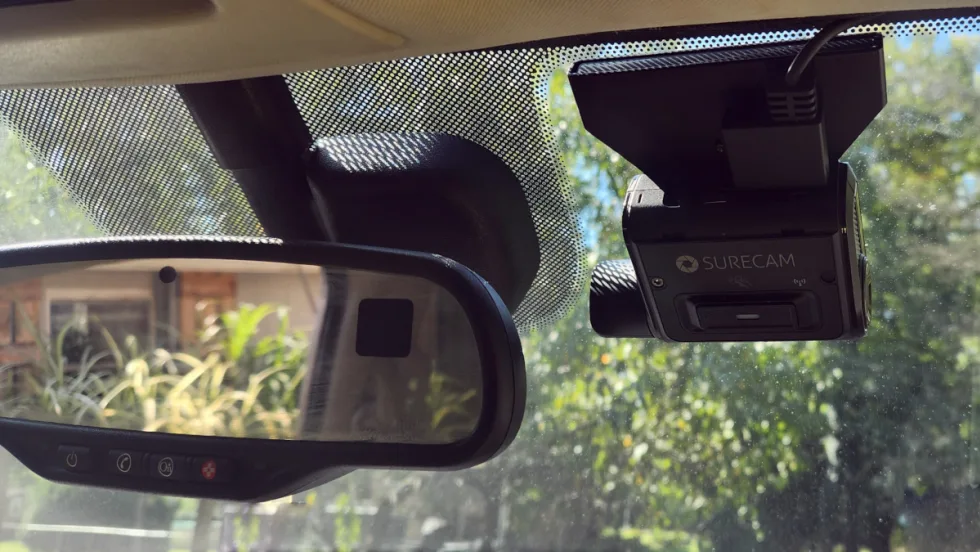
SureCam and Blackout Technologies Launch Video Telematics with Integrated Mobile Device Blocking
SureCam and Blackout Technologies have developed a fleet dashcam featuring mobile device blocking capability.
Read More →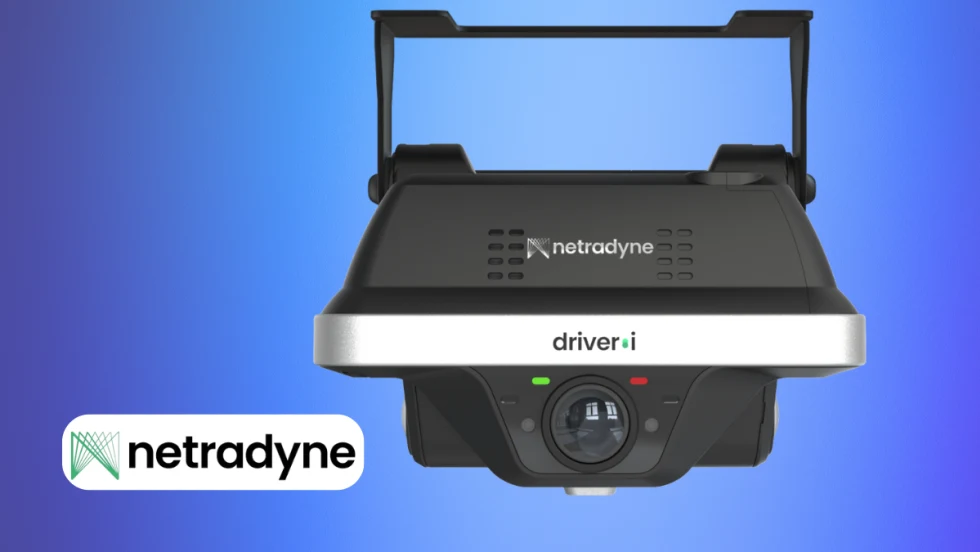
Netradyne’s New DMS Sensor Detects Early Signs of Drowsy Driving
Netradyne's third-generation drowsiness detection technology can now identify early-stage drowsiness signs, such as microsleeps and percentage of eye closure over time.
Read More →
Love’s Selling NFL-Licensed High-Visibility Workwear
Love’s Travel Stops is helping football fans show team spirit while staying safe on the job. Each Love’s location has NFL-licensed safety apparel for the two nearest NFL teams, but apparel from all 32 teams is available for order.
Read More →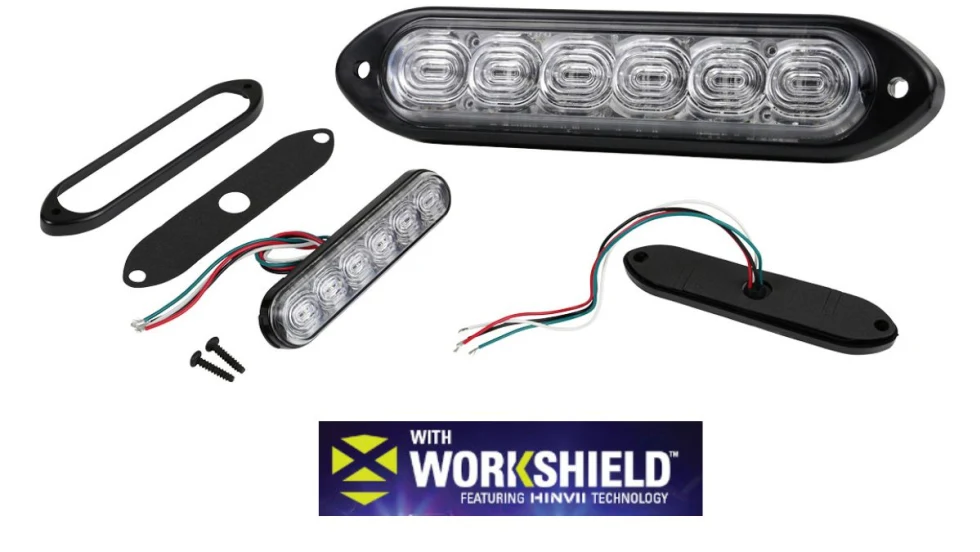
Grote Industries Launches WorkShield Warning Lights
Grote Industries’ new WorkShield warning lights are powered by HINVII technology and can increase visibility and safety on the worksite when used to illuminate high-visibility materials such as safety vests.
Read More →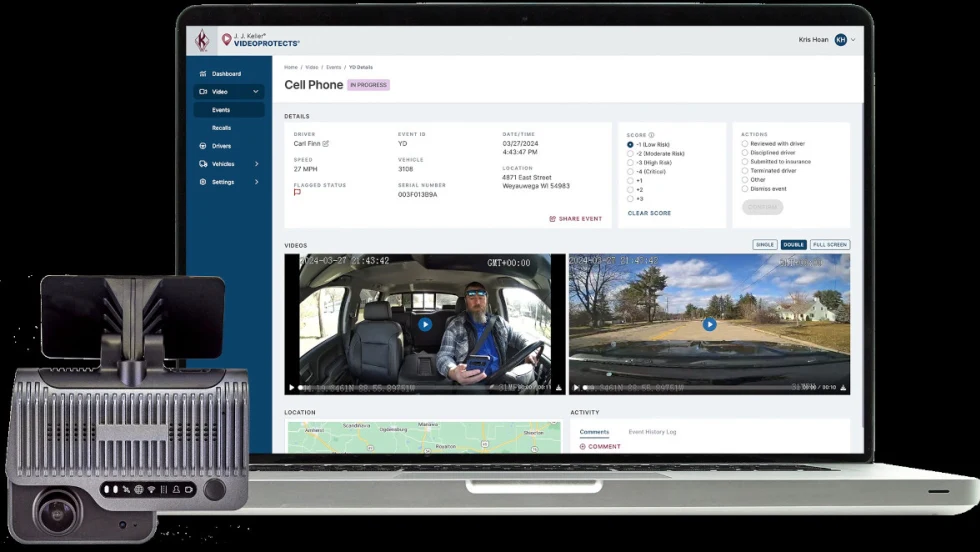
J. J. Keller Expands Dash Cam Platforms
The VideoProtects Fleet Camera System from J. J. Keller is now available across multiple platforms and can recognize hazards like driver fatigue, tailgating, forward collision warnings, and other dangerous behaviors, and assign a score based on risk level.
Read More →