





Related: IIHS to Rate Automatic Braking Systems for Pedestrian Detection
Why Drivers Deactivate Lane Departure Prevention Systems
Lane departure prevention systems that wait too long to initiate steering input or fail to prevent lane drifts greater than 35 centimeters may cause drivers to deactivate them, according to a new study from the Insurance Institute of Highway Safety.
January 10, 2019
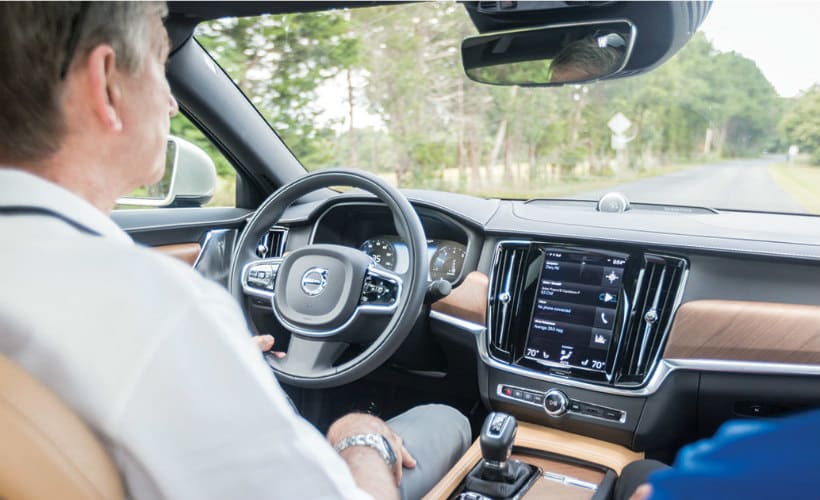
Drivers often deactivate lane departure systems that are too slow to intervene.
Photo courtesy of IIHS.
2 min to read
Lane departure prevention systems that wait too long to initiate steering input or fail to prevent lane drifts greater than 35 centimeters may cause drivers to deactivate them, according to a new study from the Insurance Institute of Highway Safety.
The study results indicate that early intervention via slight nudges from the steering wheel and subtle braking as soon as tires start to drift could be key to increasing use of this crash avoidance technology.
IIHS evaluated lane departure prevention systems from Ford, General Motors, Honda, and Volvo to assess where steering or braking occurred relative to lane markings, and whether the efforts successfully kept the vehicles in their travel lanes.
Tests were conducted at 50 mph with cruise control engaged on a four-lane highway. Test vehicles included three 2016 models, specifically, Chevrolet Malibu with Lane Keep Assist, Ford Fusion with Lane Keeping System, and Honda Accord with Road Departure Mitigation. A 2018 Volvo S90 with Lane Keeping also underwent testing.
Test drivers induced 40 lane drifts on left and right curves by steering their respective vehicles straight into the curve so that vehicles departed in the opposite direction and 40 lane drifts on straightaways by slight steering input to direct the vehicle to the left and right lane markers.
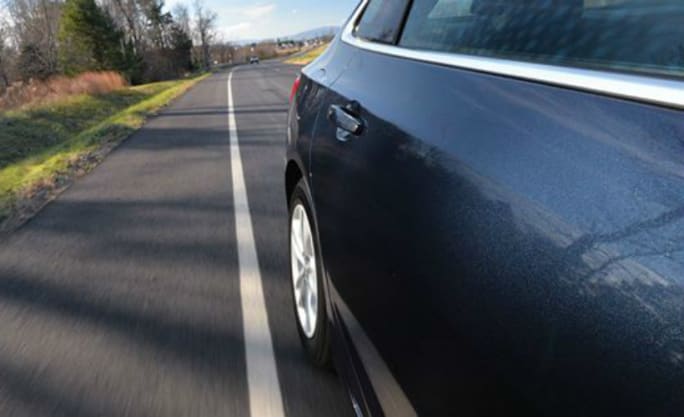
Early intervention via slight nudges from the steering wheel and subtle braking as soon as tires start to drift could be key to increasing use of this crash avoidance technology.
Photo courtesy of IIHS.
With the use of outboard cameras and video, researchers determined whether a vehicle crossed lane markers by more than 35 centimeters (about 14 inches) on any of its trials.
Both the Malibu and S90 systems provided steering input further inside the lane than the Accord and Fusion, and they produced the lowest mean peak changes in the yaw rate. On both curves and straightaways, the Malibu and S90 avoided a much larger proportion of lane marker crossings exceeding 35 centimeters than the Accord and Fusion.
The S90 avoided crossing the inside edge of solid lane markers by more than 35 centimeters on 100 percent of the trials, and the Malibu avoided doing so on 80% of the trials. In contrast, the Accord and Fusion avoided crossing lane markers by more than 35 centimeters in less than 20% of the trials.
IIHS concludes that intervention that comes sooner rather than later may allow for more subtle input that keeps the vehicle in its lane. In addition, it may prompt drivers to consistently use the lane departure prevention system.
Topics:Lane Departure WarningIIHSLane Keeping SystemSafetyAdvanced Driver Assistance SystemsSmall Fleet
Originally posted on Automotive Fleet
More Small Fleet


Developing Budget-Friendly Driver Safety Programs
From driver training and safety meetings to one-on-one coaching and incentive programs, several small fleets share how they have developed a safety culture with their drivers using low- to no-cost resources.
Read More →
Sponsored•March 9, 2026
Boosting Last-Mile Fleet Uptime, Safety, and Value with AI Vehicle Inspections
AI-powered inspections are transforming last-mile fleets by replacing manual checks with highly accurate automated scans that detect defects in seconds. By giving fleet operations visibility into the daily condition of their vehicles, you can identify trends over the vehicle’s lifecycle that enable improved procurement decisions, route management, driver training and accountability.
Read More →
Five Ways Seat Belts Help Prevent Injuries
There are five ways seat belts protect occupants from injuries, according to the Tennessee Department of Safety and Homeland Security.
Read More →
Sponsored•January 14, 2026
It’s here: The 2026 Fleet Technology Trends Report
What does AI mean for fleets? Get the answer — and learn other top tech trends.
Read More →
Small Fleets, Big Impact: How Independent Drivers Power Wreaths Across America
Check out how small fleets and independent drivers power Wreaths Across America each December and why their impact matters more than ever.
Read More →
VMS Survey Finds 65% of Small Fleet Managers Run Operations Alone
A new VMS survey shows small fleet managers are stretched thin, with most handling operations solo and eager to adopt digital tools for relief.
Read More →
Tips for Driving Safely on Halloween Night
This video features a reminder from the Connecticut Department of Transportation (DOT) and the Connecticut Police Chiefs Association, urging drivers to prioritize safety this Halloween.
Read More →
AI, Access, and Uptime: VMS’s Next Chapter with David Prusinski
VMS’s new Co-CEO, David Prusinski, shares how an AI-first approach will give small fleets and repair shops the tools to compete like big players.
Read More →
Fleet Managers Share Winter Prep Tips: It's Never Too Early!
Three fleets share best practices to prep vehicles for winter and prevent downtime when the cold sets in.
Read More →