





Similar Content: Senators Make Recommendations for Fleet Electrification
U.S. Postal Service Awards Delivery Vehicle Contract to Oshkosh Defense
The contract, which calls for putting 50,000 to 165,000 Next Generation Delivery Vehicles into service over 10 years, includes electric powertrains as well as internal combustion engines.
February 24, 2021
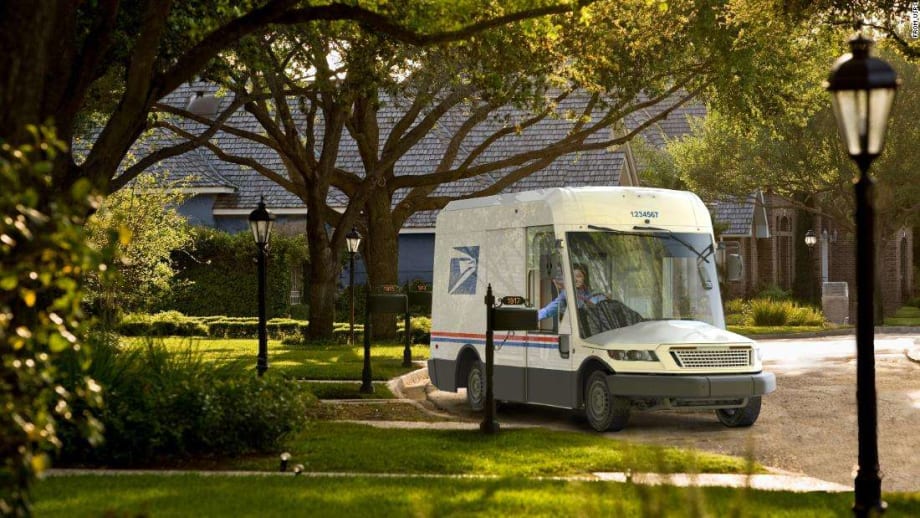
The Next Generation Delivery Vehicle can be equipped with either an internal combustion engines (ICE) or a battery electric powertrain and can be “retrofitted to keep pace with advances in electric vehicle technologies.”
Photo courtesy of USPS.
3 min to read
The U.S. Postal Service announced on Feb. 23 it has awarded a 10-year contract to Oshkosh, Wisc.-based Oshkosh Defense, a tactical vehicle manufacturer that builds defense trucks, to manufacture the next generation of postal delivery vehicles.
Under the contract’s initial $482 million investment, Oshkosh Defense will build 50,000 to 165,000 Next Generation Delivery Vehicles (NGDVs) — purpose-built, right-hand-drive vehicles for mail and package delivery — over a span of 10 years. The first NGDVs are estimated to appear on carrier routes in 2023.
The contract is only the first part of the effort to replace the Postal Service’s delivery vehicle fleet, which comprises more than 230,000 vehicles in every class.
The vehicles will be equipped with either fuel-efficient internal combustion engines (ICE) or battery electric powertrains. According to a statement by USPS, the NGDVs will be able to be “retrofitted to keep pace with advances in electric vehicle technologies.”
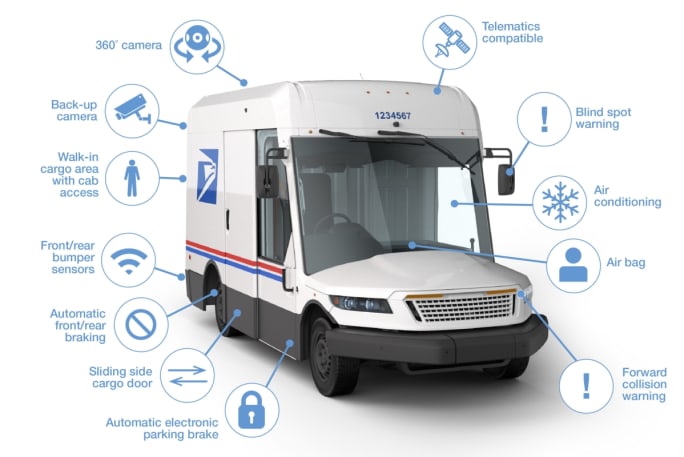
Photo: USPS
The NGDVs will upgrade the postal vehicles to modern standard technologies and will have increased cargo capacity to accommodate higher package volumes stemming from the growth of e-commerce, USPS said.
The initial investment includes plant tooling and build-out for the U.S. manufacturing facility where final vehicle assembly will occur. Oshkosh Defense is evaluating which of their U.S. manufacturing locations will produce the NGDV.
Replacing Outdated Fleet
The new vehicles will replace the estimated 140,000 Grumman Long Life Vehicles (LLVs) currently in service. A USPS audit in 2014 concluded that the current fleet, manufactured from 1987 through 1994, could only meet the agency’s delivery needs through the 2017 fiscal year.
The USPS initiated the process to replace the LLVs in 2015 when it awarded contracts to six suppliers — AM General, Karsan, Mahindra, Oshkosh, Utilimaster, and VT Hackney — to produce prototype vehicles for evaluation. Half of the original prototypes were to feature hybrid and new technologies, including alternative fuel capabilities.
VT Hackney partnered with Workhorse Group, though when that partnership dissolved in 2019, Workhorse emerged as a contender with an electric-only solution. Shares of Workhorse Group dropped by more than 50% on Tuesday.
The other bidder in the running at the end was Karsan, a Turkish company that had partnered with Morgan Olson, which spun off from bankrupt Grumman Olson in 2001.
U.S. Sen. Tom Carper (D-Del.), chairman of the Senate Committee on Environment and Public Works and senior Democrat on the Senate Committee on Homeland Security and Governmental Affairs, who has championed the need to modernize USPS operations, issued a statement praising the move.
"By investing in a new, modern delivery fleet that reduces its carbon footprint and saves money over the long-term, USPS is taking significant steps towards bringing its operations into the 21st century. Upgraded postal trucks will also have increased cargo capacity, and include advanced safety features like 360-degree cameras and collision avoidance systems to help letter carriers do their jobs safely and efficiently."
Sustainability
“Our fleet modernization also reflects the Postal Service’s commitment to a more environmentally sustainable mix of vehicles,” said Louis DeJoy, Postmaster General and USPS CEO, in a statement. “Because we operate one of the largest civilian government fleets in the world, we are committed to pursuing near-term and long-term opportunities to reduce our impact on the environment.”
The Zero Emission Transportation Association, a coalition of automotive-industry stakeholders advocating for 100% of vehicles sold by 2030 to be electric, took issue with DeJoy’s assessment.
“U.S. Postmaster General Louis DeJoy is trying to lock our postal vehicle fleet into decades of carbon-intensive transportation. This directly conflicts with the Administration’s stated goals and is certain to see swift pushback from appropriators who have sought to drive USPS vehicle electrification,” wrote Joe Britton, ZETA’s executive director.
“Many have questioned whether DeJoy has actually had USPS’ best interests in mind, but this reckless misstep is a new low. We encourage others to join us in speaking out about this decision and call on Congress to act on what is a clear invitation from DeJoy to reverse his decision.”
Originally posted on Automotive Fleet
More Green Fleet
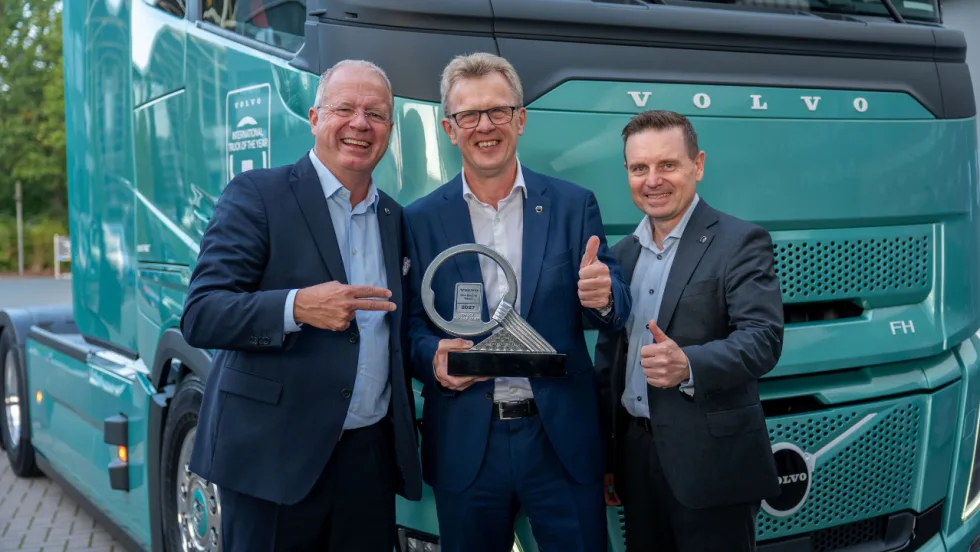
Volvo Trucks Wins International Truck of the Year 2027 for its Global Electric Range
Volvo Trucks' global heavy-duty electric range has been named International Truck of the Year 2027. Since 2019, more than 7,000 electric Volvo trucks have driven more than 310 million miles worldwide.
Read More →
Fleet Forward Conference Introduces One-Day Passes for 2026
New one-day registration gives fleet professionals the flexibility to attend Tuesday, Wednesday, or Thursday, with passes available for $199 through Sept. 18.
Read More →
CALSTART Rebrands as Catalyst Mobility, Will Combine with Forth in 2027
CALSTART has rebranded as Catalyst Mobility and will combine with Forth at the start of 2027. The new organization said it is poised to become one of the world's largest, strongest, and most impactful clean transportation nonprofits.
Read More →

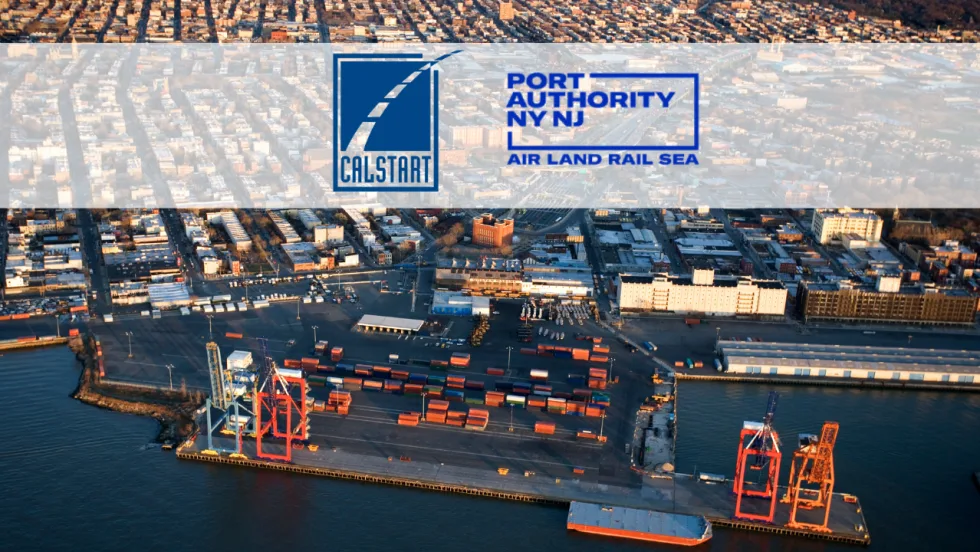
Electric Truck and Charging Programs to Boost Sustainability at NY & NJ Ports
Together, the Port Authority of New York and New Jersey and CALSTART will electrify drayage and terminal operations serving the East Coast’s busiest container port. A pair of incentive programs totaling $45 million has launched to accelerate adoption of zero-emission drayage trucks and terminal tractors.
Read More →
The Smart Way to Build a Mixed-Energy Fleet Isn’t About Picking a Side
Mixed-energy fleets aren’t about picking a winning fuel. Sarah Booth of WEX explains how vehicle data, duty cycles, charging strategy, and real-world costs can help fleets choose the right energy source for each job.
Read More →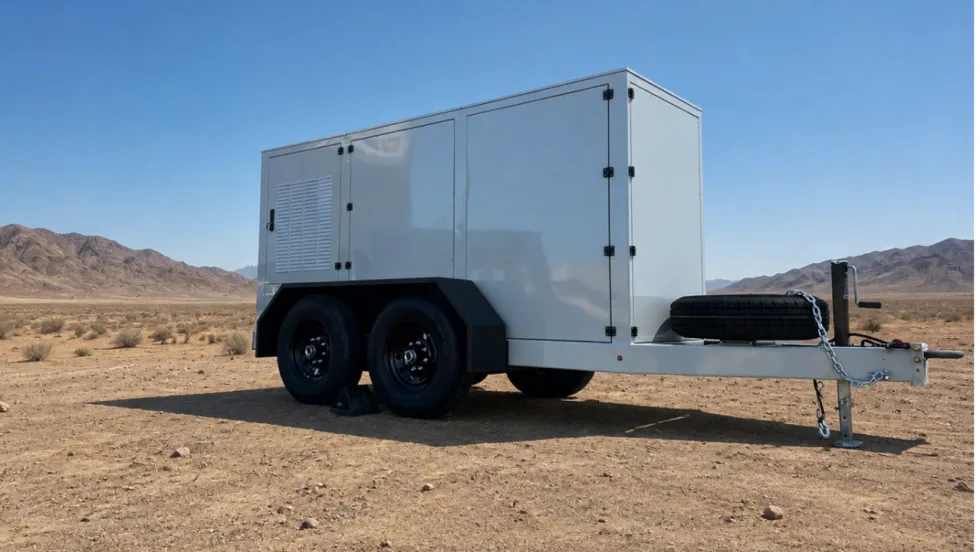
Xos Hub Surpasses One Gigawatt-Hour of Energy Delivered in the Field
A single Xos Hub has surpassed one gigawatt-hour of energy across more than 33,600 charging sessions in the field, demonstrating performance that supports Xos' expansion across new products and markets.
Read More →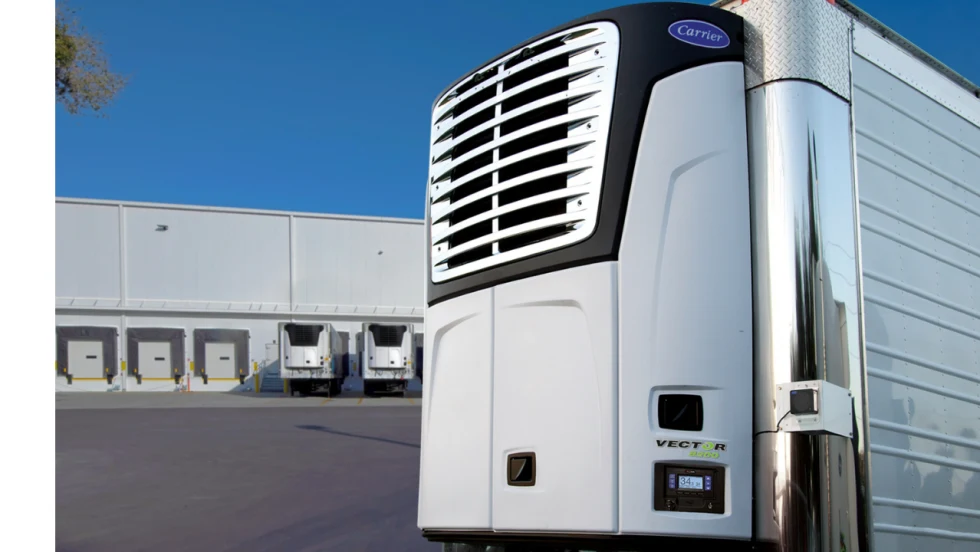
Carrier Transicold Launches All-Electric Vector 8200 TRU for Diesel-Free On-Site Cold Storage
Carrier Transicold’s first engineless multi-temperature TRU helps fresh- and frozen-food fleets add supplemental cold storage capacity during seasonal peaks.
Read More →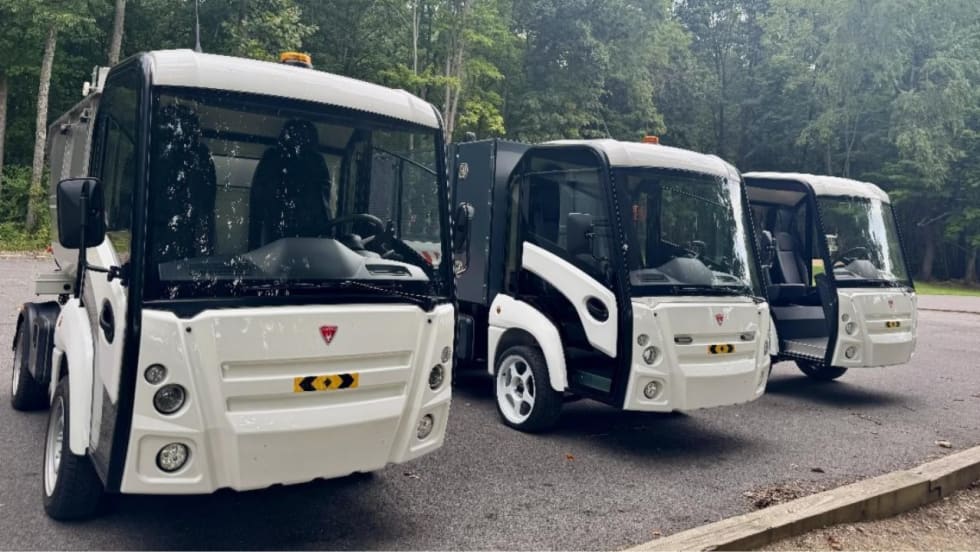
Narro Trucks Introduces Electric Utility Vehicle
Narro Trucks officially launched its operations on Aug. 20 and hosted a ride and drive to showcase its electric truck, which will be produced in Virginia.
Read More →
Samsung SDI Takes Full Control of GM Battery JV as Indiana Plant Pivots to Energy Storage
Samsung SDI is taking full control of its Indiana battery plant with GM, marking a major shift from the EV-focused joint venture Charged Fleet first covered in 2023.
Read More →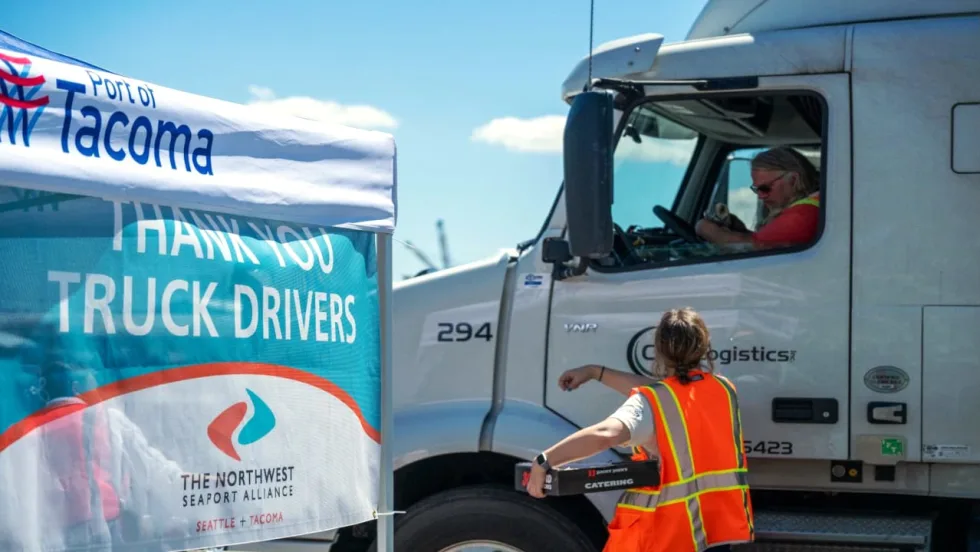
NWSA Taps CALSTART to Administer Zero-Emission Drayage Assistance Program
CALSTART will provide free technical assistance services to drayage fleets serving the Ports of Seattle and Tacoma and looking to transition to cleaner technologies and help decarbonize freight hubs.
Read More →