




Toyota Plans to Launch Advanced Driving Support System in Mid-2010s
The system, Toyota says, will use automated driving technologies to promote safer highway driving and reduce driver workload.
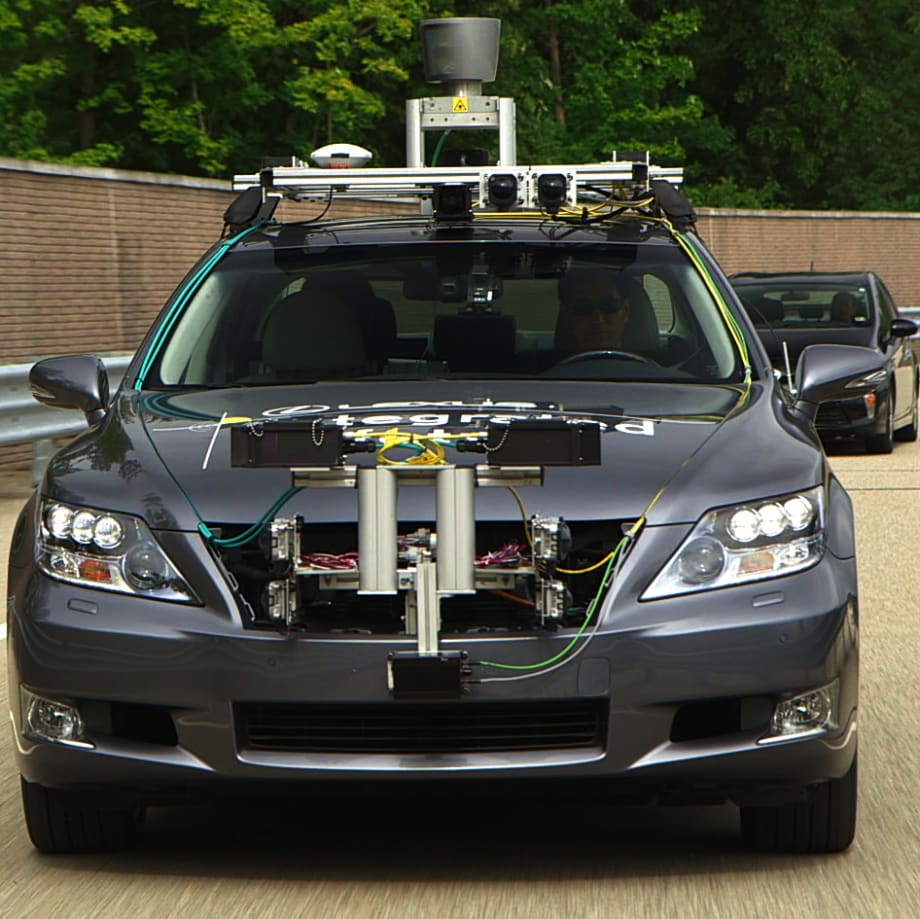
The Advanced Active Safety Research test vehicle, based on the Lexus “LS,” is being used in research at the Toyota Research Institute of North America in Saline, Mich.
Toyota Motor Corp. said it has developed a next-generation advanced driving support system, Automated Highway Driving Assist (AHDA), which uses automated driving technologies to support safer highway driving.
The automaker plans to market AHDA in the mid-2010s and other driving support systems as soon as possible to promote greater driving safety.
AHDA links two automated driving technologies to support safer driving and reduce driver workload: Cooperative-adaptive Cruise Control, which wirelessly communicates with preceding vehicles to maintain a safe distance, and Lane Trace Control, which aids steering to keep the vehicle on an optimal driving line within the lane.
Toyota stressed that it recognizes the importance of the driver being in ultimate control of the vehicle. As a result, the automaker aims to integrate AHDA and other advanced driving support systems in a way that never compromises that driver control.
Ahead of trials on the Shuto Expressway near Tokyo this week, Toyota exhibited AHDA at the 20th Intelligent Transport Systems World Congress Tokyo 2013.
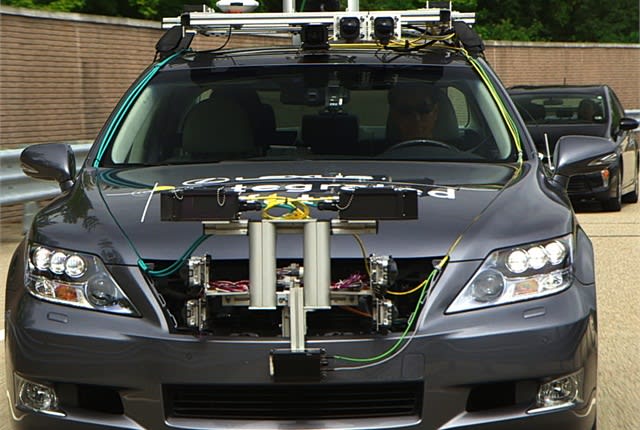
The Advanced Active Safety Research test vehicle, based on the Lexus “LS,” is being used in research at the Toyota Research Institute of North America in Saline, Mich.
In addition, to enable prompt market introduction of these advanced systems, Toyota will use component technologies and know-how acquired through research conducted with the advanced active safety research vehicle. This research was unveiled at the International Consumer Electronics Show in Las Vegas back in January.
Automated Highway Driving Assist (AHDA)
In contrast to standard radar cruise control (which uses millimeter-wave radar to detect other vehicles), Cooperative-adaptive Cruise Control uses 700-MHz band vehicle-to-vehicle ITS communications to transmit acceleration and deceleration data of preceding vehicles. As a result, following vehicles can adjust their speeds accordingly to better maintain a safe distance. By reducing unnecessary acceleration and deceleration, the system improves fuel efficiency and helps reduce traffic congestion.
Lane Trace Control, which features completely new Toyota automated driving technologies, employs high-performance cameras, millimeter-wave radar and control software to enable an optimal and smooth driving line at all speeds. The system adjusts the vehicle’s steering angle, driving torque and braking force when necessary to maintain the optimal line within the lane.
Automated Driving Technologies Research
At the 2013 International CES, Toyota displayed the advanced active safety research vehicle, a test vehicle for automated driving technologies that Toyota is researching under its Integrated Safety Management Concept. The concept does not refer to the individual safety systems on the car, but rather the integration of those systems to offer optimal driving support at all driving stages – from parking to normal operation and the moments before and after a collision – and even avoidance at the moment of an accident.
The test vehicle, based on the Lexus “LS,” is being used in research at the Toyota Research Institute of North America in Saline, Mich. The vehicle is capable of autonomous driving. It is fitted with forward-looking cameras to detect traffic signals, as well as front-mounted sensors to detect vehicles, pedestrians and obstacles. The vehicle can determine traffic conditions, such as intersections and merging traffic lanes, in the vehicle’s vicinity. Such research on various elemental technologies is aimed to help drivers choose the safest routes possible.
Toyota has been researching automated driving technologies since the second half of the 1990s, and has been conducting public road tests in the U.S. for a number of years. Within Japan, Toyota has been testing its next-generation Intelligent Driver-support System on public roads for approximately two years.
Based on the insights gained from automated driving research, Toyota said it aims to provide advanced driving support systems optimized to help enable safer driving and contribute to realizing the ultimate goal: elimination of traffic fatalities and injuries.
Originally posted on Automotive Fleet
More Small Fleet


Developing Budget-Friendly Driver Safety Programs
From driver training and safety meetings to one-on-one coaching and incentive programs, several small fleets share how they have developed a safety culture with their drivers using low- to no-cost resources.
Read More →
Boosting Last-Mile Fleet Uptime, Safety, and Value with AI Vehicle Inspections
AI-powered inspections are transforming last-mile fleets by replacing manual checks with highly accurate automated scans that detect defects in seconds. By giving fleet operations visibility into the daily condition of their vehicles, you can identify trends over the vehicle’s lifecycle that enable improved procurement decisions, route management, driver training and accountability.
Read More →
Five Ways Seat Belts Help Prevent Injuries
There are five ways seat belts protect occupants from injuries, according to the Tennessee Department of Safety and Homeland Security.
Read More →
It’s here: The 2026 Fleet Technology Trends Report
What does AI mean for fleets? Get the answer — and learn other top tech trends.
Read More →
Small Fleets, Big Impact: How Independent Drivers Power Wreaths Across America
Check out how small fleets and independent drivers power Wreaths Across America each December and why their impact matters more than ever.
Read More →
VMS Survey Finds 65% of Small Fleet Managers Run Operations Alone
A new VMS survey shows small fleet managers are stretched thin, with most handling operations solo and eager to adopt digital tools for relief.
Read More →
Tips for Driving Safely on Halloween Night
This video features a reminder from the Connecticut Department of Transportation (DOT) and the Connecticut Police Chiefs Association, urging drivers to prioritize safety this Halloween.
Read More →
AI, Access, and Uptime: VMS’s Next Chapter with David Prusinski
VMS’s new Co-CEO, David Prusinski, shares how an AI-first approach will give small fleets and repair shops the tools to compete like big players.
Read More →
Fleet Managers Share Winter Prep Tips: It's Never Too Early!
Three fleets share best practices to prep vehicles for winter and prevent downtime when the cold sets in.
Read More →