




Tariffs Update: China Tariff Boosted to 125%, Some Tariffs Paused for 90 Days, Automakers Can Operate Under USMCA
President Trump signed a proclamation enacting 25% tariffs on the import of passenger vehicles and automotive parts. However, domestic automakers can get a break from that if they operate under the guidelines of the United States-Mexico-Canada Agreement, established in 2020.

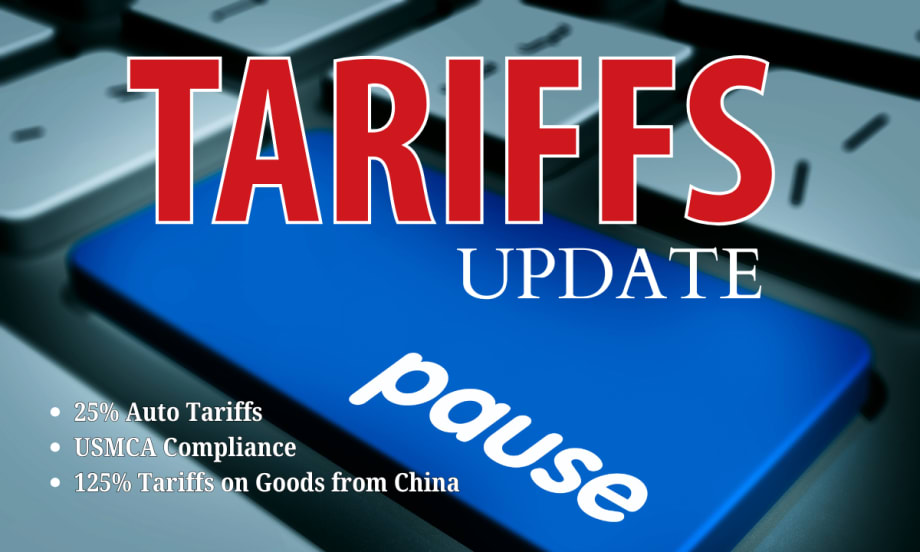
A recent executive order increased the tariffs on goods imported from China to 125%, following China’s placing higher tariffs on U.S. goods. However, some of the new 2025 tariffs have been put on hold for 90 days.
Photo: Work Truck
This week, President Donald J. Trump again adjusted the tariffs on imported goods, putting most of the increased ones on hold until July. However, he increased the tariffs on goods imported from China to 125%.
Even with the new executive order hitting the pause button, the 25% tariffs on imported vehicles not assembled in the United States remain in place. However, companies operating within the guidelines of the United States-Mexico-Canada Agreement (USMCA) can avoid those tariffs.
There is still a universal 10% tariff on goods imported into the U.S.
In an April 9 executive order, the president suspended the tariffs, or “ad valorem duties,” imposed on foreign trading partners listed in previous Trump executive orders for 90 days, until July 9.
Increased Tariffs on Goods from China
While the increased tariffs on goods from Mexico and Canada have again been put on hold, the tariffs on goods imported from China have increased. One of the earlier executive orders outlined that if any trade partner retaliated against the United States in response to new tariffs imposed, the U.S. would respond.
The latest executive order noted that the State Council Tariff Commission of the People’s Republic of China (PRC) ordered an 84% tariff on U.S. goods imported into China beginning April 10. Trump responded by raising the U.S. tariffs on goods from China to 125%
“I have determined that it is necessary and appropriate to address the national emergency declared in that order by modifying the HTSUS (Harmonized Tariff Schedule of the United States) and taking other actions to increase the duties imposed on the PRC in response to this latest retaliation,” Trump wrote in the April 9 executive order.
“In my judgment, this modification is necessary and appropriate to effectively address the threat to U.S. national and economic security posed by the PRC’s contribution to the conditions reflected in large and persistent trade deficits, including PRC industrial policies that have produced systemic excess manufacturing capacity in the PRC and suppressed U.S. domestic manufacturing capacity, which conditions are made worse by the PRC’s recent actions,” he added.
Late March: 25% Tariffs Placed on Imported Vehicles & Parts
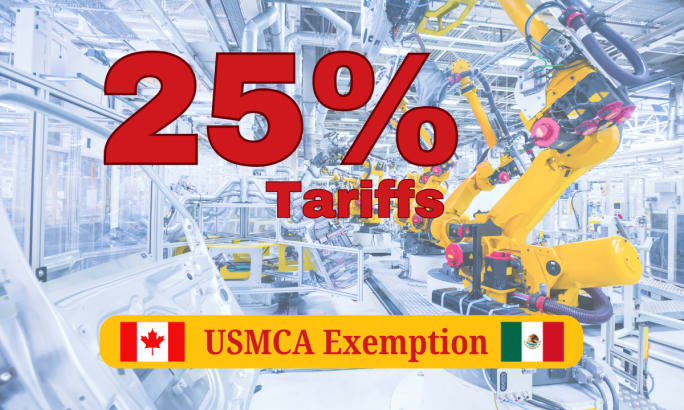
Soon there will be a new 25% tariff on imported passenger vehicles and imported automotive parts. However, U.S. automakers can avoid the tariffs if continue to import under the terms of the United States-Mexico-Canada Agreement, established in 2020.
Photo: Work Truck
There will now be a 25% tariff applied on imported passenger vehicles — cars, SUVs, crossovers, minivans, cargo vans, and light trucks, starting on April 3. Key imported auto parts, such as engines, transmissions, powertrain parts, and electrical components, also will fall under the new tariffs.
In late March, Trump signed a proclamation invoking Section 232 of the Trade Expansion Act of 1962 to enact the new automotive- and parts-related tariffs. The proclamation said the new tariffs “shall continue in effect, unless such actions are expressly reduced, modified, or terminated.”
A White House statement said, “President Trump is taking action to end unfair trade practices that jeopardize U.S. national security.”
The same statement pointed out that in 2024, Americans purchased about 16 million cars, SUVs, and light trucks. Of those, only 8 million were made domestically.
However, the White House estimates that of those 8 million vehicles produced in the U.S., only 40% to 50% of the components in those vehicles were made here. The remaining components were imported.
The United States trade deficit in automobile parts reached $93.5 billion in 2024, according to a White House statement released Wednesday.
USMCA Still in Play
When the new tariffs begin, those companies which import vehicles under the United States-Mexico-Canada Agreement will has an opportunity to certify their U.S. content and systems. The 25% tariff will only apply to the value of their non-U.S. content.
The USMCA replaced the North American Free Trade Agreement (NAFTA) and went into effect on July 1, 2020, during Trump’s first term.
When Trump’s tariffs were announced earlier this year, some industry and manufacturing leaders cited the success of the USMCA and expressed hopes that the new tariffs would not undo what had been accomplished under the USMCA.
“The United States-Mexico-Canada Agreement was a major achievement of President Trump’s first administration,” said Chris Spear, CEO and president of the American Trucking Associations.
The initially proposed tariffs — 25% on goods from Mexico, 10% on goods from China, and 10% on goods from Canada — were put on hold with a 30-day delay earlier this year. Then, they were enacted after that period, on March 4.
However, at that point Trump made some slight changes.
First, he changed the tariffs on goods imported from China from 10% to 20%.
And, he allowed for the Big Three domestic automakers to have an exemption from the tariffs on goods imported from Mexico and Canada if they abide by the terms of the USMCA.
Now the USMCA continues, even with the new 25% tariff, to allow U.S. automakers to get a break on the import fees.
Penalty for Overstatement of U.S. Content
If an importer overstates the amount of U.S.-produced content in an imported vehicle, there will be a penalty.
According to the proclamation:
“If U.S. Customs and Border Protection (CBP) determines that the declared value of non-U.S. content of an automobile, as described in clause (2) of this proclamation, is inaccurate due to an overstatement of U.S. content, the 25% tariff shall apply to the full value of the automobile, regardless of the actual U.S. content of the automobile. In addition, the 25% tariff shall be applied retroactively (from April 3, 2025, to the date of the inaccurate overstatement) and prospectively (from the date of the inaccurate overstatement to the date the importer corrects the overstatement, as verified by CBP) to the full value of all automobiles of the same model imported by the same importer.”
UAW Reacts to the 25% Tariffs
The new tariffs garnered a show of support from the UAW, which in a statement said the major tariffs on passenger cars and trucks entering the U.S. market marks “the beginning of the end of a 30-plus year ‘free trade’ disaster.”
“This is a long-overdue shift away from a harmful economic framework that has devastated the working class and driven a race to the bottom across borders in the auto industry. It signals a return to policies that prioritize the workers who build this country—rather than the greed of ruthless corporations,” the UAW statement added.
According to the UAW, the new tariffs could bring thousands of “good-paying“ jobs back to communities across the U.S. through the gain of additional production shifts or production lines in underutilized auto plants.
The union said the Big Three automakers, collectively, have seen production decrease by 2 million units per year over the last decade. Also, the Big Three have closed or spun off 65 facilities in the past 20 years, according to the UAW.
“The UAW has encouraged the Trump administration to take clear, aggressive action to bring back good, union auto jobs,” the union statement said. “We are heartened by the significant measures they have announced today, and we urge the administration to take similar action to protect and reshore the heavy truck sector. Beyond tariffs, a continued, dramatic shift in our country’s trade agreements and economic policies will be necessary to end the free trade disaster.”
Editor's Note: This story was edited April 10, 2025, to include updates about the tariffs.
More Operations
Family Ties Inside the Fleet Families Building Careers Across Generations
Three fleet families share what it really takes to work together, learn across generations, and keep business from following them home.
Read More →
Shades of Fleet Call for Voices: Fleet's Hidden Heroes
Fleet’s hidden heroes are often the ones keeping everything moving behind the scenes. September’s Shades of Fleet is looking for dispatchers, coordinators, parts specialists, and other support pros to share their stories.
Read More →
Truck Centers, Inc. Celebrates National Truck Driver Appreciation Week with $1,000 Fuel Card Giveaways
During National Truck Driver Appreciation Week, Truck Centers, Inc. is offering customers a chance to fuel up for free. Customers at all Truck Centers locations can enter to win one of four $1,000 fuel cards from Sept. 14 - 18.
Read More →
Fleet Guides, AI Time-Savers, Truck Tariffs & Fuel Strategy Lead the News
This week’s Truck Chat Cheat Sheet covers new fleet vehicle guides, practical AI use cases, U.S.-Canada truck production, mixed-energy strategy, and more.
Read More →
What Fleet Employers Are Missing When Hiring Veterans
What if some of the strongest candidates for fleet are already out there, but their experience is written in a language our industry does not always recognize?
Read More →
Automotive Fleet Opens 2026 Personal Use Survey for Commercial Fleet Managers
Less than two weeks left! Commercial and corporate fleet managers are invited to share how their organizations handle company vehicle personal-use policies, charges, and driver eligibility.
Read More →
What Resilient Fleets Do Differently When Conditions Change
Fleet resilience is about more than reacting to disruption. Lauren Fletcher talks with AP Fleet’s Alex Coveney about flexibility, planning, scaling, and what helps fleets adapt when business conditions shift.
Read More →
If We Want the Next Generation in Automotive, We Have to Give Them a Reason to Care
The automotive industry talks constantly about its workforce shortage. But before we can recruit the next generation, we may need to do a better job giving kids a reason to care about automotive in the first place.
Read More →
Ram ProMaster City Under $40K, Truck Tariffs, and AI Maintenance Lead the News
A sub-$40K commercial van, tariff questions, AI-powered maintenance, and a new EV production strategy headline this week’s Truck Chat Cheat Sheet.
Read More →
Bob Adamsky Shares the Fleet Lessons You Usually Learn the Hard Way
After more than 30 years in fleet, Arrow International’s Bob Adamsky has learned that the job is about far more than vehicles. He shares the lessons he wishes every fleet manager could learn a little earlier.
Read More →