




Takata Vehicle Safety Recall Now Biggest Ever
The Japan-based auto safety parts supplier reaches an agreement with NHTSA to expand its recall of defective air bag inflators, which have been linked to six deaths worldwide.
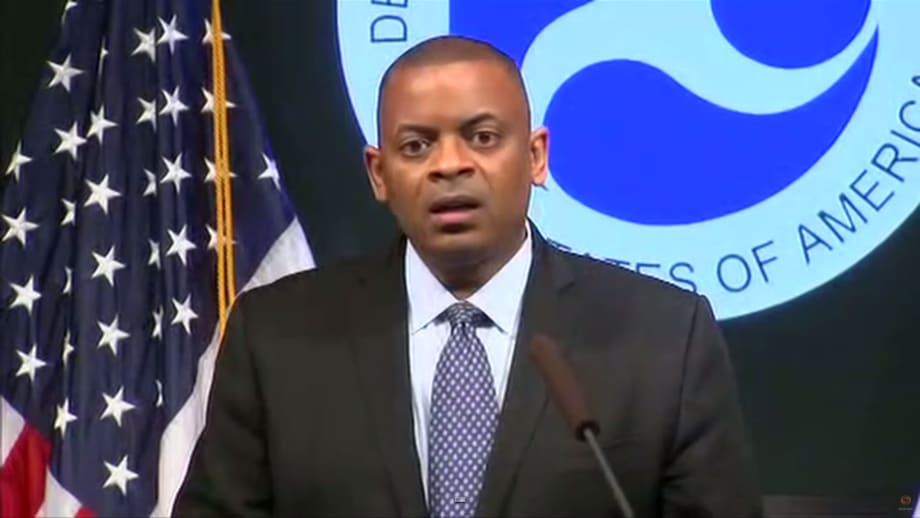
Screen shot of U.S. Transportation Secretary Anthony Foxx during press conference, via YouTube.
Screen shot of U.S. Transportation Secretary Anthony Foxx during press conference, via YouTube.
The Takata Corp. has agreed to expand the national recall of its defective air bag inflators, bringing the number of vehicles covered to nearly 34 million, U.S. Transportation Secretary Anthony Foxx announced.
Takata’s action, following months of growing pressure from the National Highway Traffic Safety Administration, makes the vehicle safety recall the largest ever in the U.S.
The recall expansion essentially doubles the number of vehicles covered. The goal is to replace certain types of driver- and passenger-side air bag inflators made with a “propellant that can degrade over time and has led to ruptures that have been blamed for six deaths worldwide,” the National Highway Traffic Safety Administration said in a released statement.
The agency is waiting for the automakers to supply a complete list of vehicles affected by the recall expansion. When the information becomes available, it will be released publicly.
“We are pleased to have reached this agreement with NHTSA, which presents a clear path forward to advancing safety and restoring the trust of automakers and the driving public,” Takata CEO Shigehisa Takada said in a statement.
NHTSA also issued a consent order requiring Takata to cooperate with the agency’s future regulatory actions tied to the recall investigation and oversight. The federal safety agency, part of the Department of Transportation, is taking steps to assume legal authority over management of the safety recall. NHTSA intends to organize and prioritize replacement of Takata’s defective air bag inflators.
The actions expand regional recalls of Takata passenger-side inflators, currently limited to areas of high absolute humidity, to nationwide recalls involving more than 16 million vehicles. Additionally, the current nationwide recall of driver-side inflators will expand to more than 17 million vehicles.
“It’s anticipated that the remedy of vehicles will be prioritized based upon risk, with the vehicles that present the greatest risk in terms of age and geographic location to be serviced first,” NHTSA said.
Despite investigations and testing by Takata, automakers and independent researchers, a definitive root cause for the inflator malfunctions still hasn’t been established, NHTSA said. But the problem appears to be related to moisture infiltrating the defective inflators over extended periods of time.
Eventually, that moisture causes changes in the structure of the chemical propellant that ignites when an air bag deploys. The degraded propellant ignites too quickly, producing excess pressure that causes the inflator to rupture. The resulting metal shards can strike vehicle occupants and cause serious injury or death.
NHTSA has already held informal discussions with automakers and parts suppliers in “an effort to coordinate one of the largest and most complex product recalls in history,” the agency said.
Ten automakers – Honda, BMW, Fiat Chrysler (FCA), Ford, General Motors, Mazda, Mitsubishi, Nissan, Subaru and Toyota – have previously issued recalls to replace the air bag inflators. The recall expansion is expected to add Daimler Trucks to the list of affected manufacturers.
“From the very beginning, our goal has been simple: a safe air bag in every vehicle,” said NHTSA Administrator Mark Rosekind. “The steps we’re taking today represent significant progress toward that goal.”
Originally posted on Automotive Fleet
More Small Fleet


Developing Budget-Friendly Driver Safety Programs
From driver training and safety meetings to one-on-one coaching and incentive programs, several small fleets share how they have developed a safety culture with their drivers using low- to no-cost resources.
Read More →
Boosting Last-Mile Fleet Uptime, Safety, and Value with AI Vehicle Inspections
AI-powered inspections are transforming last-mile fleets by replacing manual checks with highly accurate automated scans that detect defects in seconds. By giving fleet operations visibility into the daily condition of their vehicles, you can identify trends over the vehicle’s lifecycle that enable improved procurement decisions, route management, driver training and accountability.
Read More →
Five Ways Seat Belts Help Prevent Injuries
There are five ways seat belts protect occupants from injuries, according to the Tennessee Department of Safety and Homeland Security.
Read More →
It’s here: The 2026 Fleet Technology Trends Report
What does AI mean for fleets? Get the answer — and learn other top tech trends.
Read More →
Small Fleets, Big Impact: How Independent Drivers Power Wreaths Across America
Check out how small fleets and independent drivers power Wreaths Across America each December and why their impact matters more than ever.
Read More →
VMS Survey Finds 65% of Small Fleet Managers Run Operations Alone
A new VMS survey shows small fleet managers are stretched thin, with most handling operations solo and eager to adopt digital tools for relief.
Read More →
Tips for Driving Safely on Halloween Night
This video features a reminder from the Connecticut Department of Transportation (DOT) and the Connecticut Police Chiefs Association, urging drivers to prioritize safety this Halloween.
Read More →
AI, Access, and Uptime: VMS’s Next Chapter with David Prusinski
VMS’s new Co-CEO, David Prusinski, shares how an AI-first approach will give small fleets and repair shops the tools to compete like big players.
Read More →
Fleet Managers Share Winter Prep Tips: It's Never Too Early!
Three fleets share best practices to prep vehicles for winter and prevent downtime when the cold sets in.
Read More →