





AI Adoption Pays Off for Field Service Fleets, Says Geotab Report
Survey: GPT Tools Spark Fleet Interest, But Adoption Still Early
New EVAI survey finds fleets curious but cautious about GPT tools—AI adoption is rising, but trust, integration, and ROI questions remain.
June 12, 2025

EVAI’s latest survey reveals growing interest in GPT-style AI tools for fleet operations—highlighting both early adoption and cautious optimism across the industry.
Photo: Work Truck
3 min to read
A new industry survey from EVAI, an AI-first company focused on fleet analytics and decision support, is shining a spotlight on how GPT-style interfaces are making their way into commercial vehicle fleets. Spoiler alert: fleets are curious, cautiously optimistic, but still pretty early in the game when it comes to widespread use.
EVAI’s survey, sent to more than 2,000 fleet professionals in May 2025, explored how generative AI tools like ChatGPT are being used (or not used yet) in real-world fleet operations. And while awareness is growing fast, most fleets haven’t gone all-in just yet.
How Familiar Are Fleets with GPT Interfaces?
40.8% of fleet respondents said they’re moderately familiar with GPT-style tools
10.7% said they’re very familiar, and 9.7% claimed expert knowledge
But only 10.7% are using these tools extensively, while 40.8% are just dabbling
Nearly 39% aren’t using GPT at all but are actively exploring the idea
And 30.1% said they definitely plan to start within the next 12 months
What’s Getting in the Way?
There are some very real concerns slowing things down:
Integration complexity (20.4%)
Lack of awareness and understanding (19.4%)
Data security worries (19.4%)
Accuracy and AI “hallucinations” (also 19.4%)
ROI uncertainty (9.7%) and comfort with existing systems (11.6%) also made the list but weren’t the main blockers.
What’s Getting Fleet Pros Excited?
Some of the most promising GPT use cases include:
Total Cost of Ownership (TCO) analysis (21.4%)
Trip and route optimization (20.4%)
Advanced data analysis (17.5%)
Vehicle health monitoring (15.5%)
In fact, 51.5% said GPT-style tools perform better than traditional dashboards when it comes to making sense of fleet data.
Real-World Results: Efficiency and Trust
For fleets already using GPT:
30.1% reported efficiency gains of 8-10%
9.7% saw boosts of 15% or more
And among those on the fence:
29.1% expect a 10–12% bump in efficiency once they implement
But trust is still a work in progress. Only 10.7% feel very comfortable using GPT tools for ops analysis, and another 39.8% are somewhat comfortable. When it comes to trip and route optimization:
10.7% trust GPT completely
39.8% trust it—but with some reservations
Human Oversight Isn’t Going Anywhere
Delegating tasks to AI? Fleets are open, but still cautious:
30.1% are OK with some AI help, as long as humans are watching
Another 30.1% support moderate delegation with occasional reviews
Only 10.7% are cool with high-level delegation
And just 9.7% would go full-autonomy
Preferred oversight methods include:
Periodic audits and checks (31.1%)
Exception-based oversight (29.1%)
Full-time human monitoring (20.4%)
Where GPT Could Add Major Value
Fleet managers see major upside in a few key areas:
Automated safety alerts and compliance monitoring (59.2% rated this very/extremely valuable)
Real-time geofencing and location tracking (21.4% said very important, 29.1% moderately)
But they’re still worried about:
Data accuracy (31.1%)
Integration with existing tech (29.1%)
Privacy and security (20.4%)
The Bottom Line
“The data reveals a clear desire to embrace generative AI in the fleet sector but also underscores that we’re still in the early phases,” said Ian Gardner, Founder and CEO of EVAI. “Fleet managers are asking smart questions about integration, trust, and ROI—and that’s where EVAI is helping bridge the gap, providing real-time, actionable insights while keeping human oversight in focus.”
While GPT tools won’t replace dashboards and driver input anytime soon, this survey shows a future that’s charging toward smarter, more predictive operations, with the right tools and training leading the way.
More Green Fleet

Fleet Forward Conference Introduces One-Day Passes for 2026
New one-day registration gives fleet professionals the flexibility to attend Tuesday, Wednesday, or Thursday, with passes available for $199 through Sept. 18.
Read More →
CALSTART Rebrands as Catalyst Mobility, Will Combine with Forth in 2027
CALSTART has rebranded as Catalyst Mobility and will combine with Forth at the start of 2027. The new organization said it is poised to become one of the world's largest, strongest, and most impactful clean transportation nonprofits.
Read More →
Electric Truck and Charging Programs to Boost Sustainability at NY & NJ Ports
Together, the Port Authority of New York and New Jersey and CALSTART will electrify drayage and terminal operations serving the East Coast’s busiest container port. A pair of incentive programs totaling $45 million has launched to accelerate adoption of zero-emission drayage trucks and terminal tractors.
Read More →
Xos Hub Surpasses One Gigawatt-Hour of Energy Delivered in the Field
A single Xos Hub has surpassed one gigawatt-hour of energy across more than 33,600 charging sessions in the field, demonstrating performance that supports Xos' expansion across new products and markets.
Read More →
Carrier Transicold Launches All-Electric Vector 8200 TRU for Diesel-Free On-Site Cold Storage
Carrier Transicold’s first engineless multi-temperature TRU helps fresh- and frozen-food fleets add supplemental cold storage capacity during seasonal peaks.
Read More →
Narro Trucks Introduces Electric Utility Vehicle
Narro Trucks officially launched its operations on Aug. 20 and hosted a ride and drive to showcase its electric truck, which will be produced in Virginia.
Read More →
Samsung SDI Takes Full Control of GM Battery JV as Indiana Plant Pivots to Energy Storage
Samsung SDI is taking full control of its Indiana battery plant with GM, marking a major shift from the EV-focused joint venture Charged Fleet first covered in 2023.
Read More →
NWSA Taps CALSTART to Administer Zero-Emission Drayage Assistance Program
CALSTART will provide free technical assistance services to drayage fleets serving the Ports of Seattle and Tacoma and looking to transition to cleaner technologies and help decarbonize freight hubs.
Read More →
EV Fleet Reality Check: What Operators Wish They Knew Before Electrifying Their Work Vans
Electric work truck upfits bring new compatibility questions. Learn how parts availability, OEM guidance, power demands, and route planning can affect fleet performance.
Read More →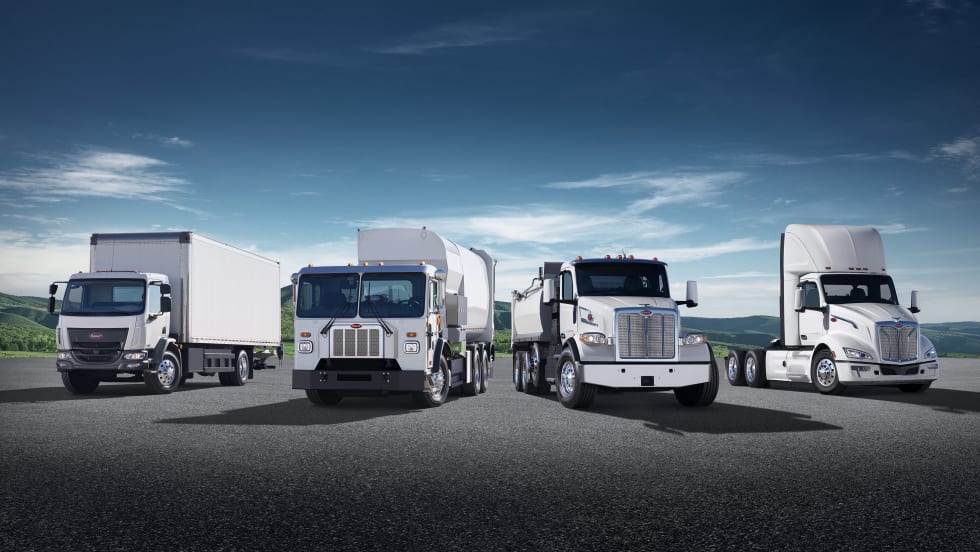
Peterbilt Expands Sourcewell Partnership with Electric Vehicle Lineup
Peterbilt Motors Company’s cooperative purchasing agreement with Sourcewell and its Canadian partner, Canoe Procurement Group, now includes including Peterbilt's battery-electric vehicle lineup.
Read More →