




Study Identifies Heavy-Duty NGVs as Viable Path for Better Air Quality
The peer-reviewed "Pathways to Near-Zero-Emission Natural Gas Heavy Duty Vehicles" report, commission by SoCalGas, calls on California policymakers to enact policies and programs to encourage the development and commercialization of these ultra-low-emission motor vehicle technologies.
As California policymakers and environmental regulators work to balance air quality and climate protection planning, a new study commissioned by Southern California Gas Co. (SoCalGas) suggests that heavy-duty engines powered by natural gas can provide a viable "pathway" that can simultaneously help the state achieve pollution emission and greenhouse gas (GHG) reduction targets.
The peer-reviewed "Pathways to Near-Zero-Emission Natural Gas Heavy Duty Vehicles" report calls on California policy makers to enact policies and programs to encourage the development and commercialization of these ultra-low-emission motor vehicle technologies. The report was prepared by Gladstein, Neandross & Associates, a consulting firm with expertise in alternative transportation fuels and technologies.
Notably, the authors found "technology forcing" requirements, which direct manufacturers to phase-in sales of battery-electric vehicles or large transit fleets to buy zero-emission buses, have not resulted in the commercialization of zero-tailpipe emission vehicles as quickly as air quality regulators hoped or planned.
"This study's findings align with what the transportation industry marketplace is already demonstrating through increasing adoption of ultra-low emission natural gas-powered heavy-duty engines in trucking, shipping and public transportation such as buses and sanitation trucks," said Rodger Schwecke, vice president of customer solutions for SoCalGas.
By contrast, zero emission vehicle mandates spurred tremendous innovation by manufacturers of internal combustion engines, emission control equipment, and advanced vehicle drive trains, resulting in significantly increased options available to policy makers to meet the state's air quality and GHG reduction goals.
"Many state planning documents rely exclusively on electric vehicle technology that may not be viable in heavy-duty applications and we hope the study will encourage California's policy makers to implement policies to support the development of other viable 'pathway' technologies to help meet environmental goals in the near-term," added Schwecke.
Heavy-duty vehicles fueled by natural gas are recognized by the California Air Resources Board (ARB) as a method of reducing GHG emissions. Today's commercially available natural gas engines already emit nitrogen oxides (NOx) at levels well below the current (2010) federal heavy-duty engine standard.
This provides a low-emission, low-carbon baseline upon which engineers have begun to apply well understood technologies to improve the emissions performance and fuel efficiency of conventionally-fueled engines.
Engine manufacturers have already begun integrating technologies into natural gas heavy-duty engines, and are expected to bring products to market in the next few years with NOx emissions less than 0.05 g/bhp-hr. At the same time, advancements in engine and vehicle design will dramatically increase fuel efficiency, thereby reducing GHG emissions.
Additional top-level findings include:
Near term utilization of technologies such as optimized compression ratios, enhanced three-way catalysts, integration of electric and hydraulic hybridization, improved aerodynamics, and low pressure storage are expected to help reduce NOx emissions from natural gas heavy-duty vehicles by 75 percent.
Research indicates that heavy-duty natural gas engines are on a trajectory to be certified at a NOx level of 0.02 g/bhp-hr, an emissions level so low that it equates to the power plant emissions that would result from charging an electric vehicle of a comparable size.
Technologies currently being developed, include advanced after-treatment and waste heat recovery, lean burn plus lean NOx emissions traps, integration of zero-emission miles technologies, further refinements in reducing friction and parasitic energy losses, and widespread utilization of renewable and hydrogenized natural gas.
Integration of these technologies will increase the likelihood that California can meet smog reduction requirements, and also help heavy-duty natural gas engines meet the 2050 goal to reduce GHG emissions by 80 percent.
The entire report is available here: Pathways to Near-Zero-Emission.
More Utility Fleet
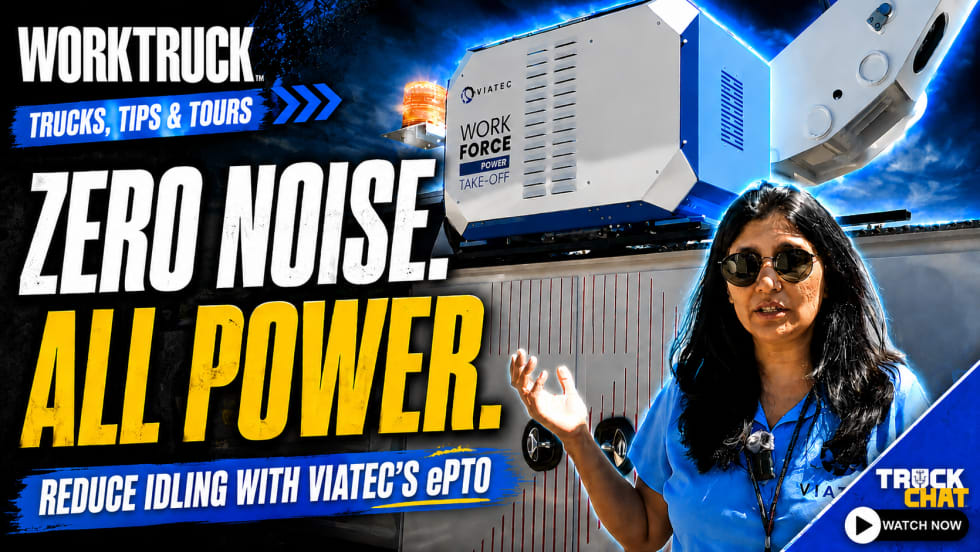
Reduce Noise & Idling with Viatec’s ePTO
Viatec's Workforce ePTO lets utility trucks power booms, outriggers, and auxiliary equipment using battery power instead of idling the engine. Learn how this technology helps reduce fuel use, noise, engine wear, and emissions while improving operator comfort.
Read More →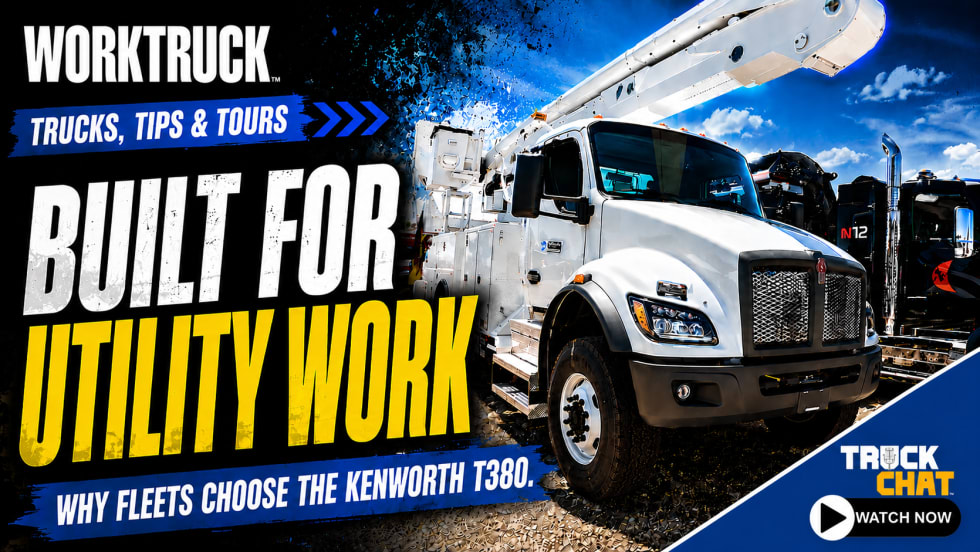
Why Utility Fleets Choose the Kenworth T380
The Kenworth T380 is engineered for utility fleets with custom chassis layouts, optimized frame rails, 4x4 capability, and improved driver visibility. See how its design helps maximize upfit flexibility and field performance.
Read More →
PALFINGER PB 38 AT P: Purpose-Built for Telecom Fleets
Purpose-built for telecommunications crews, the PALFINGER PB 38 ATP combines a 43-foot working height, flexible basket stowage, integrated cameras, and operator communication systems to improve productivity and safety during fiber and overhead cable installation.
Read More →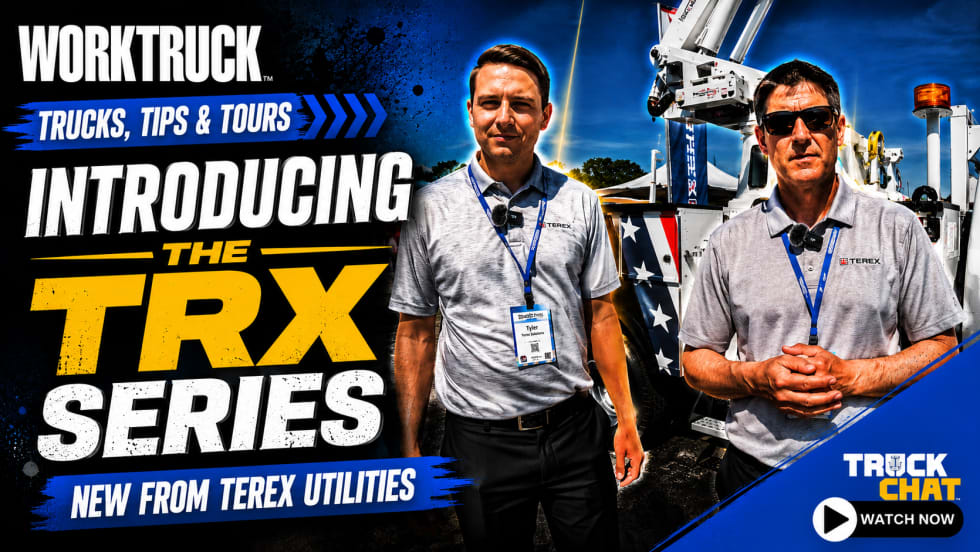
Inside Terex Utilities' Latest Work Truck Innovations
Terex Utilities is advancing utility fleet operations with its new TRX aerial platforms, Flex Pro controls, and AI-powered 3rd Eye safety technology. See how these innovations are helping fleets work safer, smarter, and more productively.
Read More →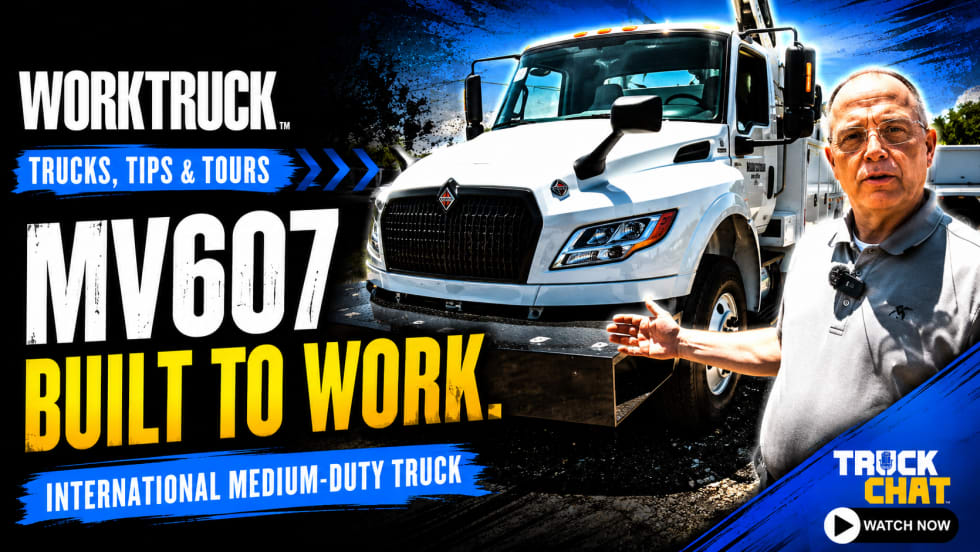
Walkaround of International MV607 Digger Derrick
The International MV607 combines advanced safety technologies, excellent visibility, vocational flexibility, and seamless body integration to create a powerful platform for utility fleet operations. Take a closer look at this Altec digger derrick configuration from EUFMC.
Read More →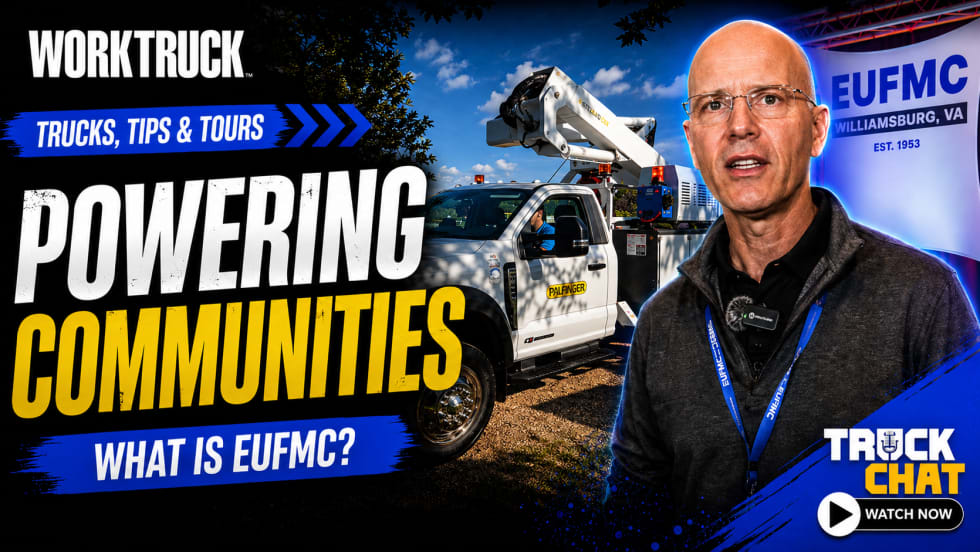
Inside the Electric Utility Fleet Managers Conference
What is EUFMC? For more than seven decades, the Electric Utility Fleet Managers Conference has served as a hub for collaboration, education, and innovation within the utility fleet industry. In this video, Work Truck talks to EUFMC President Greg Loew to learn more.
Read More →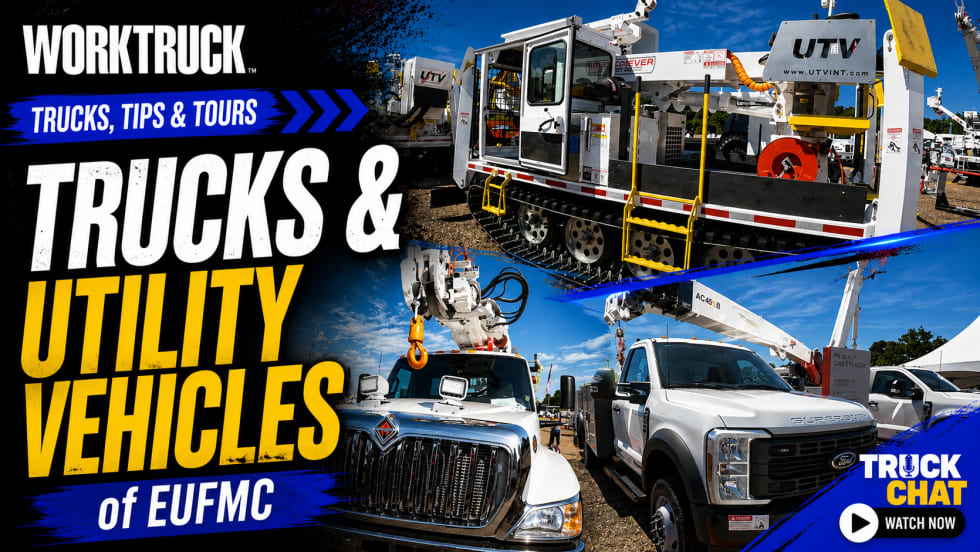
Inside the EUFMC Equipment Expo & Drive-Through
Follow Work Truck as we check out the trucks and other vehicles that were showcased at the Electric Utility Fleet Managers Conference in Williamsburg, Virginia. Whether looking for something on tires or treads, it was there for fleet managers to see.
Read More →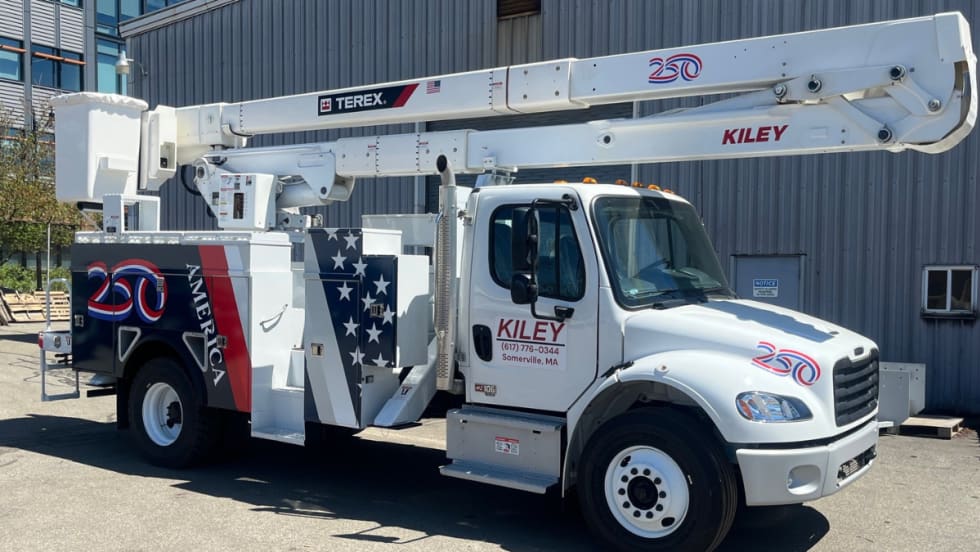
Terex Utilities & Kiley Unveil Custom America 250 Bucket Trucks at EUFMC 2026
Terex Utilities showcased a patriotic spirit in its booth this week during the Electric Utility Fleet Managers Conference in Williamsburg, Virginia, by debuting two custom-wrapped bucket trucks celebrating America’s upcoming 250th anniversary.
Read More →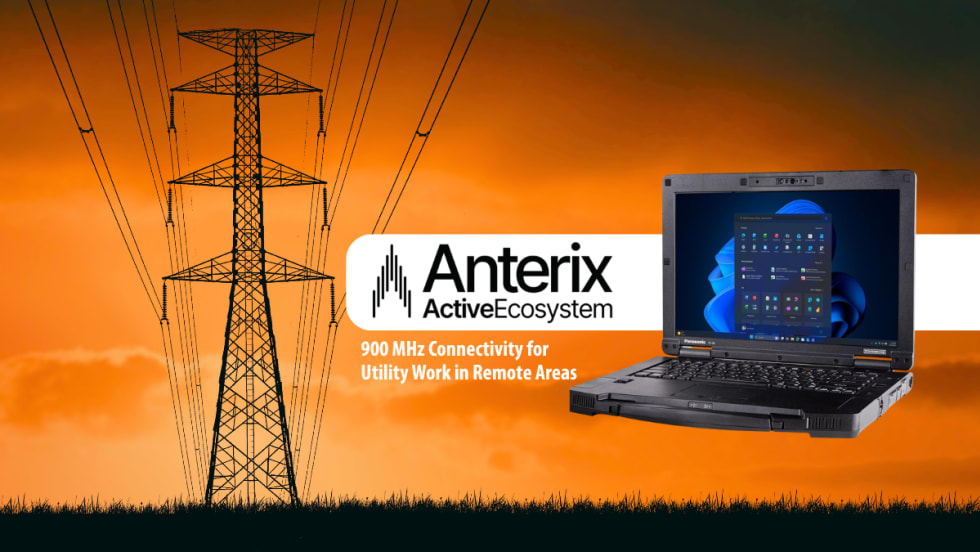
Panasonic Connect & Anterix Strengthen Connectivity Options for Utilities and Field Workers
The Panasonic Connect Toughbook 56 is the first Toughbook to earn the AnterixActive badge, which means it can connect to and operate on Anterix’s 900 MHz network even in the most remote locations.
Read More →
Streamlight Launches Portable Scene Light III & LiteBox 1Million
Streamlight has launched its Portable Scene Light III (PSL III), which delivers up to 10,000 lumens, and the LiteBox 1Million, a long-range search light that delivers one million candela.
Read More →