





Learn More: 2026 Outlook for EV Truck Charging
Royal Waste Services Expands Mack LR Electric Fleet
Waste Connections, which reported success after deploying its first Mack LR Electric in December 2025, will now add three more to its refuse fleet.
February 19, 2026
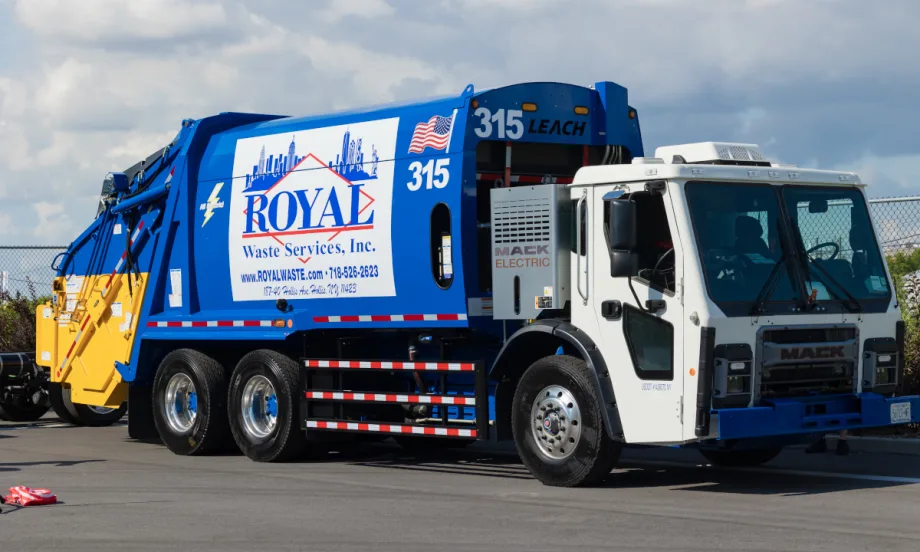
Royal Waste Services has ordered three additional Mack LR Electric refuse trucks after deploying its first LR Electric in December 2025.
Credit: Mack Trucks
3 min to read
Royal Waste Services, a Waste Connections subsidiary, has ordered three additional Mack LR Electric refuse trucks, funded through the New York Truck Voucher Incentive Program (NYTVIP). The order follows the company’s initial LR Electric deployment in December 2025.
That first truck has accumulated more than 500 miles and collected 600 tons of municipal solid waste since December, all with zero downtime.
New York State Zero-Emission Funding
NYTVIP is administered by the New York State Energy Research and Development Authority (NYSERDA) and provides vouchers to fleets across New York State that purchase or lease zero-tailpipe emission battery-electric or hydrogen fuel-cell electric vehicles.
The program supports the state’s goal of reducing greenhouse gas (GHG) emissions and improving air quality, particularly in disadvantaged communities.
“Royal Waste Services’ decision to expand its Mack LR Electric fleet demonstrates the operational viability of electric refuse vehicles in demanding urban environments,” said George Fotopoulos, Mack Trucks vice president and e-mobility business unit leader. “The company’s continued investment in zero-tailpipe emission technology reflects both the performance of the LR Electric and its commitment to sustainable waste collection operations in New York.”
Mack Trucks said that in its first eight weeks of operation, Royal Waste Services’ initial LR Electric demonstrated strong reliability and efficiency, collecting approximately 75 tons of waste per week while maintaining 100% uptime.
Drivers have reported reduced fatigue due to the absence of engine vibration, along with improved control and responsiveness compared with traditional diesel units on stop-and-go collection routes.
“After seeing positive results with our initial Mack LR Electric, and with the support from the voucher incentive program, adding three more units was a natural next step for our fleet,” said Michael Angelo Reali, district manager for Royal Waste Services. “The move to electric propulsion delivers environmental and community benefits, enhances driver comfort, and provides fuel and maintenance cost savings.”
Royal Waste Services received its first Mack LR Electric in early 2025 as part of “The Bronx Is Breathing” initiative, a project funded through the New York Clean Transportation Prizes program.
Features of the Mack LR Electric
The Mack LR Electric features a standard 376 kWh total battery capacity, providing extended range between charges. Twin electric motors produce 448 continuous horsepower and 4,051 lb.-ft. of peak torque output from zero RPM, making it well-suited for the stop-and-start demands of urban refuse collection.
The vehicle’s four NMC (Nickel Manganese Cobalt Oxide) lithium-ion batteries are charged through a 150 kW, SAE J1772-compliant charging system, and a two-stage regenerative braking system recaptures energy from the hundreds of stops the vehicle makes each day.
The LR Electric is easily recognizable by its copper-colored Bulldog on the cab, denoting the all-electric powertrain. The vehicle offers the same driver- and passenger-side configurations and customization options as the diesel-powered Mack LR model.
More Green Fleet

Fleet Forward Conference Introduces One-Day Passes for 2026
New one-day registration gives fleet professionals the flexibility to attend Tuesday, Wednesday, or Thursday, with passes available for $199 through Sept. 18.
Read More →
CALSTART Rebrands as Catalyst Mobility, Will Combine with Forth in 2027
CALSTART has rebranded as Catalyst Mobility and will combine with Forth at the start of 2027. The new organization said it is poised to become one of the world's largest, strongest, and most impactful clean transportation nonprofits.
Read More →
Electric Truck and Charging Programs to Boost Sustainability at NY & NJ Ports
Together, the Port Authority of New York and New Jersey and CALSTART will electrify drayage and terminal operations serving the East Coast’s busiest container port. A pair of incentive programs totaling $45 million has launched to accelerate adoption of zero-emission drayage trucks and terminal tractors.
Read More →
Xos Hub Surpasses One Gigawatt-Hour of Energy Delivered in the Field
A single Xos Hub has surpassed one gigawatt-hour of energy across more than 33,600 charging sessions in the field, demonstrating performance that supports Xos' expansion across new products and markets.
Read More →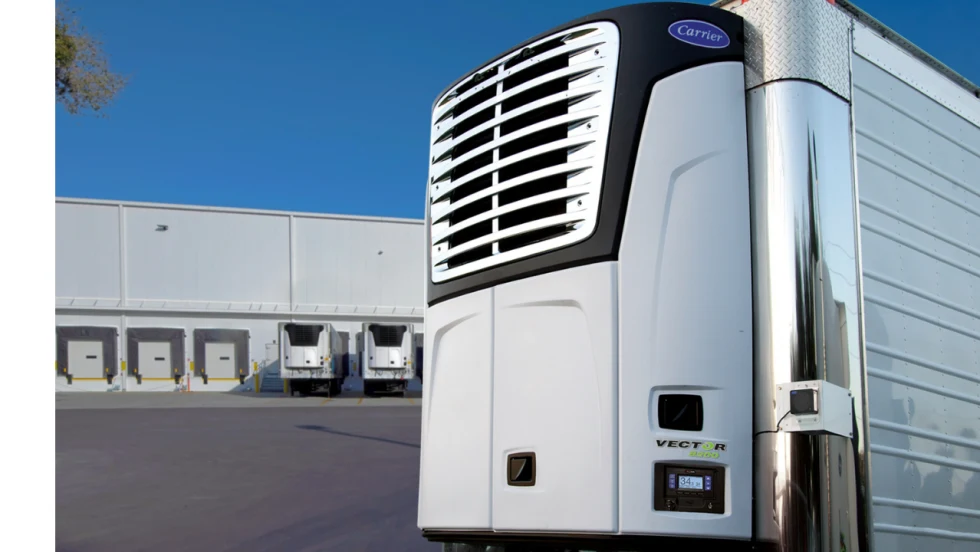
Carrier Transicold Launches All-Electric Vector 8200 TRU for Diesel-Free On-Site Cold Storage
Carrier Transicold’s first engineless multi-temperature TRU helps fresh- and frozen-food fleets add supplemental cold storage capacity during seasonal peaks.
Read More →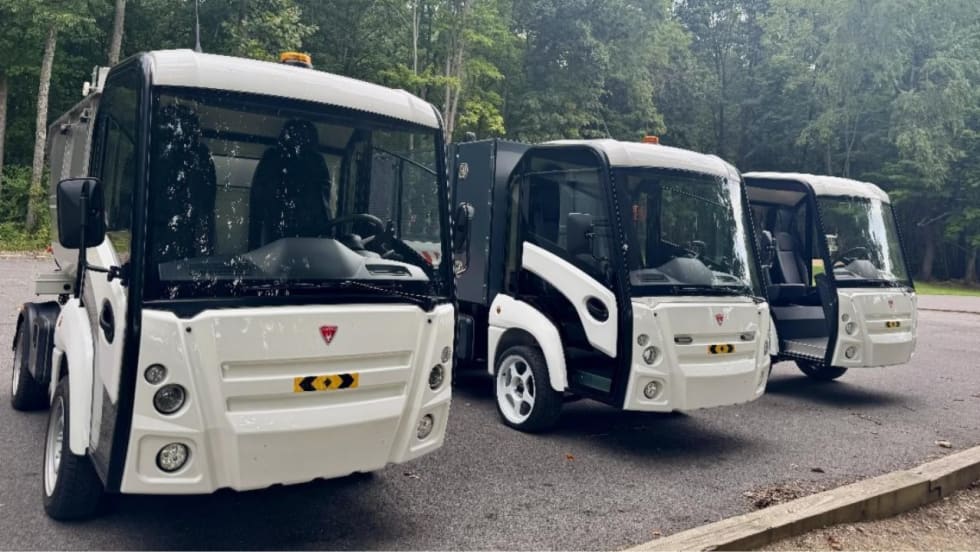
Narro Trucks Introduces Electric Utility Vehicle
Narro Trucks officially launched its operations on Aug. 20 and hosted a ride and drive to showcase its electric truck, which will be produced in Virginia.
Read More →
Samsung SDI Takes Full Control of GM Battery JV as Indiana Plant Pivots to Energy Storage
Samsung SDI is taking full control of its Indiana battery plant with GM, marking a major shift from the EV-focused joint venture Charged Fleet first covered in 2023.
Read More →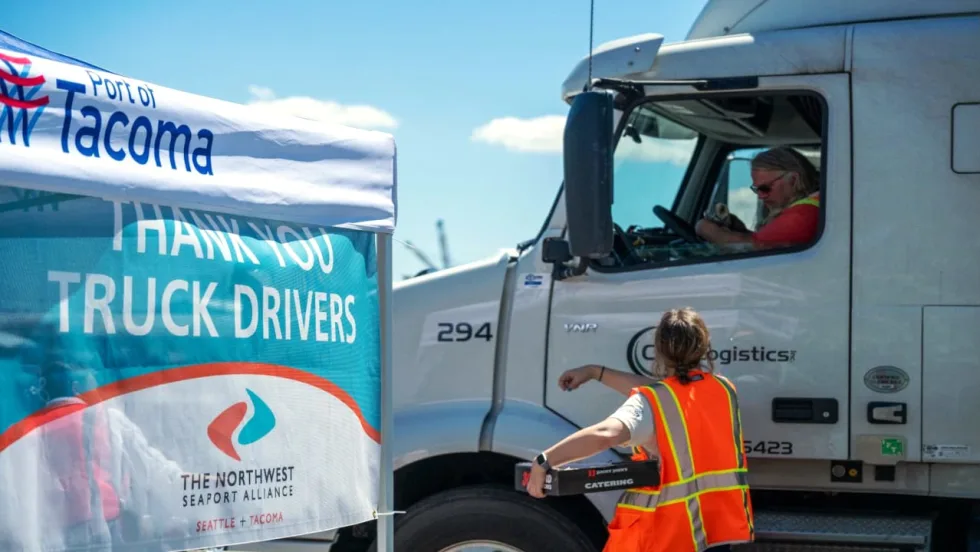
NWSA Taps CALSTART to Administer Zero-Emission Drayage Assistance Program
CALSTART will provide free technical assistance services to drayage fleets serving the Ports of Seattle and Tacoma and looking to transition to cleaner technologies and help decarbonize freight hubs.
Read More →
EV Fleet Reality Check: What Operators Wish They Knew Before Electrifying Their Work Vans
Electric work truck upfits bring new compatibility questions. Learn how parts availability, OEM guidance, power demands, and route planning can affect fleet performance.
Read More →
Peterbilt Expands Sourcewell Partnership with Electric Vehicle Lineup
Peterbilt Motors Company’s cooperative purchasing agreement with Sourcewell and its Canadian partner, Canoe Procurement Group, now includes including Peterbilt's battery-electric vehicle lineup.
Read More →