




Pride Travel Center Offers Propane, Electric, Hydrogen Fueling
One of the first travel centers in the United States to house multiple alternative energy options for vehicles is now open in Connecticut.

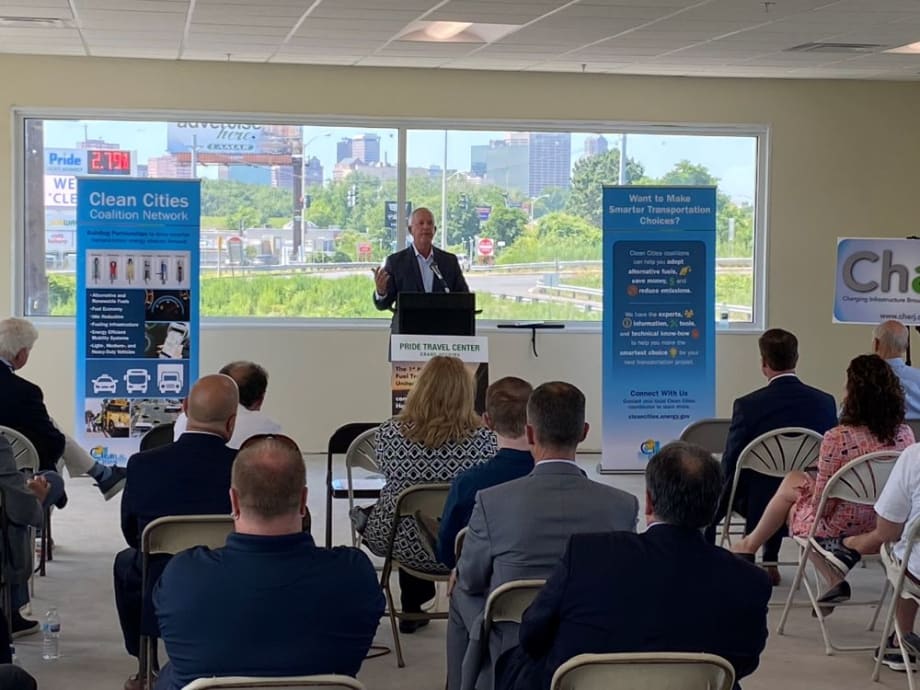
Tucker Perkins, president and CEO of PERC, addresses the crowd during a grand opening ceremony for the Pride Travel Center.
Photo: Pride Travel Center
As the drive for alternative energy source adoption grows stronger, the first fuel travel center in the United States to house multiple alternative energy options is now open in Hartford, Connecticut.
The Pride Travel Center, a 7-acre facility located off I-91, has 12 bays of covered fueling for cars on the south side for personal vehicles and eight bays of covered fueling for large trucks on the north side. In addition to traditional gasoline and diesel, it boasts Tesla EV stations, a hydrogen fueling station, two quick-fueling EV stations for non-Tesla vehicles, and a propane fueling station. Plus there's infrastructure for compressed natural gas fueling in the future, reported the Hartford Courant.
“This Pride Travel Center is the first travel center in the United States to offer these three clean alternative fuels: which include, hydrogen, propane, DC fast chargers, and Tesla SuperChargers as well,” explained Craig Peters, of Capitol Clean Cities of Connecticut, during the grand opening, according to local news coverage.
At the grand opening cars, trucks, and buses that use these alternative fuels were on display, including the hydrogen-fuel-cell Toyota Mirai.
Propane Autogas
During a grand opening ceremony hosted by Pride Stores and Capitol Clean Cities of Connecticut, propane autogas vehicles from Nestlé Waters, Yale University, and Simsbury Public Schools were on display alongside the state-of-the-art propane infrastructure from Superior Energy Systems (SES). The 18,000-gallon tank and dispenser include SES software that tracks data like driver and vehicle identification, mileage, and gallons pumped, providing a convenient experience for fleets.
“Over the past five years, we have seen substantial growth of work truck fleets utilizing propane to significantly lower their emissions, thanks in large part to the success of cloud-based fleet management software,” said Jim Bunsey, director of operations for Superior Energy Systems. “By providing users with convenient, affordable, and reliable refueling, it’s never been easier for fleets to take advantage of this ideal energy source for clean transportation.”
In addition to being a low-carbon energy source, today’s propane autogas ultra-low nitrogen oxide (NOx) engines are 90% cleaner than Environmental Protection Agency standards and reduce NOx emissions by 96% compared to the best-in-class clean diesel engine. Propane autogas’s ability to significantly reduce these harmful emissions to near-zero levels make it a compelling choice for fleet owners.
“Propane autogas plays a critical role in clean transportation, and the addition of this essential energy source at the Pride Travel Center underscores the vital position propane autogas has in achieving net-zero emissions goals,” said Tucker Perkins, president and CEO of the Propane Education & Research Council. “This is especially true for medium-duty fleet owners looking for an alternative energy that can improve air quality without sacrificing on range, payload, or torque.”
More Green Fleet

Fleet Forward Conference Introduces One-Day Passes for 2026
New one-day registration gives fleet professionals the flexibility to attend Tuesday, Wednesday, or Thursday, with passes available for $199 through Sept. 18.
Read More →
CALSTART Rebrands as Catalyst Mobility, Will Combine with Forth in 2027
CALSTART has rebranded as Catalyst Mobility and will combine with Forth at the start of 2027. The new organization said it is poised to become one of the world's largest, strongest, and most impactful clean transportation nonprofits.
Read More →
Electric Truck and Charging Programs to Boost Sustainability at NY & NJ Ports
Together, the Port Authority of New York and New Jersey and CALSTART will electrify drayage and terminal operations serving the East Coast’s busiest container port. A pair of incentive programs totaling $45 million has launched to accelerate adoption of zero-emission drayage trucks and terminal tractors.
Read More →
Xos Hub Surpasses One Gigawatt-Hour of Energy Delivered in the Field
A single Xos Hub has surpassed one gigawatt-hour of energy across more than 33,600 charging sessions in the field, demonstrating performance that supports Xos' expansion across new products and markets.
Read More →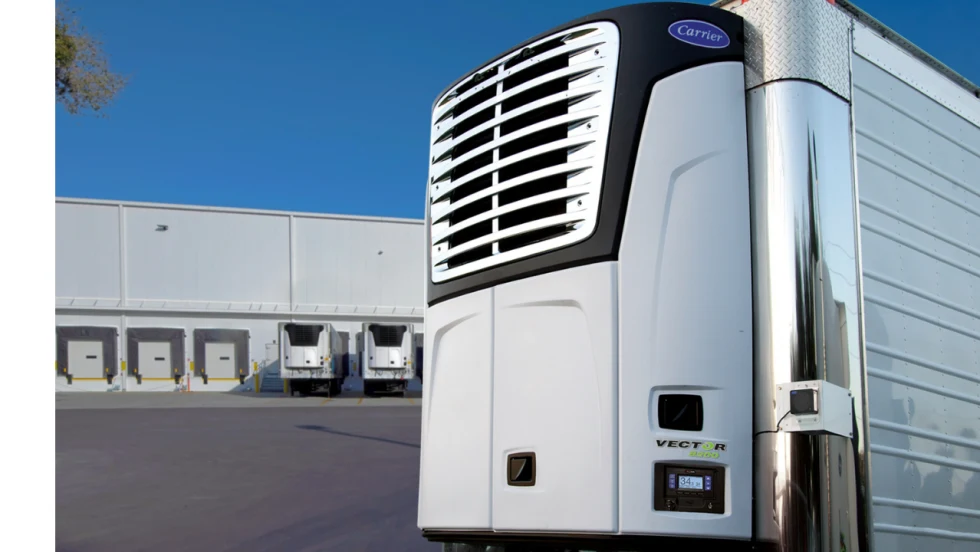
Carrier Transicold Launches All-Electric Vector 8200 TRU for Diesel-Free On-Site Cold Storage
Carrier Transicold’s first engineless multi-temperature TRU helps fresh- and frozen-food fleets add supplemental cold storage capacity during seasonal peaks.
Read More →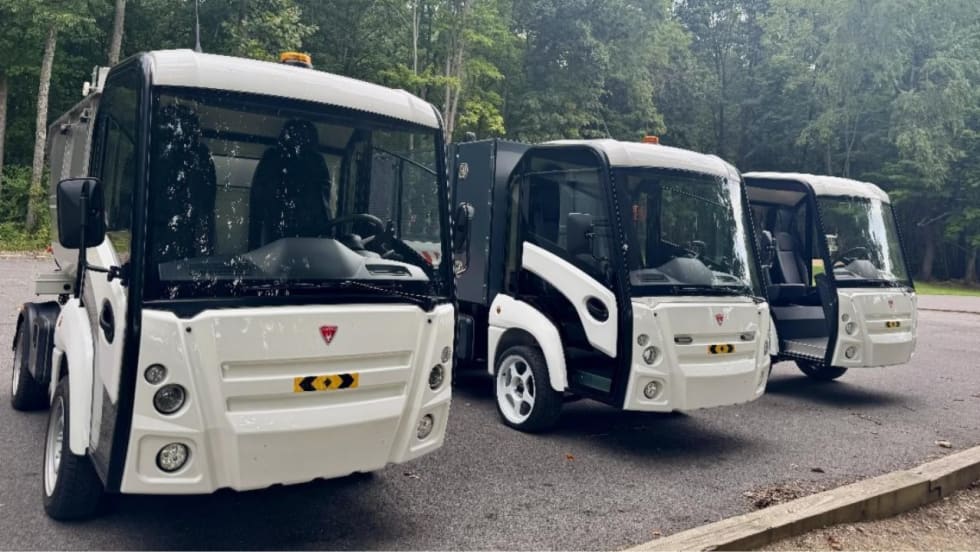
Narro Trucks Introduces Electric Utility Vehicle
Narro Trucks officially launched its operations on Aug. 20 and hosted a ride and drive to showcase its electric truck, which will be produced in Virginia.
Read More →
Samsung SDI Takes Full Control of GM Battery JV as Indiana Plant Pivots to Energy Storage
Samsung SDI is taking full control of its Indiana battery plant with GM, marking a major shift from the EV-focused joint venture Charged Fleet first covered in 2023.
Read More →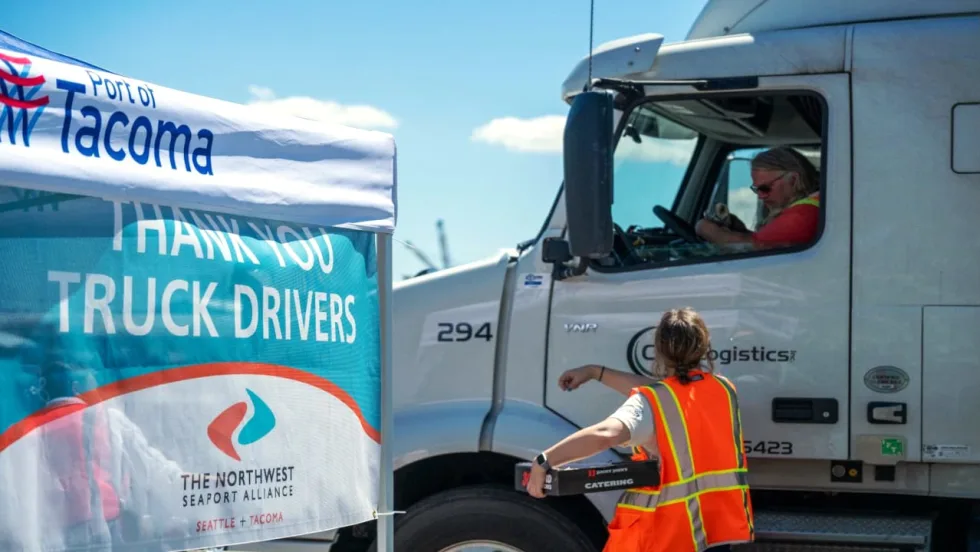
NWSA Taps CALSTART to Administer Zero-Emission Drayage Assistance Program
CALSTART will provide free technical assistance services to drayage fleets serving the Ports of Seattle and Tacoma and looking to transition to cleaner technologies and help decarbonize freight hubs.
Read More →
EV Fleet Reality Check: What Operators Wish They Knew Before Electrifying Their Work Vans
Electric work truck upfits bring new compatibility questions. Learn how parts availability, OEM guidance, power demands, and route planning can affect fleet performance.
Read More →
Peterbilt Expands Sourcewell Partnership with Electric Vehicle Lineup
Peterbilt Motors Company’s cooperative purchasing agreement with Sourcewell and its Canadian partner, Canoe Procurement Group, now includes including Peterbilt's battery-electric vehicle lineup.
Read More →