




PHH Study Finds Preventive Maintenance Programs Reduce Truck and Car Downtime
For many companies, downtime is not an abstract concept and can be calculated in dollars and cents, but translating how PM, or the lack thereof, affects downtime is a different matter.

Fleet management company PHH Arval asked a third-party company to analyze the maintenance and repair transactions of its clients to determine whether preventive maintenance programs actually do reduce the amount of downtime its clients’ vehicles experience. For many companies, downtime is not an abstract concept and can be calculated in dollars and cents, but translating how PM, or the lack thereof, affects downtime is a different matter. Work Truck spoke with PHH Arval’s Bill Jones, director, PHH product management, about the study and what the FMC found.
According to Jones, in April of this year, the third-party that did the analysis for PHH looked at 130,000 repair transactions that occurred over the last three years for 100 clients. These fleets had a minimum of 20-percent medium and heavy-duty trucks. He said the study broke out the repair transactions tracked for those clients into two groups, assets in a PM program and those that weren’t. From there, the study looked at scheduled maintenance and repairs required for breakdowns that took a given vehicle off the road.
The key finding from the study is that fleet vehicles participating in a PM program experience roughly 20-percent fewer days down per service repair (i.e., unusable by employees for business purposes) than those that aren’t in a PM program. Jones went on to explain how this affects a fleet’s costs.
“One of the interesting things is that those clients that participate in a rigorous PM program may spend a little more on maintenance,” Jones said. “One of the things we hear in the market is that clients who institute a PM program get pushback when maintenance expenses initially go up. It turns out that they were paying for those expenses in a way that couldn’t be tracked. Part of the advice we are giving clients is how to represent the value of a PM program internally. It’s not just about the cost of a repair. Often, the reason they’re not doing scheduled maintenance in the first place is because they have to keep the vehicle on the road.
Ultimately, they’re spending more time with the asset down by doing less maintenance.”
For fleet managers, Jones said PHH is working with its clients to help them translate downtime into costs that others in their respective organizations can understand.
“One thing we hear from clients with some regularity is that the biggest cost is the lost opportunity for sales,” Jones said. “They have time-sensitive delivery schedules. They lose sales to competitors because they can’t meet delivery schedules.”
One more direct cost is for towing a vehicle that suffered a breakdown. In addition, fleets with specialized vehicles can’t easily get a timely replacement asset.
“With a car fleet, you can easily go out and rent a car,” he said. “With a work truck, you can’t necessarily run out and rent another truck. You’ve got inventory, tools, and the upfit. It knocks the vehicle out of service.”
What about having a pool of backup vehicles? Not in today’s competitive business world.
“We hear that in recent years many organizations have leaned out their fleets,” said Jones. “In the past, they might have had another truck in the back that they could put into service. That frequently is no longer an option.”
A “soft” downtime cost noted by Jones is the inability to accurately budget for breakdown repairs. This problem is similar to what fleets experience with fuel prices. In the case of calculating maintenance and repair costs, the goal is to take as much unpredictability out of the equation as possible.
When it comes to PM programs, getting drivers to participate can be a challenge, depending on the type of fleet and whether assets are in a motor pool or assigned to specific drivers. In motor pools, a company’s branch or regional manager in charge of drivers is often aware of the impacts of downtime on scheduling and can be an ally in ensuring PM program compliance.
For companies that assign vehicles, there are a variety of ways to ensure compliance. Some examples given by Jones include incentive programs, where drivers can earn points and use them for rewards, including time off. He also noted its PM program features automated email reminders sent to a client’s designated employees.
Overall, scheduled maintenance is better than unscheduled repairs for a variety of reasons. The key is communicating those costs in order to ensure timely and predictable maintenance costs and schedules.
--By Greg Basich
More Maintenance
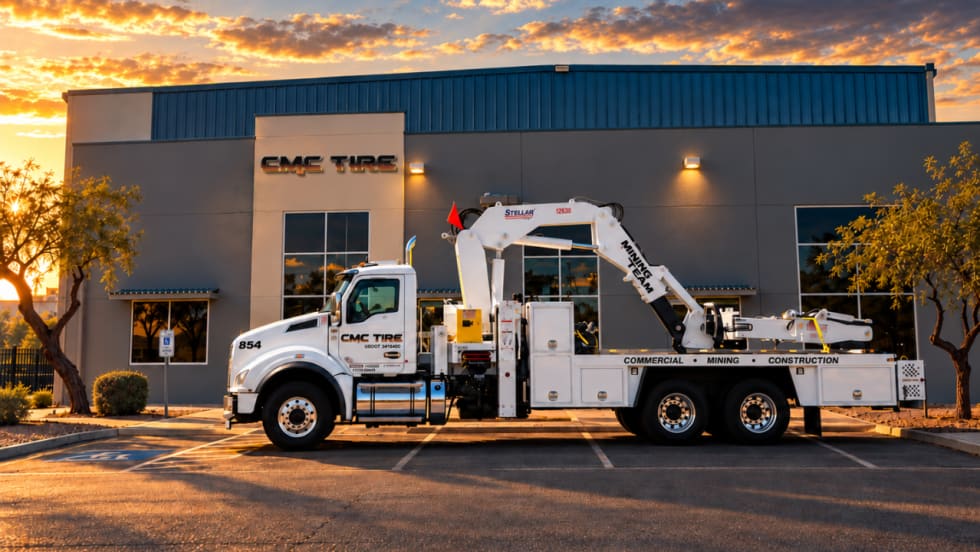
Les Schwab Expands Commercial Tire Footprint Into Arizona
Les Schwab Tires has expanded into Arizona with two commercial tire locations in Phoenix and Tucson, strengthening its fleet service footprint in the Southwest.
Read More →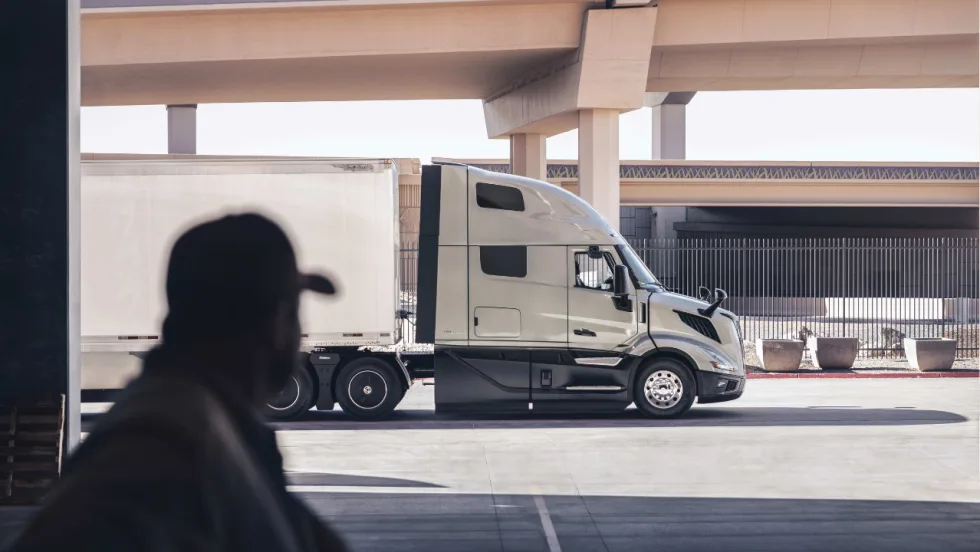
Volvo Trucks’ 'Lock and Leave' Software Updates Go Live Across North America
Unattended over-the-air software updates are now available in Volvo trucks across the U.S. and Canada. The new capability lets trucks stay current with the latest software without interrupting operations or requiring a dealership visit.
Read More →
Why Technician Appreciation Can’t Be a Once-a-Year Thought
For fleets trying to keep skilled technicians, recognition cannot begin and end with Technician Appreciation Week. Learn what year-round appreciation really looks like and why the everyday technician experience matters just as much as pay when fleets are trying to keep good people.
Read More →
How Faster Driver Reporting Can Keep Small Truck Problems Small
When minor damage, warning lights, or equipment issues are reported late, small problems can quickly become bigger maintenance headaches. Conversational AI can help shorten the path from what a driver notices in the field to the person who can act on it.
Read More →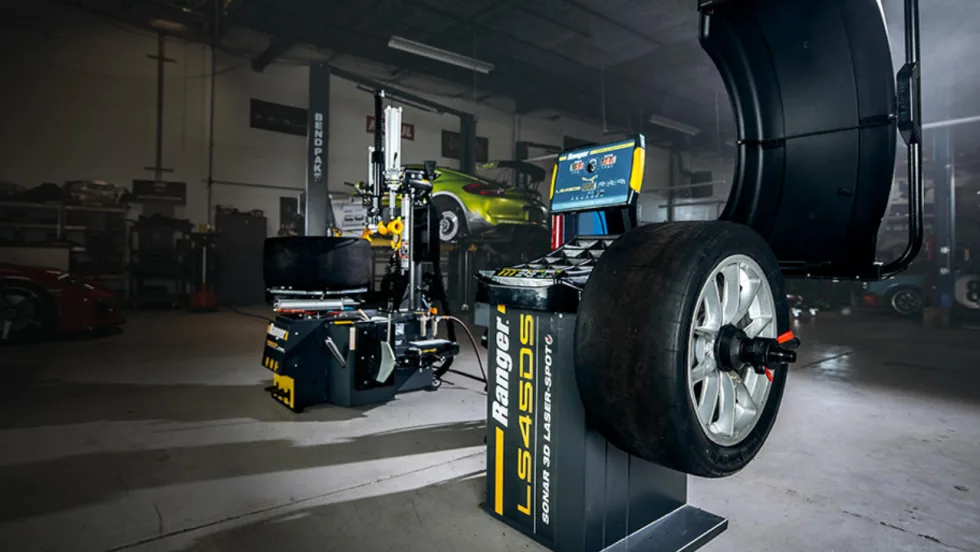
BendPak’s Ranger Wheel Service Equipment Achieves North American Safety Certification
BendPak’s full line of Ranger tire changers and wheel balancers has been ETL certified to UL and CSA standards to improve operator safety.
Read More →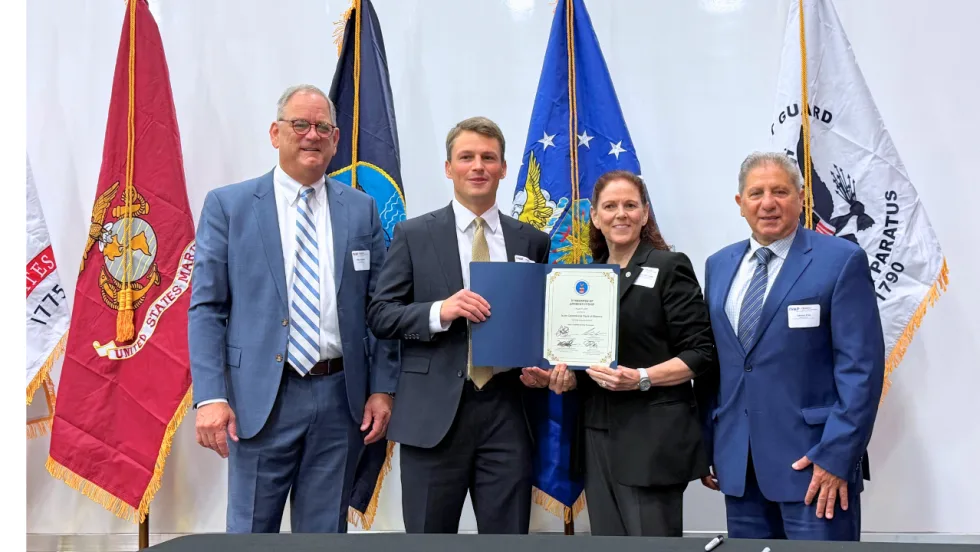
Isuzu & U.S. Department of Labor Celebrate Milestone for Veterans Apprenticeship Program
The Isuzu Veterans Apprenticeship Program (IVAP) signing ceremony highlighted Isuzu’s long-term commitment to veterans, Isuzu dealers, and the skilled workforce supporting its customers and the commercial transportation industry.
Read More →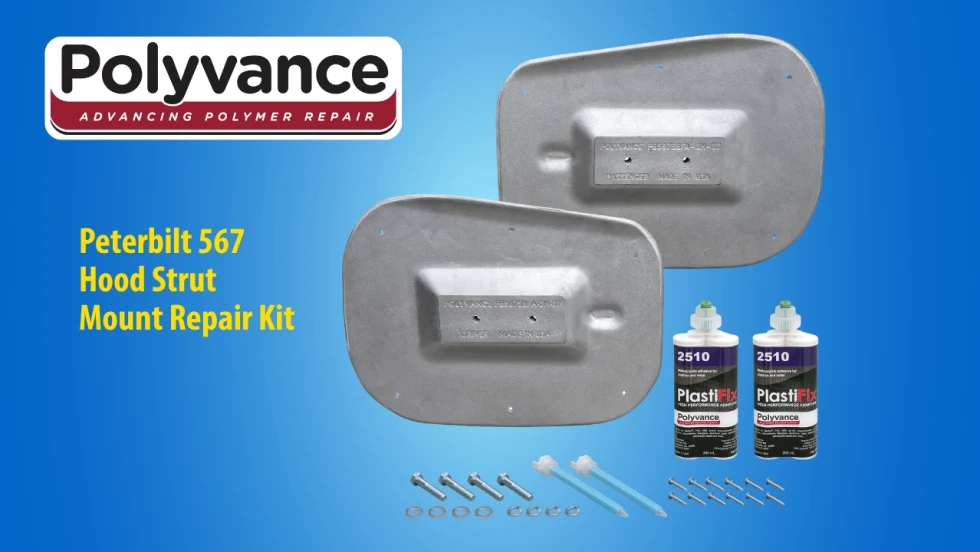
Polyvance Introduces New Peterbilt 567 Hood Strut Mount Repair Kit
Polyvance has launched a repair solution for Peterbilt 567 hood struts, helping truck owners and repair facilities avoid costly hood replacements.
Read More →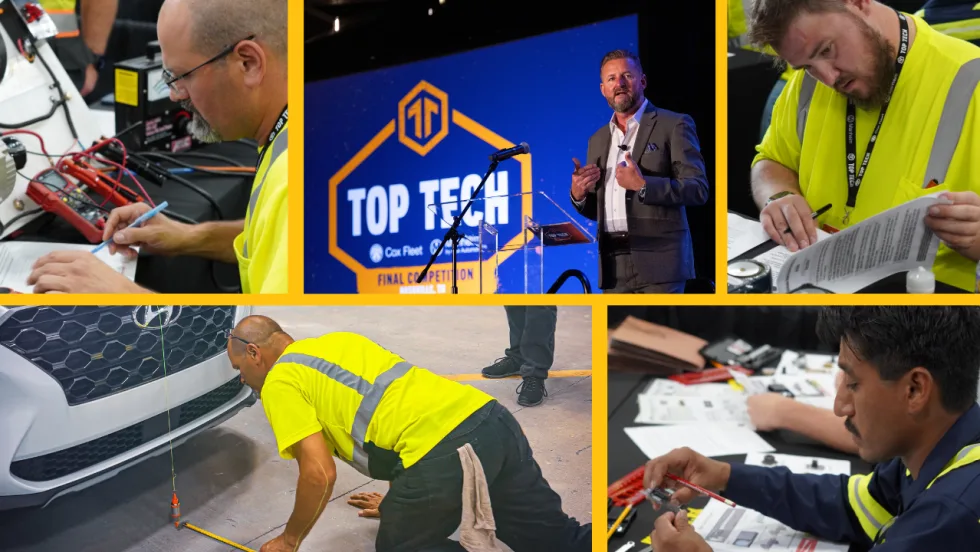
Cox Automotive Celebrates Technical Excellence at 2026 Top Tech Finals
The top technicians from Cox Fleet and Manheim tested their skills in Nashville, Tennessee, at Cox Automotive’s 2026 Top Tech Finals. The overall winners will advance to compete at the American Trucking Association’s TMC SuperTech competition.
Read More →
Grote Industries Appoints Vice President of North American Operations
Grote Industries has appointed Patrick Smith as vice president of North American operations as it celebrates 125 years of innovation and manufacturing excellence. He has more than 20 years of manufacturing leadership experience.
Read More →
Winter Fleet Prep: Expert Tips to Keep Vehicles Running Smoothly
Cold weather can expose weak batteries, tires, fuel systems, and maintenance gaps fast. Use this winter fleet checklist to prepare trucks and drivers before temperatures drop.
Read More →