




New Fuel Economy & GHG Emission Standards Proposed
WASHINGTON - Instead of three standards, the Department of Transportation and Environmental Protection Agency worked with state agencies to propose clearer standards for all automakers, beginning with the 2012 model-year.
WASHINGTON - The U.S. Department of Transportation (DOT) and U.S. Environmental Protection Agency (EPA) jointly proposed a program Sept. 15 to improve vehicle fuel economy and reduce greenhouse gases.
Under the proposed program, which covers model years 2012 through 2016, automobile manufacturers would be able to build a single, light-duty national fleet that satisfies all federal requirements as well as the standards of California and other states. The proposed program includes miles per gallon requirements under National Highway Traffic Safety Administration's (NHTSA) Corporate Average Fuel Economy Standards (CAFE) program and the first-ever national emissions standards under EPA's greenhouse gas program. The collaboration of federal agencies for this proposal also allows for clearer rules for all automakers, instead of three standards (DOT, EPA, and a state standard).
Specifically, the program would:
Increase fuel economy by approximately five percent every year. Model year 2016 vehicles would be required to meet an estimated combined average emission level of 250 grams of carbon dioxide per mile. Under the proposed program, the overall light-duty vehicle fleet would reach 35.5 miles per gallon (mpg) in model year 2016, if all reductions were made through fuel economy improvements. If this occurs, Congress' fuel economy goal of 35.0 mpg by 2020 will be met four years ahead of schedule. This would surpass the CAFE law passed by Congress in 2007 which required an average fuel economy of 35 mpg in 2020.
Reduce greenhouse gas emissions by nearly 950 million metric tons. The proposed standards would require model year 2016 vehicles to meet an estimated combined average emission level of 250 grams of carbon dioxide per mile under EPA's greenhouse gas program. The combined EPA and NHTSA standards would reduce carbon dioxide emissions from the light-duty vehicle fleet by about 21 percent in 2030 over the level that would occur in the absence of any new greenhouse gas or fuel economy standards. The greenhouse gas emission reductions this program would bring about are equivalent to the emissions of 42 million cars.
Conserve 1.8 billion barrels of oil. The program will provide important energy security benefits by conserving 1.8 billion barrels of oil, which is twice the amount of oil (crude oil and products) imported in 2008 from the Persian Gulf countries, according to the Department of Energy's Energy Information Administration Office. These standards also provide important energy security benefits as light-duty vehicles account for about 60 percent of transportation oil use.
NHTSA and EPA expect automobile manufacturers to meet these proposed standards by improving engine efficiency, transmissions and tires, as well as increasing the use of start-stop technology and improvements in air conditioning systems. In doing so, the standards would also promote the more widespread use of advanced fuel-saving technologies such as hybrid vehicles and clean diesel engines.
More Leasing

Wheels Names Matthew Cole President to Advance Fleet Technology and Growth
Matthew Cole brings more than 30 years of automotive and technology leadership to Wheels, including experience with connected and software-defined vehicle technologies.
Read More →
Why Fleets Need More Flexibility in Financing and Asset Strategy
Vehicle costs, resale values, and demand keep shifting. See how fleets can balance leasing, financing, ownership, and rentals without adding unnecessary complexity.
Read More →
What Mike Albert Fleet Solutions’ New CEO Says Will Change for Fleets
Martin Kuhn explains why investments in technology and people are coming, but access to personal customer service must remain the same for fleets of every size.
Read More →
Inside AP Fleet Management’s Move From Financing to Fleet Services
AP Fleet Management President Alex Coveney explains how the company grew from equipment financing into fleet services and what shaped its customer-first approach.
Read More →
Mike Albert CEO Marty Kuhn Sees Technology and Upfitting Driving Fleet Success
New CEO Marty Kuhn highlights work-ready upfitting, fleet technology, and AI-powered insights as key parts of Mike Albert's strategy.
Read More →
Union Leasing Announces New Identity as Moventum Fleet Management
Union Leasing becomes Moventum Fleet Management, reflecting its expanded focus on full-service fleet management and growth.
Read More →
Merchants Fleet Evolves FleetShare
Merchants Fleet’s upgraded FleetShare platform boosts efficiency with keyless access, real-time data, telematics integration, and tools for smarter, scalable fleet management.
Read More →
Element and Motus Team Up to Offer Smarter Mobility Options for Fleets
The goal? Help companies optimize costs, simplify compliance, and support drivers, no matter what they’re driving.
Read More →
Fleet Managers: It's Time to Evaluate Your FMC!
Help shape fleet services! Share your insights in the 2025 Fleet Management Company Research survey. Quick, anonymous, and impactful for fleets of all sizes.
Read More →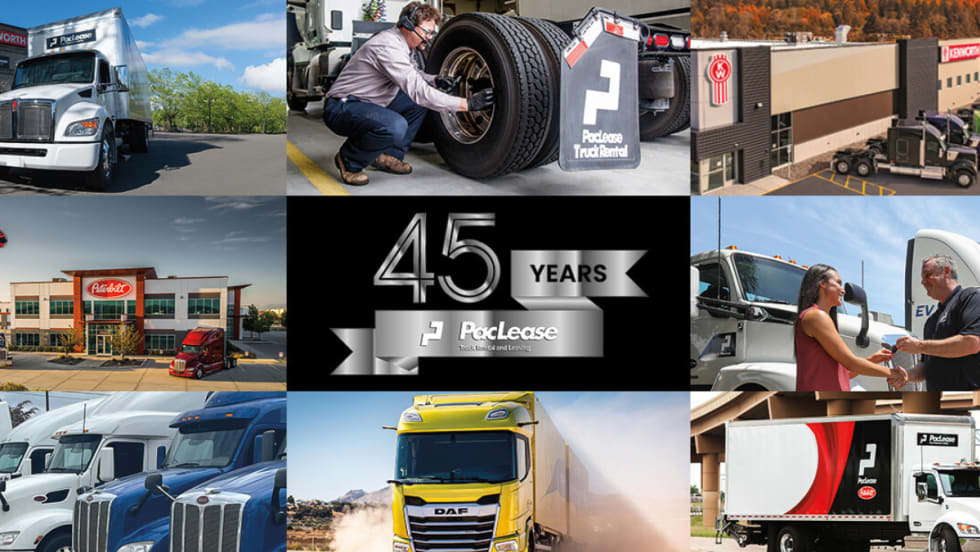
PacLease News: PacLease Celebrates 45th Anniversary
Paccar Leasing’s PacLease marks 45 years of full-service leasing operations, growing from 17 franchises to a global network supporting nearly 41,000 vehicles across five countries.
Read More →