




Motiv Becomes a Truck OEM, Changes Name
Motiv's new CEO, Scott Griffith, talks about the company's direction as an OEM now that it has rebranded to Motiv Electric Trucks.

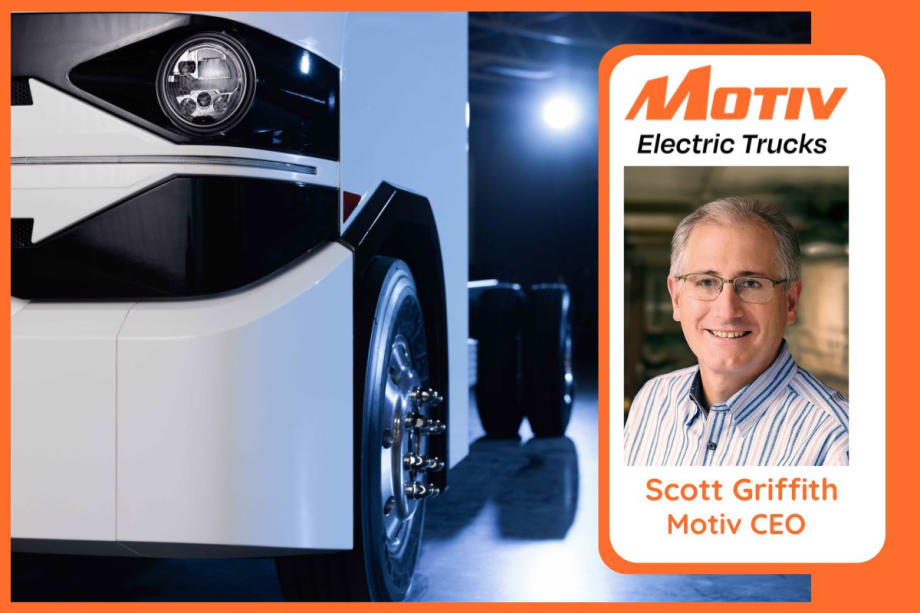
Motiv Power Systems is now Motiv Electric Trucks and has a new CEO.
Photo: Motiv Electric Trucks
A lot is new at Motiv — a new company name, a new chief executive officer, and a new medium-duty electric truck. The company is transitioning from being a producer of powertrains, Motiv Power Systems, into a truck OEM, Motiv Electric Trucks.
The name change to Motiv Electric Trucks has started, and the transition will continue into the coming months. It was kicked off without much fanfare, yet it was timed around the unveiling of the Argo, a battery-electric medium-duty truck designed and built from the ground up by Motiv.
Prior to the Argo launch during the Advanced Clean Transportation (ACT) Expo, Motiv designed powertrains that they would then place into other OEMs’ trucks and sell. With that business model, the company already has about 330 trucks on the road, primarily step vans, that have collectively tallied more than 4 million miles. All are electric and Motiv has supplied trucks to 10 of the largest 20 fleets.
Currently, Motiv trucks are fielded by companies in Arizona, California, Colorado, Connecticut, Illinois, Michigan, New York, Ohio, Pennsylvania, plus Ontario and British Columbia in Canada.
Scott Griffith, who before joining Motiv served as CEO of Ford Motor Company’s Autonomous Vehicles and Mobility Businesses, was named as the new Motiv Electric Trucks CEO in mid-May, just ahead of ACT Expo. He will lead the company as it grows as an electric truck OEM.
“The challenge in front of us is scale and I’m looking forward to Scott’s proven success in building strong teams and high-growth, profitable businesses,” said Jim Castelaz, Motiv’s Founder, chief technology and revenue officer.
Griffith: Medium Duty Segment Primed for Electric Trucks
Griffith has humbly taken his place at the helm, giving due credit to all that Motiv accomplished before his arrival. He compares it to joining the team and already starting on third base with home plate within sight. Motive was founded in 2009 and is based in the San Francisco Bay area.
“I could see the revolution coming in electric vehicles and was really looking for my piece of the rock in the electric vehicle world. I was looking around for the last year or so in the electric vehicle space for a vehicle company to join,” Griffith said.
With Motiv, Griffith found what he describes as a ground-up entrant OEM in the medium-duty truck space. Medium-duty trucks, he pointed out, provide a great opportunity for electrification because they don’t require a broad infrastructure network and the payload, duty cycle, daily miles, and operational time per day are favorable for battery-electric trucks.
With the current technology and batteries, medium-duty trucks are a prime choice for electrification, according to Griffith.
“I think we’re the tip of the spear where we’re going to see rapid adopting of electric trucks in that medium-duty space,” Griffith said.
Pushing Past the Trough of Disillusionment
Griffith said the EV industry now is in what the Gartner Hype Circle methodology terms as the trough of disillusionment. According to executive consulting company Gartner, this is when “Interest wanes as experiments and implementations fail to deliver. Producers of the technology shake out or fail. Investments continue only if the surviving providers improve their products to the satisfaction of early adopters.”
The Gartner Hype Cycle suggests there are five key phases of a technology’s life cycle, which are:
Innovation trigger
Peak of inflated expectations
Trough of disillusionment
Slope of Enlightenment
Plateau of Productivity
So, if EV technology is in the trough of disillusionment now as Griffith said, then the industry will turn the corner and advance two steps to mainstream adoption, the plateau of productivity.
“We have the early adopters, we’re trying to jump to the other side now,” he said. “Now, a lot of the incumbents are struggling with this sort of classic innovator’s dilemma, ‘Do we put out a really great electric product, or do we sort of focus on our current stuff?’” Griffith explained.
What Started as Regulatory Push Now More Widely Adopted
Griffith said he finds it interesting that the move toward decarbonization began as a regulatory push in California but has grown into something more. Not only are other states now following the California example, but companies now are pushing for decarbonization irregardless of any regulatory pressure.
He said he has talked to current and potential fleet customers and is hearing from them that they want to decarbonize, especially consumer brand companies.
“If you're looking at millennials and Gen Z in particular, which are now the biggest buying population in the United States, they're demanding of these big brands that they start to decarbonize and that they start to change their supply chains,” Griffith said. “So, I think what started as a regulatory top-down push, now is becoming a pull from the consumer side, in addition to what we saw in California.”
That is what he calls his big takeaway from talking to people while at ACT Expo.
“They see these big trucks in cities, and they see them coming right to their house to deliver and they're looking for a change. They don't want to see tailpipes anymore,” he added.
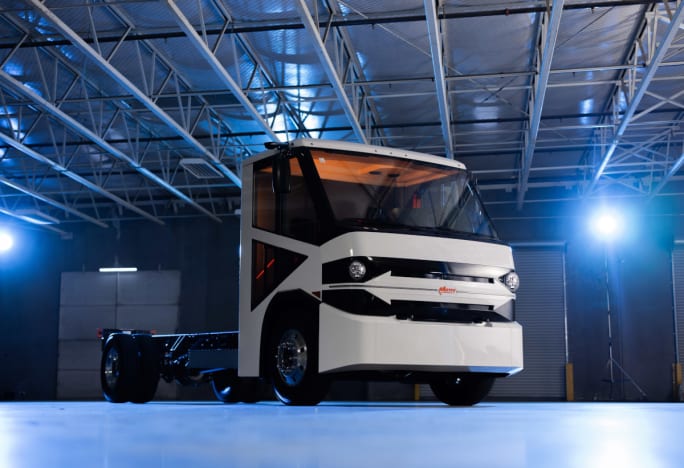
Argo's cab design centered around driver accessibility, better visibility, and weight reduction that allows more payload capability.
Photo: Motiv Electric Trucks
Design Can Help Consumers Know They Saw an EV Truck
With the increased consumer push to drive companies toward decarbonization and sustainability, it helps if people can spot a zero-emission vehicle when they see one.
As Griffith pointed out, early battery-electric trucks were electric powertrains fitted into converted traditional trucks, meaning ones powered by internal combustion (ICE) engines. That is what Motiv Power Systems did successfully.
For companies to better draw attention to such converted trucks, most are labeled in some form or fashion as EV, CNG, RNG, or whatever denotes the alternative powertrain that is being used. But from a distance, many of these battery-electric trucks still look like traditional ICE vehicles. That is changing.
The industry is starting to produce electric trucks that do not look the same as their predecessors, the converted ICE trucks. These new generation trucks are designed from the start to be electric vehicles.
Argo is just such a truck. It was designed and built by Motiv as a battery-electric truck.
“That's the coming of age of us as an OEM versus as an integrator and power systems builder,” Griffith said.
Moving forward with Argo, and even past that, as an electric-vehicle OEM Motiv will produce what Griffith calls 100% proprietary builds.
“We completely ground up rethought this whole thing. So, if you start with that perspective, not only do you get a different-looking truck that looks electrified and looks more like today and where the world is moving, it also has better ergonomics, has better safety, has better visibility,” Griffith said. “So, there are features that make it look cool, but also give it more safety and better visibility and better drivability.”
Rebranding to Become Motiv Electric Trucks
Motiv started rebranding to Motiv Electric Trucks at ACT Expo, but Griffith said it is a multi-month transition.
“Motiv Power Systems has been the historical name for the company for quite a while. That really, to me, identifies us more as what we used to be, and as we come of age as an OEM we think Motiv Electric Trucks is really the future. It really identifies us as a truck OEM and we like the word electric in there because that's our commitment and our vision is the electrification of that medium-duty truck business,” Griffith explained.
The first production models of Argo will reach customers in the fourth quarter of this year, said Griffith, and those are already spoken for by customers. For 2024, the number of Argos delivered will be in what the CEO termed as the low double digits. Motiv is currently building production capability and full production of the Argo will ramp up in 2025. The company is developing pre-orders for those 2025 trucks now.
Griffith said he has received “amazing” feedback from customers and ACT Expo attendees.
“They love the capacity — 14,000 pounds is the highest payload of any medium-duty truck. Now, we're able to accomplish that with our composite cab architecture,” Griffith added. “They love the new Gen 6 powertrain, the driver ergonomics, and we're excited to get some of those on the road and get on-the-road feedback.”
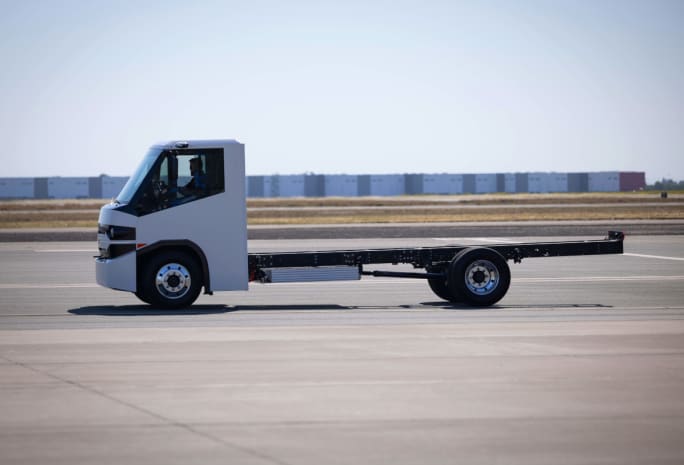
Argo can be tailored to a variety of truck types, including box trucks, refrigerated trucks, bucket trucks, shuttle buses, and more.
Photo: Motiv Electric Trucks
Griffith’s Career Path Focused on Technology and Innovation
Griffith served as CEO of Ford Motor Company’s Autonomous Vehicles and Mobility Businesses, where he oversaw the development of Level 4 autonomous vehicles as well as overseeing Ford’s portfolio of strategic investments in future mobility businesses. But his technology and innovation journey began long before that.
He was the CEO of Zipcar for 10 years and led it from its seed stage. His leadership at Zipcar was validated in a cover story by Fortune Magazine, which proclaimed the car sharing category he developed as “The Best New Idea in Business.” He garnered several rounds of venture capital funding, coordinated acquisitions, and carried the company through to its initial public offering. He later facilitated the sale of Zipcar to Avis Budget Group.
Next, he became an executive-in-residence at General Catalyst Partners (GCP), a venture and growth stage investment firm. In that role, he also was an active chairman in portfolio companies.
While with GCP, Griffith co-founded True Motion, a mobile phone and IOT-based telematics platform with a mission to increase safe driving through real-time, AI-based driver sensing and scoring. The company later merged with Cambridge Mobile Telematics.
More recently, Griffith was appointed to the board at EVgo, a pioneer in the development of large-scale fast-charging networks for electric vehicles.
More Vehicle Research
2026 Ram 1500 Tradesman Put to a Real-World Fleet Test
A few days behind the wheel of a 2026 Ram 1500 Tradesman turned into a test of visibility, parking, work-ready features, and even severe-weather driving.
Read More →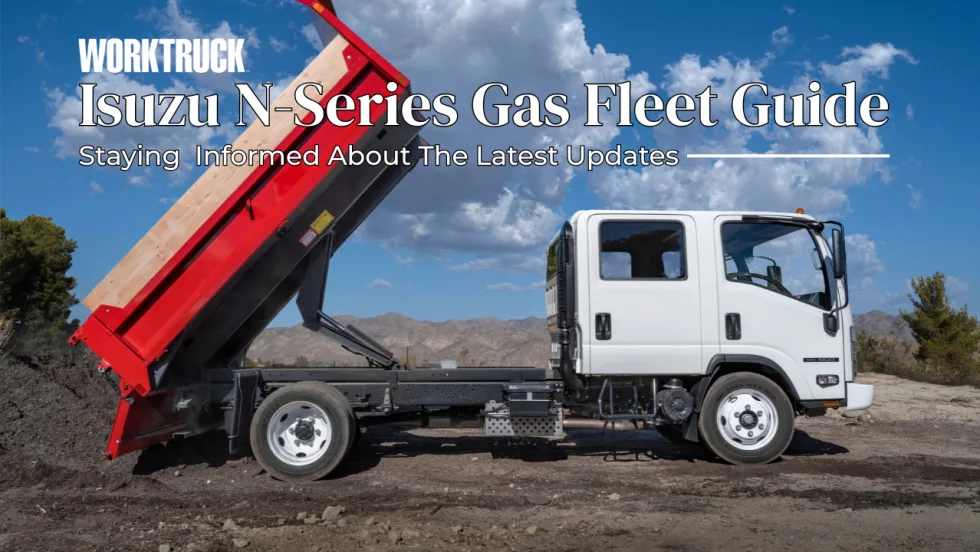
Isuzu N-Series Gas Fleet Guide: Specs, Capability and 2027 Model-Year Updates
Explore Isuzu Truck North America’s N-Series Gas fleet specs, engine performance, GVWR and payload capability, configurations, chassis dimensions, work-focused features, and 2027 model-year information.
Read More →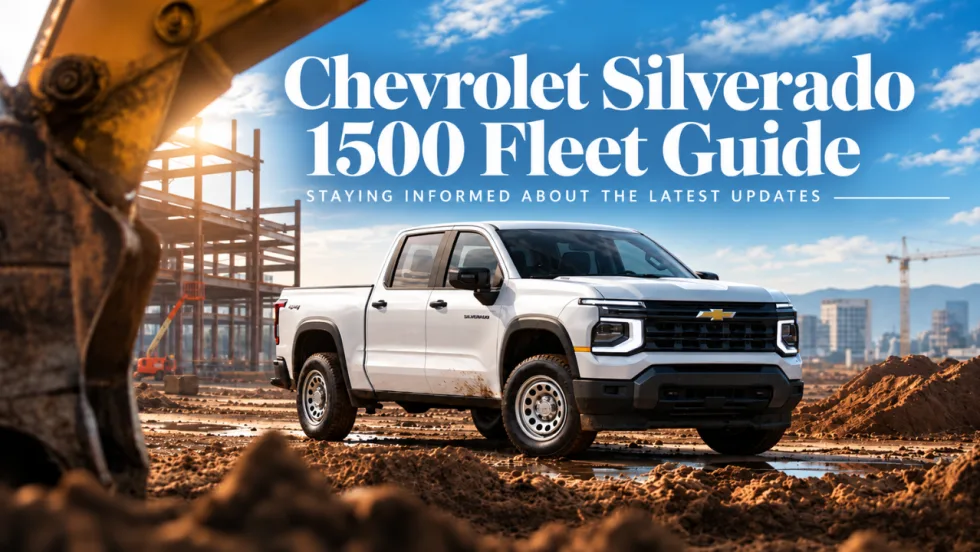
Chevrolet Silverado 1500 Fleet Guide Specs Capability and 2027 Model-Year Updates
The next-generation 2027 Chevrolet Silverado 1500 brings new V-8 engines, updated technology, expanded safety features, and a fleet-focused Work Truck. Here’s what commercial fleets need to know so far.
Read More →
Ram ProMaster City Fleet Guide Specs Cargo Capacity and 2027 Updates
Work Truck’s Ram ProMaster City Fleet Guide tracks the latest specifications, cargo capability, configurations, fleet technology, pricing, and model-year updates for Ram’s mid-size commercial van.
Read More →
Ford F-150 Fleet Guide Specs Capability and 2026 Model-Year Updates
Explore 2026 Ford F-150 fleet specs, engines, towing and payload capability, configurations, work features, technology, and model-year updates.
Read More →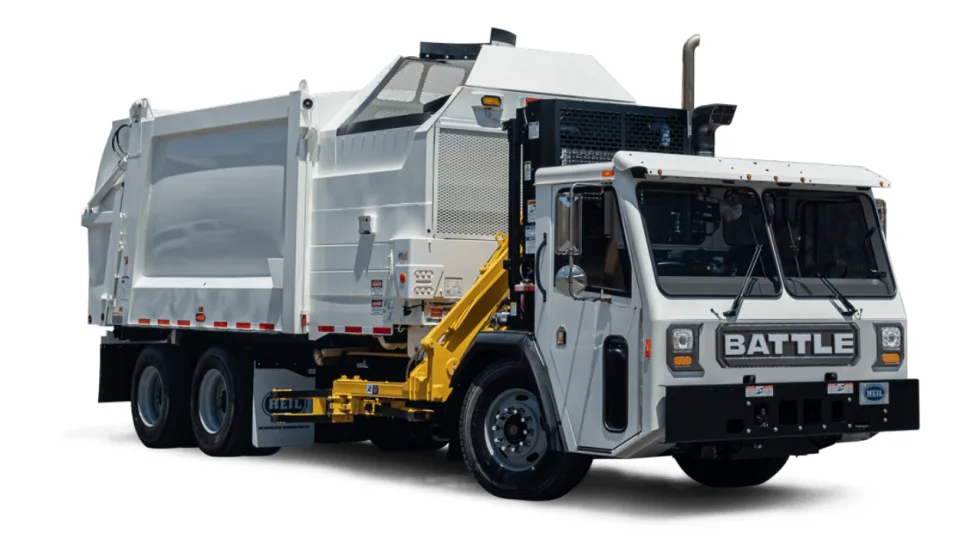
TCI Now Sells & Supports Battle Motors’ Vocational Trucks
Midwest truck dealer Truck Centers, Inc. (TCI) has expanded its transportation solutions with sales and service support for Battle Motors’ heavy-duty vocational trucks at locations in locations in Indiana, Illinois, and Missouri
Read More →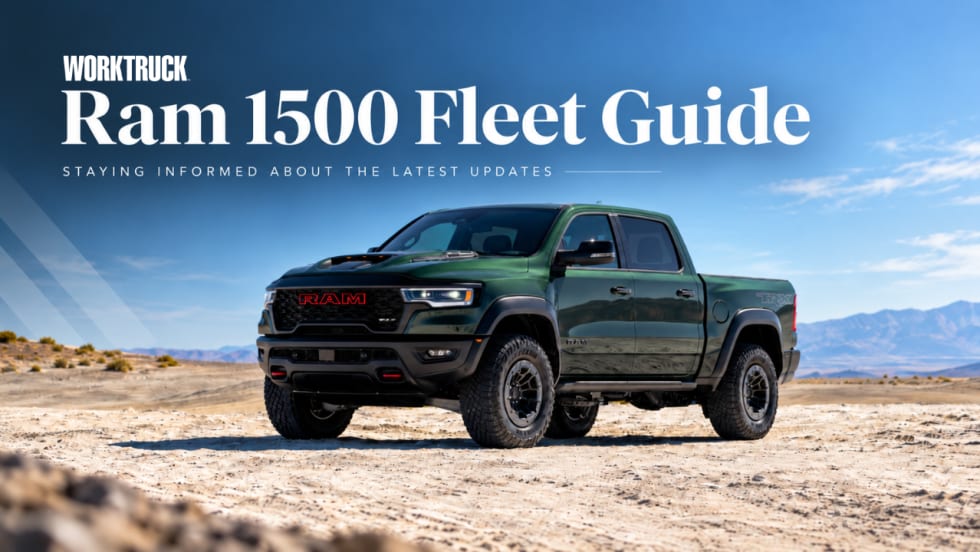
Ram 1500 Fleet Guide Specs, Capability and 2027 Model-Year Updates
Explore always up-to-date Ram 1500 fleet specs, engines, towing and payload capability, configurations, technology, pricing updates, and model-year changes.
Read More →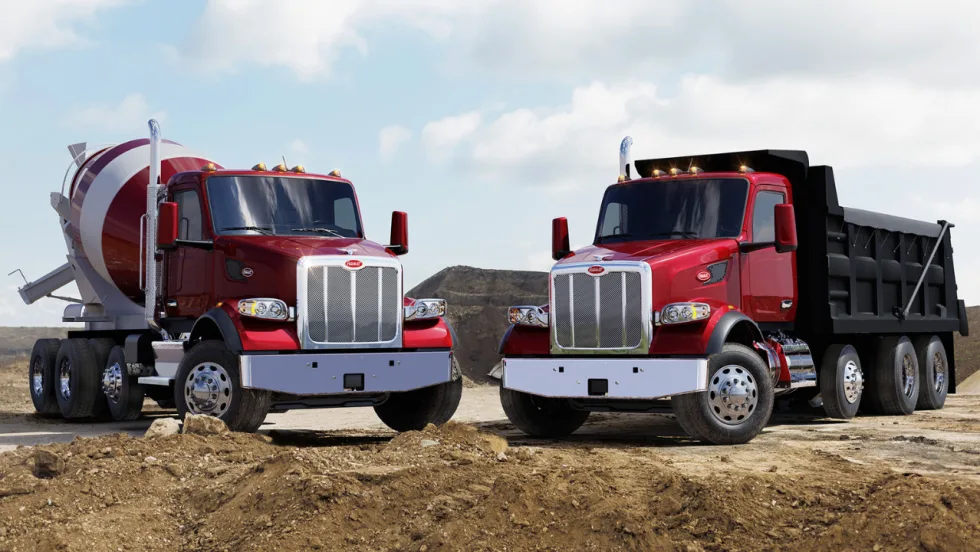
Peterbilt Trucks Equipped with Paccar TX-18 Pro Boost Efficiency for Maryland Fleet
Patuxent Companies is replacing aging trucks with the Peterbilt Model 567 and Model 589, specified with the Paccar TX-18 Pro 18-speed automated transmissions, and is reporting an 8% to 10% improvement in fuel economy.
Read More →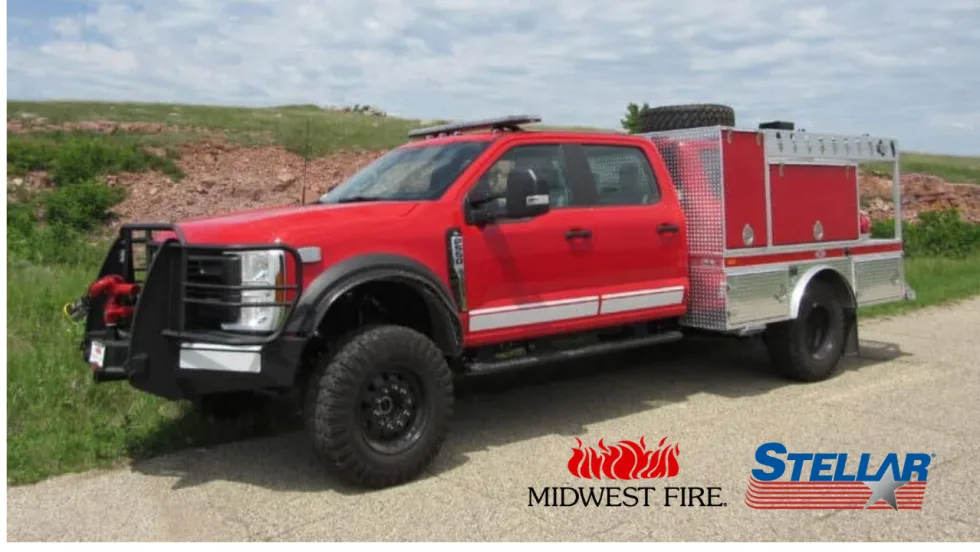
Stellar Expands into Fire Apparatus Market with Acquisition of Midwest Fire
Stellar Industries has acquired Midwest Fire, a custom fire apparatus manufacturer headquartered in Luverne, Minnesota, with nearly four decades of specialized apparatus experience.
Read More →
Recalls You Need to Know About in August 2026
If you have Altec, Chrysler, Ford, Heil, General Motors, International, Mack Trucks, Paccar, Rivian, Royal Truck, Toyota, US Truck Body, or Volvo Trucks vehicles in your fleet, you should check these important recalls issued by the National Highway Safety Administration.
Read More →