




More Air Bag Recalls Expected for 5.1M Vehicles
Yet another round of Takata air bag inflator recalls will involve vehicles from several automakers, including Ford, Toyota and Honda.
Photo courtesy of NHTSA.
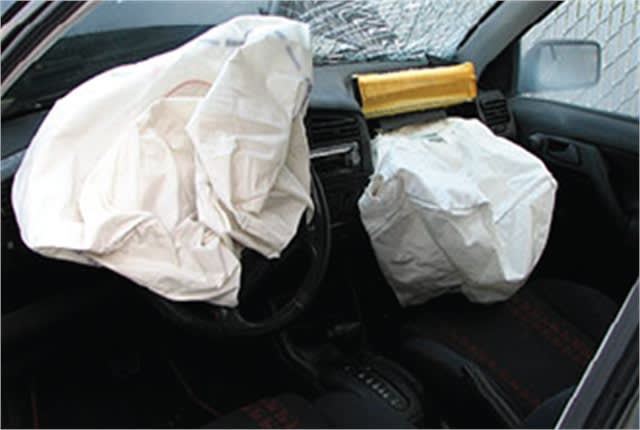
Photo courtesy of NHTSA.
In the wake of another death linked to an exploding Takata air bag inflator, the National Highway Traffic Safety Administration announced on its website that more safety recalls affecting an estimated 5.1 million vehicles are on the way.
The driver death, which occurred Dec. 22 in a 2006 model-year Ford Ranger in South Carolina, is the ninth fatality in the U.S. tied to defective air bag inflators manufactured by Takata Corp.
Another fatality occurred in Malaysia in 2014. An exploding air bag inflator in an August fatal crash in India is also under investigation.
The future recalls in the U.S. will involve two different types of air bag inflators: SDI model inflators for driver-side frontal air bag modules installed in certain Audi, Ford, Mazda, Sprinter and Volkswagen vehicles; and PSDI-5 model inflators for air bag modules installed in certain Audi, BMW, Honda, Mercedes-Benz, Saab, Toyota and Volkswagen vehicles, according to NHTSA.
The Takata SDI driver-side air bag inflators at issue were manufactured from Jan. 1, 2002, through the end of the production cycle for 2014 model-year vehicles, NHTSA reported. Air bags with these inflators were installed as original or replacement equipment in an estimated 1.2 million vehicles in the U.S.
The Takata PSDI-5 air bag inflators were manufactured from Jan. 1, 2003, through the end of the production cycle for 2014-MY vehicles. Air bags with these inflators were installed as original or replacement equipment in 3.9 million vehicles. Toyota has already launched a recall campaign to address these defective inflators. Additionally, inflators installed as part of a previous recall aren’t affected, NHTSA reported.
To facilitate the upcoming recalls, Takata Corp. has declared both of these types of air bag inflators defective.
“Takata will be working with vehicle manufacturers to identify into which vehicles the affected inflators were installed either as original or replacement equipment during service,” NHTSA said. “As this work progresses, numerous vehicle recalls will likely be announced by the impacted vehicle manufacturers. NHTSA will supply this information as soon as possible.”
Meanwhile, Ford Motor Co. has already expanded its recall of Takata-made air bag inflators in response to the reported death in the 2006 Ford Ranger. The automaker is recalling an additional 361,692 2004-2006 Ford Ranger trucks in the U.S. so the defective SDI driver-side air bag inflators can be replaced at no cost to affected vehicle owners.
Previous Takata air bag inflator recalls in the U.S. have affected about 19 million vehicles made by 12 different vehicle manufacturers, according to NHTSA. During air bag deployment, the defective inflators have the potential to explode and disperse shrapnel inside the vehicle.
Originally posted on Automotive Fleet
More Small Fleet


Developing Budget-Friendly Driver Safety Programs
From driver training and safety meetings to one-on-one coaching and incentive programs, several small fleets share how they have developed a safety culture with their drivers using low- to no-cost resources.
Read More →
Boosting Last-Mile Fleet Uptime, Safety, and Value with AI Vehicle Inspections
AI-powered inspections are transforming last-mile fleets by replacing manual checks with highly accurate automated scans that detect defects in seconds. By giving fleet operations visibility into the daily condition of their vehicles, you can identify trends over the vehicle’s lifecycle that enable improved procurement decisions, route management, driver training and accountability.
Read More →
Five Ways Seat Belts Help Prevent Injuries
There are five ways seat belts protect occupants from injuries, according to the Tennessee Department of Safety and Homeland Security.
Read More →
It’s here: The 2026 Fleet Technology Trends Report
What does AI mean for fleets? Get the answer — and learn other top tech trends.
Read More →
Small Fleets, Big Impact: How Independent Drivers Power Wreaths Across America
Check out how small fleets and independent drivers power Wreaths Across America each December and why their impact matters more than ever.
Read More →
VMS Survey Finds 65% of Small Fleet Managers Run Operations Alone
A new VMS survey shows small fleet managers are stretched thin, with most handling operations solo and eager to adopt digital tools for relief.
Read More →
Tips for Driving Safely on Halloween Night
This video features a reminder from the Connecticut Department of Transportation (DOT) and the Connecticut Police Chiefs Association, urging drivers to prioritize safety this Halloween.
Read More →
AI, Access, and Uptime: VMS’s Next Chapter with David Prusinski
VMS’s new Co-CEO, David Prusinski, shares how an AI-first approach will give small fleets and repair shops the tools to compete like big players.
Read More →
Fleet Managers Share Winter Prep Tips: It's Never Too Early!
Three fleets share best practices to prep vehicles for winter and prevent downtime when the cold sets in.
Read More →