




MIT Study Says Electric Trucks Can Save Fleets Money
CAMBRIDGE, MA - Using electric vehicles can markedly lower the costs of a fleet of delivery trucks. Electric vehicles can cost 9-12 percent less to operate than trucks powered by diesel engines.
CAMBRIDGE, MA - Using electric vehicles (EVs) can markedly lower the costs of a fleet of delivery trucks, according to a new Massachusetts Institute of Technology (MIT) study. The study shows that EVs are not just environmentally friendly, but also have a potential economic upside for many kinds of businesses.
Using data collected by the international office supplier Staples, as well as ISO New England, the nonprofit firm that runs New England's electric power grid, researchers at MIT's Center for Transportation and Logistics (CTL) found that EVs can cost 9-12% less to operate than trucks powered by diesel engines, when used to make deliveries on an everyday basis in big cities.
Using that data, the researchers modeled the costs for a fleet of 250 delivery trucks, and examined alternate scenarios in which the whole fleet used one of three kinds of motors: purely electric engines, hybrid gas-electric engines, and conventional diesel engines.
Based on the Staples data, the researchers modeled what would happen if diesel gasoline cost $4 per gallon. Trucks with internal-combustion engines averaged 10.14 miles per gallon, compared to 11.56 mpg for hybrid trucks, while the electric-only trucks averaged 0.8 kilowatt-hours per mile. Staples currently operates 53 all-electric trucks, manufactured by Mo.-based Smith Electric Vehicles, in use in several American cities.
The study added one new component to the projections often made by industry fleet managers: The researchers looked at what would happen if the fleets of trucks were part of a vehicle-to-grid (V2G) system in which their batteries could be plugged into the electricity grid for 12 hours overnight, as an additional resource for providing reliable electricity to consumers. In such a setup, truck owners would be paid by utility firms for the power services they provide. V2G systems are currently being tested by multiple utility companies.
After running the numbers for various scenarios in which trucks are parked at slightly different times overnight, the MIT team found that businesses could earn roughly $900 to $1,400 per truck per year in V2G revenues in current energy markets, representing a reduction of 7-11% in vehicle operating costs. Firms would also save money on fuel, and on maintenance, because electric trucks induce less wear and tear on brakes.
All told, the operational cost per mile — the basic metric all fleet managers use — would drop from 75 cents per mile to 68 cents per mile when V2G-enabled electric trucks are substituted for internal-combustion trucks, based on the MIT findings.
More Green Fleet

Fleet Forward Conference Introduces One-Day Passes for 2026
New one-day registration gives fleet professionals the flexibility to attend Tuesday, Wednesday, or Thursday, with passes available for $199 through Sept. 18.
Read More →
CALSTART Rebrands as Catalyst Mobility, Will Combine with Forth in 2027
CALSTART has rebranded as Catalyst Mobility and will combine with Forth at the start of 2027. The new organization said it is poised to become one of the world's largest, strongest, and most impactful clean transportation nonprofits.
Read More →
Electric Truck and Charging Programs to Boost Sustainability at NY & NJ Ports
Together, the Port Authority of New York and New Jersey and CALSTART will electrify drayage and terminal operations serving the East Coast’s busiest container port. A pair of incentive programs totaling $45 million has launched to accelerate adoption of zero-emission drayage trucks and terminal tractors.
Read More →
Xos Hub Surpasses One Gigawatt-Hour of Energy Delivered in the Field
A single Xos Hub has surpassed one gigawatt-hour of energy across more than 33,600 charging sessions in the field, demonstrating performance that supports Xos' expansion across new products and markets.
Read More →
Carrier Transicold Launches All-Electric Vector 8200 TRU for Diesel-Free On-Site Cold Storage
Carrier Transicold’s first engineless multi-temperature TRU helps fresh- and frozen-food fleets add supplemental cold storage capacity during seasonal peaks.
Read More →
Narro Trucks Introduces Electric Utility Vehicle
Narro Trucks officially launched its operations on Aug. 20 and hosted a ride and drive to showcase its electric truck, which will be produced in Virginia.
Read More →
Samsung SDI Takes Full Control of GM Battery JV as Indiana Plant Pivots to Energy Storage
Samsung SDI is taking full control of its Indiana battery plant with GM, marking a major shift from the EV-focused joint venture Charged Fleet first covered in 2023.
Read More →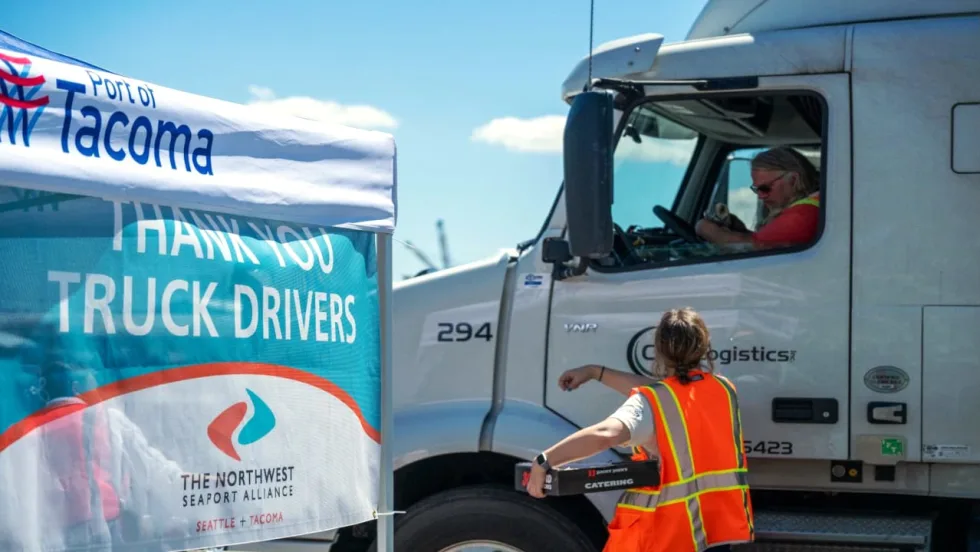
NWSA Taps CALSTART to Administer Zero-Emission Drayage Assistance Program
CALSTART will provide free technical assistance services to drayage fleets serving the Ports of Seattle and Tacoma and looking to transition to cleaner technologies and help decarbonize freight hubs.
Read More →
EV Fleet Reality Check: What Operators Wish They Knew Before Electrifying Their Work Vans
Electric work truck upfits bring new compatibility questions. Learn how parts availability, OEM guidance, power demands, and route planning can affect fleet performance.
Read More →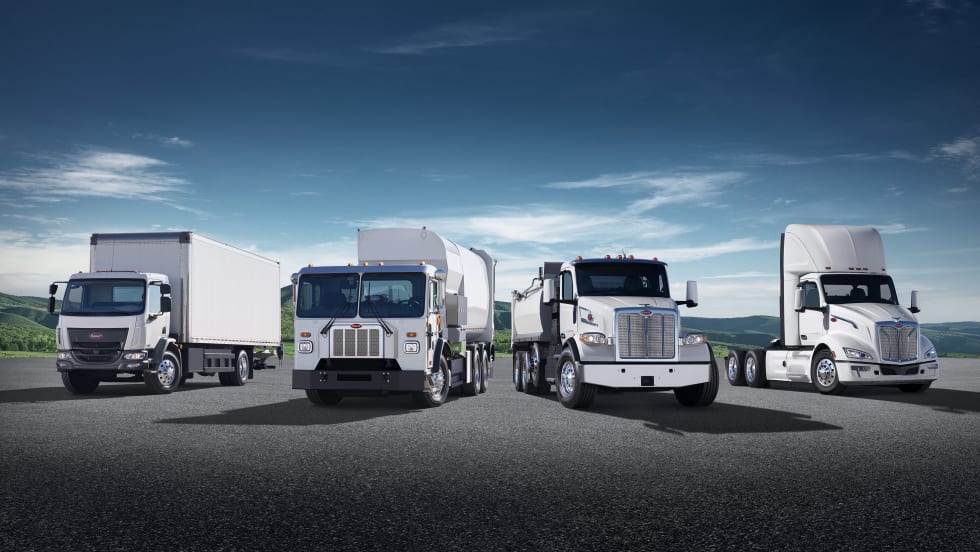
Peterbilt Expands Sourcewell Partnership with Electric Vehicle Lineup
Peterbilt Motors Company’s cooperative purchasing agreement with Sourcewell and its Canadian partner, Canoe Procurement Group, now includes including Peterbilt's battery-electric vehicle lineup.
Read More →