




Mercedes-Benz Trucks Developers Test Megawatt Charging
Mercedes-Benz Trucks developers charged a battery-electric truck at 1,000 kilowatts for the first time during internal testing at Wörth am Rhein, Germany. They charged a prototype of the eActros 600.

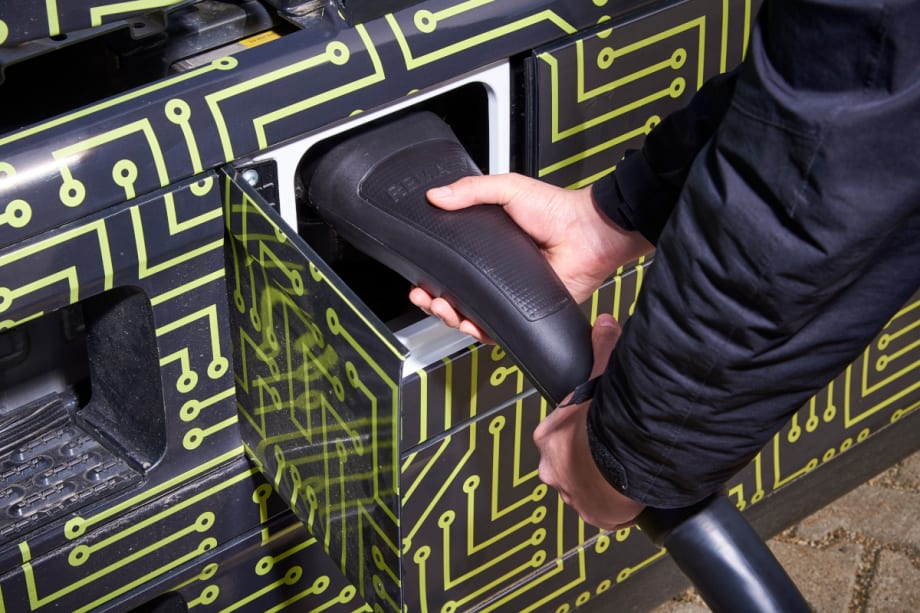
A Mercedes-Benz eActros 600 was charged for the first time by a megawatt charger.
Photo: Mercedes-Benz Trucks
Developers from Mercedes-Benz Trucks successfully charged for the first time a prototype of the eActros 600 at a charging station with an output of one megawatt at the in-house development and testing center in Wörth am Rhein, Germany.
Mercedes-Benz Trucks was thoroughly involved in developing the new, industry-wide MCS charging standard. MCS plays a central role in public charging along important transportation routes.
“Our developers have put the newly defined MCS Standard into the e-truck in the shortest of times with full charging capacity – an outstanding feat of engineering,” said Rainer Müller-Finkeldei, head of Mercedes-Benz Trucks product engineering. “Customers placing high demands on range and vehicle availability will benefit in particular from megawatt charging at 1,000 kilowatts in the future.”
Within the industry, a charging capacity of more than 700 kilowatts is already known as MCS charging, explained Peter Ziegler, head of e-charging components, Mercedes-Benz Trucks.
“We, however, understand the importance of our customers being able to charge the eActros 600 at a full 1,000 kilowatts and thus benefit from short charging times with a long range,” said Ziegler. “We are working at full speed to take the MCS technology in our eActros 600 to series maturity.”
Mercedes-Benz Trucks development engineers will continue testing the communications interface between the vehicle and charging station, defined as part of MCS standardization, and ongoing development of prototype components to series maturity.
The launch of series production of the eActros 600 is planned for the end of 2024. In addition to CCS charging with up to 400 kW, the eActros 600 will later enable megawatt charging at a full 1,000 kilowatts, once it becomes available. Customers can order a pre-installation or MCS technology can be retrofitted.
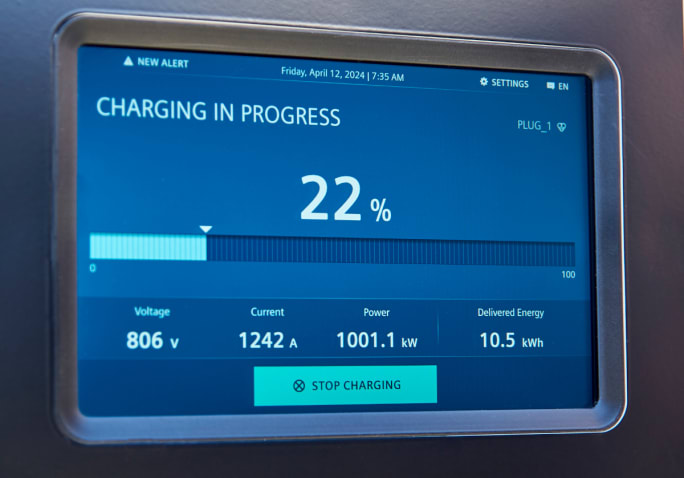
Megawatt charging capability can get trucks back on the road faster.
Photo: Mercedes-Benz Trucks
Charging Infrastructure at Loading and Unloading Locations
The eActros’ high battery capacity of more than 600 kilowatt hours – hence the model designation 600 – and a new, particularly efficient electric drive axle developed in-house, enable the truck to achieve a range of 500 kilometers without intermediate charging. This means the e-truck will be able to travel significantly more than 1,000 kilometers per day. This is made possible by intermediate charging during the legally prescribed driver breaks, even without megawatt-charging.
Around 60% of long-distance journeys for Mercedes-Benz Trucks customers in Europe are shorter than 500 kilometers anyway, which means a charging infrastructure at the depot and at the loading and unloading points is sufficient in such cases. For all other uses, continual expansion of public charging infrastructure is vital in to make the electric truck viable for long-distance haulage across Europe.
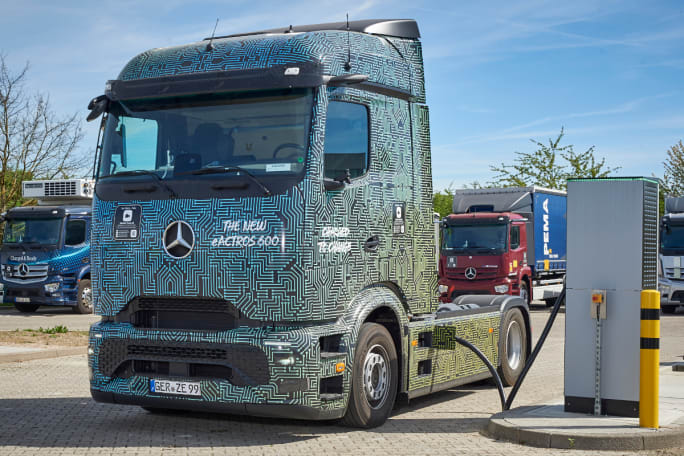
The eActros 600 has a high battery capacity of more than 600 kilowatt hours.
Photo: Mercedes-Benz Trucks
More Green Fleet

Fleet Forward Conference Introduces One-Day Passes for 2026
New one-day registration gives fleet professionals the flexibility to attend Tuesday, Wednesday, or Thursday, with passes available for $199 through Sept. 18.
Read More →
CALSTART Rebrands as Catalyst Mobility, Will Combine with Forth in 2027
CALSTART has rebranded as Catalyst Mobility and will combine with Forth at the start of 2027. The new organization said it is poised to become one of the world's largest, strongest, and most impactful clean transportation nonprofits.
Read More →
Electric Truck and Charging Programs to Boost Sustainability at NY & NJ Ports
Together, the Port Authority of New York and New Jersey and CALSTART will electrify drayage and terminal operations serving the East Coast’s busiest container port. A pair of incentive programs totaling $45 million has launched to accelerate adoption of zero-emission drayage trucks and terminal tractors.
Read More →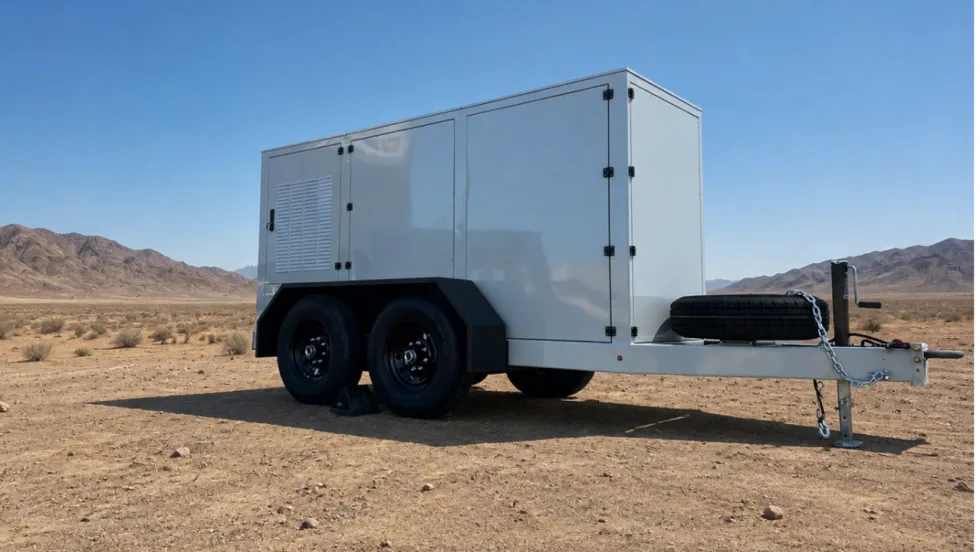
Xos Hub Surpasses One Gigawatt-Hour of Energy Delivered in the Field
A single Xos Hub has surpassed one gigawatt-hour of energy across more than 33,600 charging sessions in the field, demonstrating performance that supports Xos' expansion across new products and markets.
Read More →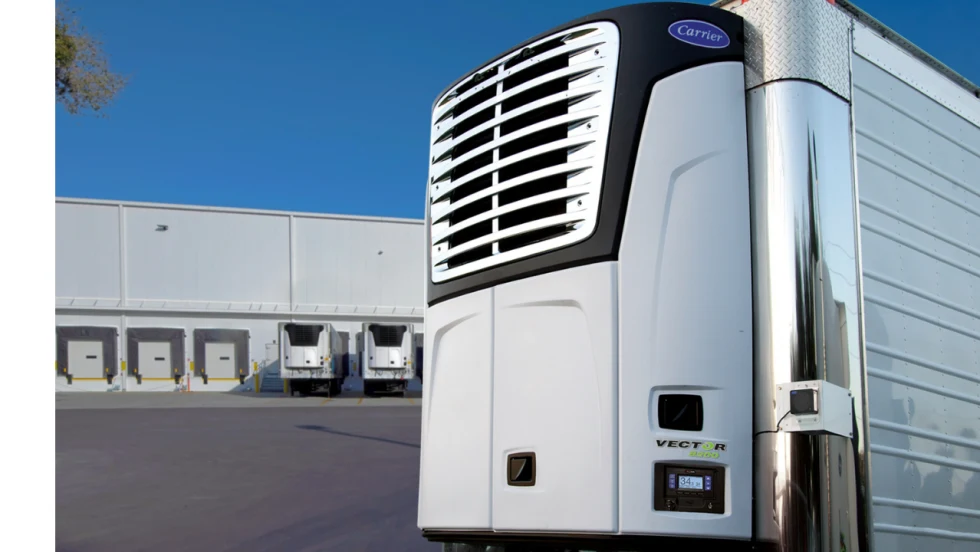
Carrier Transicold Launches All-Electric Vector 8200 TRU for Diesel-Free On-Site Cold Storage
Carrier Transicold’s first engineless multi-temperature TRU helps fresh- and frozen-food fleets add supplemental cold storage capacity during seasonal peaks.
Read More →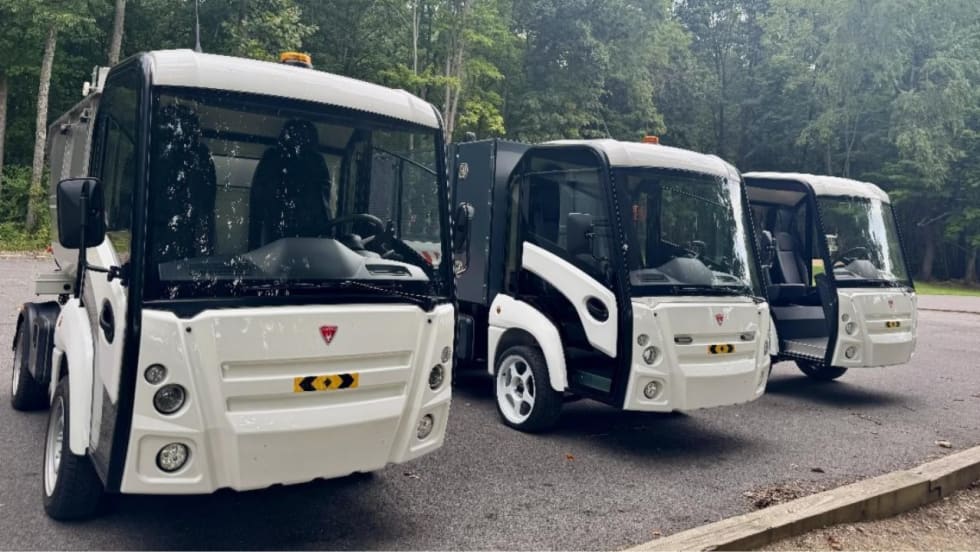
Narro Trucks Introduces Electric Utility Vehicle
Narro Trucks officially launched its operations on Aug. 20 and hosted a ride and drive to showcase its electric truck, which will be produced in Virginia.
Read More →
Samsung SDI Takes Full Control of GM Battery JV as Indiana Plant Pivots to Energy Storage
Samsung SDI is taking full control of its Indiana battery plant with GM, marking a major shift from the EV-focused joint venture Charged Fleet first covered in 2023.
Read More →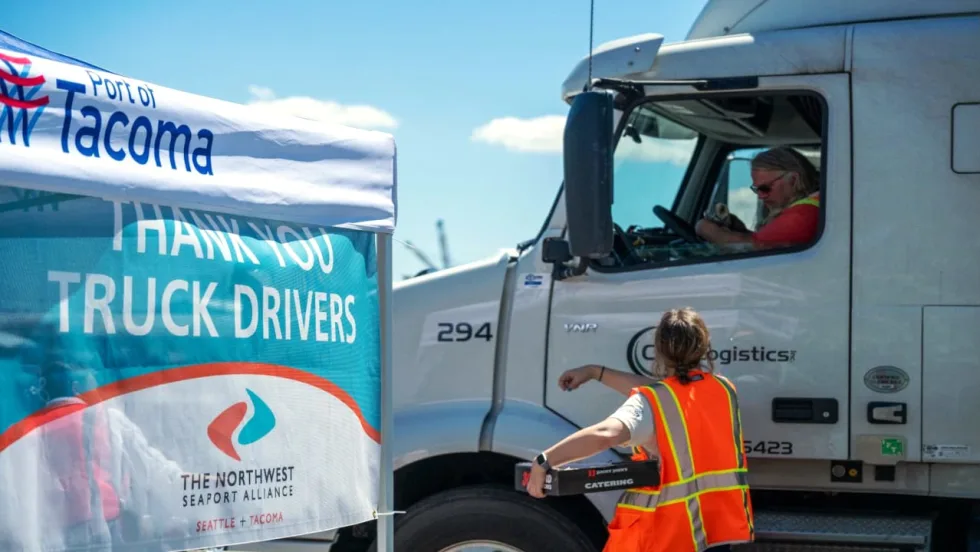
NWSA Taps CALSTART to Administer Zero-Emission Drayage Assistance Program
CALSTART will provide free technical assistance services to drayage fleets serving the Ports of Seattle and Tacoma and looking to transition to cleaner technologies and help decarbonize freight hubs.
Read More →
EV Fleet Reality Check: What Operators Wish They Knew Before Electrifying Their Work Vans
Electric work truck upfits bring new compatibility questions. Learn how parts availability, OEM guidance, power demands, and route planning can affect fleet performance.
Read More →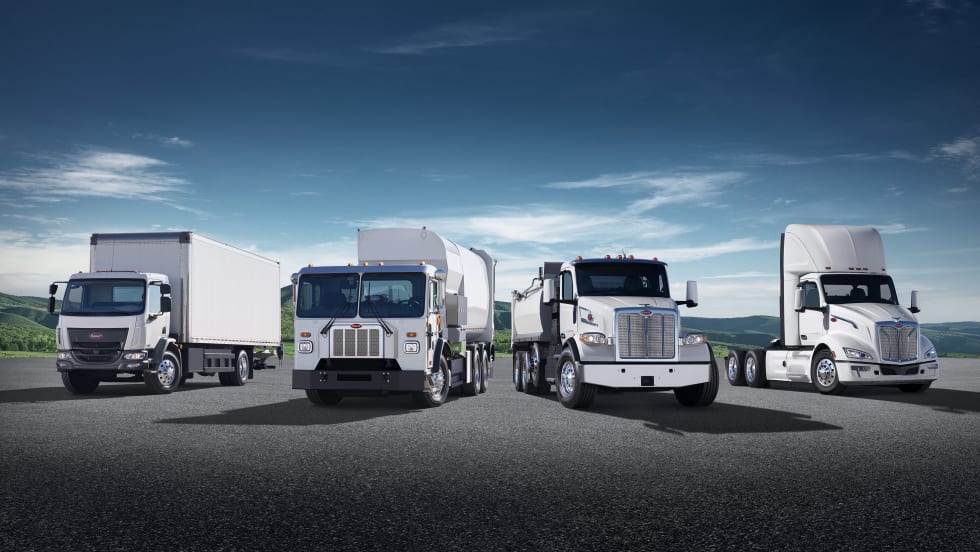
Peterbilt Expands Sourcewell Partnership with Electric Vehicle Lineup
Peterbilt Motors Company’s cooperative purchasing agreement with Sourcewell and its Canadian partner, Canoe Procurement Group, now includes including Peterbilt's battery-electric vehicle lineup.
Read More →