




Mass. Provides Alt-Fuel Fleet Grants
Massachusetts will provide state grants to help municipal fleets replace gasoline and diesel-powered vehicles with electric vehicles and add EV charging infrastructure, Gov. Deval Patrick announced this week.
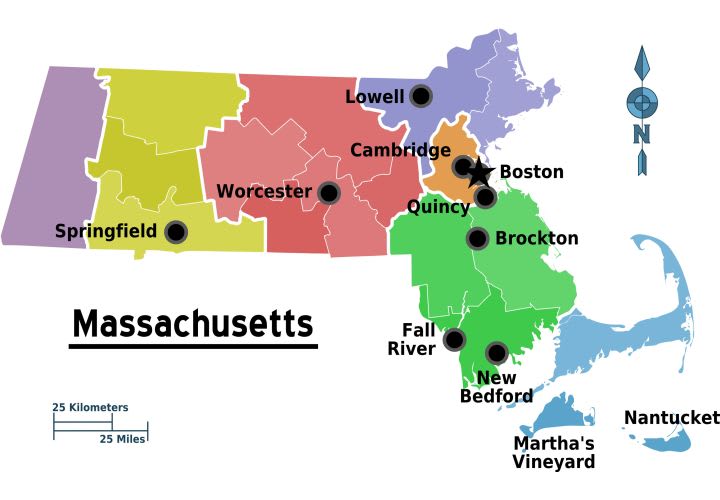
Map image via Wikimedia.
Map image via Wikimedia.
Massachusetts will provide state grants to help municipal fleets replace gasoline and diesel-powered vehicles with electric vehicles and add EV charging infrastructure, Gov. Deval Patrick announced this week.
The electric-vehicle initiative will be the second Massachusetts alt-fuel initiative available to fleets, following the 2013 Clean Vehicle Project, which aims to replace more than 200 public and private fleet vehicles. That initiative includes a state allocation of $11.7 million for electric vehicle initiatives, according to a spokeswoman for Gov. Patrick.
The Massachusetts Electric Vehicle Incentive Program (MassEVIP) is a competitive incentive program that provides funds to cities to acquire electric vehicles and install Level 2 charging stations. The program is administered by the Massachusetts Department of Environmental Protection (MassDEP) and funded with $2.5 million from the Motor Vehicle Inspection Trust Fund.
"With MassEVIP, the Commonwealth demonstrates its commitment to increase the deployment of EVs in municipal fleets, encourage demand for electric vehicles in Massachusetts, reduce smog forming emissions and greenhouse gases, and help the Commonwealth meet its air quality and Global Warming Solutions Act goals," according to a statement from Gov. Patrick.
MassDEP has awarded two phases of MassEVIP grants, including $555,000 to 20 municipalities for 21 plug-in hybrid electric vehicles, 26 battery-electric vehicles, and 17 Level 2 dual-head charging stations in the first phase.
The second phase was open to municipalities, colleges, state agencies and car share operators. The state awarded $600,000 to 19 entities for the purchase or lease of electric vehicles and Level 2 charging stations.
The state also plans to convert diesel medium-duty trucks or shuttle buses to operate with plug-in battery-electric drivetrains and replace diesel shuttle buses with battery electric shuttle buses with wireless charging.
Under the Clean Vehicle Project, the state will also add fast-charging stations on major arteries to enable publicly-accessible highway charging. The chargers, which can fully charge most electric vehicles in less than 30 minutes, will support the eight-state Northeast Electric Vehicle Network.
"The Patrick Administration is committed to using innovative strategies that reduce greenhouse gas emissions, bolster our energy independence and grow our clean energy economy," said Rick Sullivan, Massachusetts Energy and Environmental Affairs secretary. "Electric fleets advance our goals and show that alternative fuel vehicles are a win-win for the environmental and economic bottom line."
The Clean Vehicle Program is funded by the Congestion Mitigation and Air Quality (CMAQ) improvement program sponsored by the U.S Department of Transportation's Federal Highway Administration.
By Paul Clinton
Originally posted on Automotive Fleet
More Small Fleet


Developing Budget-Friendly Driver Safety Programs
From driver training and safety meetings to one-on-one coaching and incentive programs, several small fleets share how they have developed a safety culture with their drivers using low- to no-cost resources.
Read More →
Boosting Last-Mile Fleet Uptime, Safety, and Value with AI Vehicle Inspections
AI-powered inspections are transforming last-mile fleets by replacing manual checks with highly accurate automated scans that detect defects in seconds. By giving fleet operations visibility into the daily condition of their vehicles, you can identify trends over the vehicle’s lifecycle that enable improved procurement decisions, route management, driver training and accountability.
Read More →
Five Ways Seat Belts Help Prevent Injuries
There are five ways seat belts protect occupants from injuries, according to the Tennessee Department of Safety and Homeland Security.
Read More →
It’s here: The 2026 Fleet Technology Trends Report
What does AI mean for fleets? Get the answer — and learn other top tech trends.
Read More →
Small Fleets, Big Impact: How Independent Drivers Power Wreaths Across America
Check out how small fleets and independent drivers power Wreaths Across America each December and why their impact matters more than ever.
Read More →
VMS Survey Finds 65% of Small Fleet Managers Run Operations Alone
A new VMS survey shows small fleet managers are stretched thin, with most handling operations solo and eager to adopt digital tools for relief.
Read More →
Tips for Driving Safely on Halloween Night
This video features a reminder from the Connecticut Department of Transportation (DOT) and the Connecticut Police Chiefs Association, urging drivers to prioritize safety this Halloween.
Read More →
AI, Access, and Uptime: VMS’s Next Chapter with David Prusinski
VMS’s new Co-CEO, David Prusinski, shares how an AI-first approach will give small fleets and repair shops the tools to compete like big players.
Read More →
Fleet Managers Share Winter Prep Tips: It's Never Too Early!
Three fleets share best practices to prep vehicles for winter and prevent downtime when the cold sets in.
Read More →