



Kamps Propane Becomes Biggest California User of ROUSH Propane Trucks
LIVONIA, MI - Though they are not the biggest player in the propane industry, Kamps Propane is the biggest user of ROUSH propane-fueled vehicles in the western states.
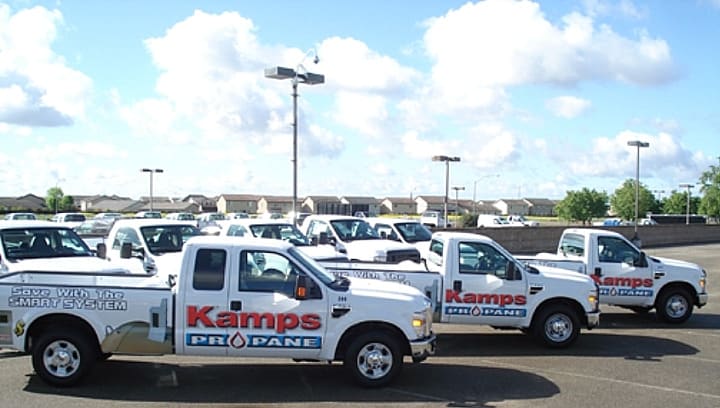
LIVONIA, MI - Though they are not the biggest player in the propane industry, Kamps Propane is the biggest user of ROUSH propane-fueled vehicles in the western states. The family-owned company which prides itself on family values has 25 ROUSH propane vehicles in service throughout their distribution network.
Located in Manteca, Calif., Kamps Propane primarily services the northern California markets around Fresno, San Francisco, Sacramento and the surrounding communities. They have been in business since 1969, and claim a major reason for their high level of customer satisfaction is because they are local and based in the markets they serve.
According to Terry Ayres, vice-president of Kamps Propane, the company has a long history with Ford trucks so it was natural they would gravitate to the ROUSH conversions on the F-250 for their fleet.
"We've been buying Ford all along, pretty much since our company was founded," Ayres said. "ROUSH has the only propane conversion kit that is certified for the state so it was an easy and natural fit because of our company's preference for Ford products."
The 2010 ROUSH propane-fueled F-250 and F-350 with the 5.4L, V-8 engine has received CARB approval. This means that it meets the strict emission standards set by the California Air Resources Board (CARB) and can be sold in all 50-states.
Ayres says that his trucks run an average of 25,000 to 35,000 miles annually, and he is pleased with the operating cost savings by switching to propane as a vehicle fuel.
"We see savings of $1.50 to $1.70 per gallon based on the current pump prices and our distributor pricing on propane," he said. "It makes a lot of sense for us in the propane business to run our vehicles on the fuel we sell, and with the tax incentives on the upfit system and the 50-cent per-gallon tax credit on the fuel, it makes a lot of sense for the end user as well."
As an alternative fuel, propane offers a variety of advantages. It is available "right here, right now" with a national infrastructure already in place. Propane burns cleaner than gasoline or diesel, with up to 20 percent less nitrogen oxide, up to 60 percent less carbon monoxide, 24 percent fewer greenhouse gas emissions, and fewer particulate emissions when compared to gasoline. It is already the third most widely used fuel worldwide, following gasoline and diesel. Propane also plays a strong role in lowering our national dependence on foreign oil, as 90 percent of the propane used today comes from domestic sources of production.
Complete details on the ROUSH propane offerings can be found online at www.SwitchToPropane.com or by calling (800) 59-ROUSH.
More Green Fleet

Xos Hub Surpasses One Gigawatt-Hour of Energy Delivered in the Field
A single Xos Hub has surpassed one gigawatt-hour of energy across more than 33,600 charging sessions in the field, demonstrating performance that supports Xos' expansion across new products and markets.
Read More →
Carrier Transicold Launches All-Electric Vector 8200 TRU for Diesel-Free On-Site Cold Storage
Carrier Transicold’s first engineless multi-temperature TRU helps fresh- and frozen-food fleets add supplemental cold storage capacity during seasonal peaks.
Read More →
Narro Trucks Introduces Electric Utility Vehicle
Narro Trucks officially launched its operations on Aug. 20 and hosted a ride and drive to showcase its electric truck, which will be produced in Virginia.
Read More →
Samsung SDI Takes Full Control of GM Battery JV as Indiana Plant Pivots to Energy Storage
Samsung SDI is taking full control of its Indiana battery plant with GM, marking a major shift from the EV-focused joint venture Charged Fleet first covered in 2023.
Read More →
NWSA Taps CALSTART to Administer Zero-Emission Drayage Assistance Program
CALSTART will provide free technical assistance services to drayage fleets serving the Ports of Seattle and Tacoma and looking to transition to cleaner technologies and help decarbonize freight hubs.
Read More →
EV Fleet Reality Check: What Operators Wish They Knew Before Electrifying Their Work Vans
Electric work truck upfits bring new compatibility questions. Learn how parts availability, OEM guidance, power demands, and route planning can affect fleet performance.
Read More →
Peterbilt Expands Sourcewell Partnership with Electric Vehicle Lineup
Peterbilt Motors Company’s cooperative purchasing agreement with Sourcewell and its Canadian partner, Canoe Procurement Group, now includes including Peterbilt's battery-electric vehicle lineup.
Read More →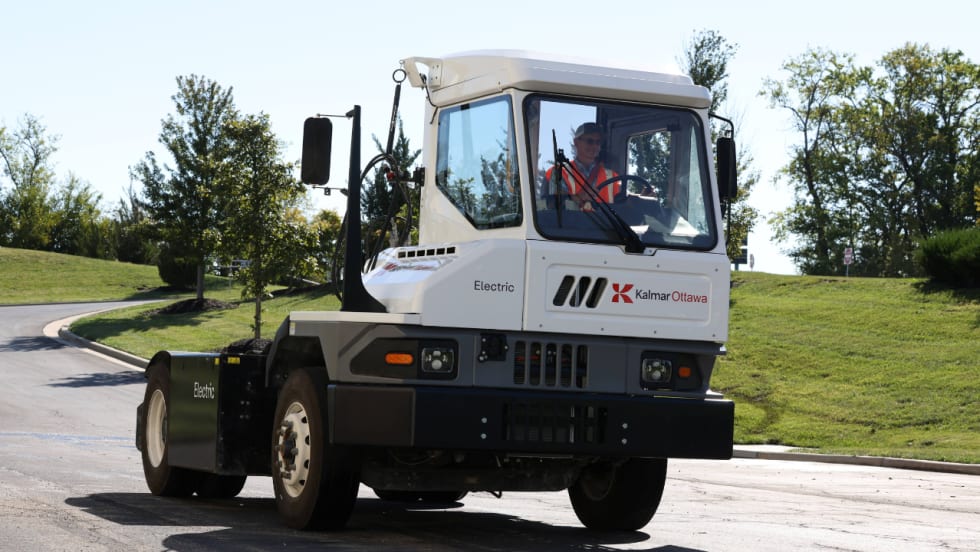
WTC Group Expands Sustainable Operations with Kalmar Ottawa T2 EV Fleet
Commercial adoption of the Kalmar Ottawa T2 EV terminal tractor continues to grow as customers add the zero-emission yard tractor to their fleets. WTC Group has placed an order for a Kalmar Ottawa T2 EV.
Read More →
Where Propane Autogas Fits in Today's Fleet Fuel Strategy
Learn more from PERC's Joel Stutheit, as he explains why propane autogas remains a practical alternative for fleets seeking to reduce emissions without sacrificing operational flexibility.
Read More →
Schneider Electric Simplifies Commercial EV Charging with New Charge Pro for the U.S.
Schneider Electric’s updated Charge Pro Level 2 chargers deliver reliable, flexible charging for multi-unit dwellings, fleets and workplaces, as well as public and destination charging locations such as hotels and retail centers.
Read More →