




Gridlock Lures Drivers into Phone Distractions
Research underscores how widespread distracted driving has become, especially in bumper-to-bumper traffic.
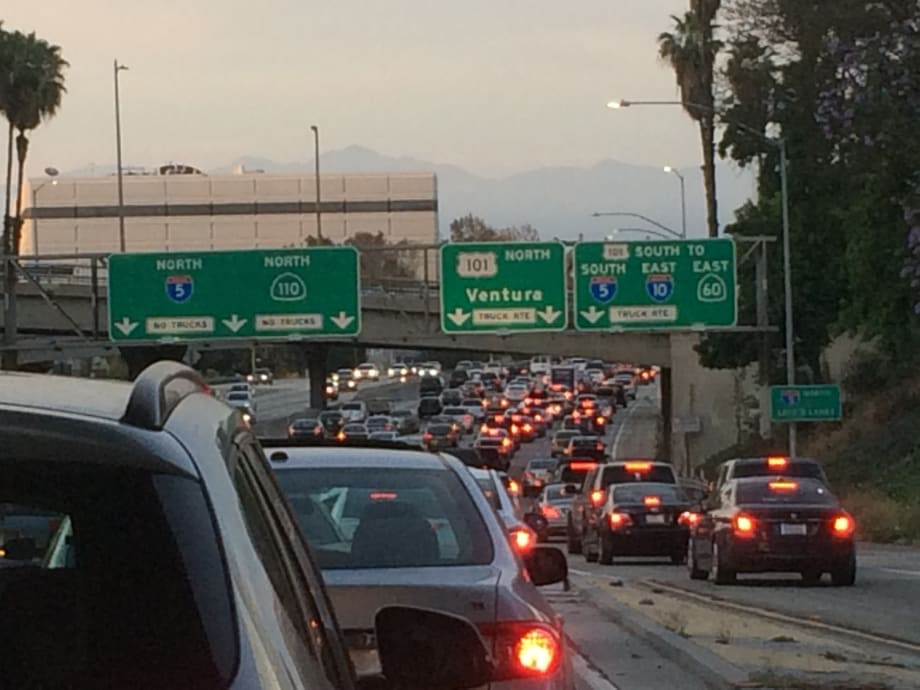
During rush-hour traffic, drivers are more likely to reach for their phone.
During rush-hour traffic, drivers are more likely to reach for their phone.
In cities where traffic can slow to a crawl, motorists are more likely to reach for their phone to read a text, send a text, or open an app. And the top 10 apps that drivers open are, in order: Google Maps, Pokemon Go, Android Messaging, Facebook, YouTube, Waze, Amazon Music, Google Chrome, Pandora, and NetFlix, according to a study from True Motion.
TrueMotion, formerly known as Censio, has developed an app/technology platform that monitors data tied to driver behavior so that insurance companies can better assess risk level and offer discounts when warranted. The company created the technology for Progressive Insurance’s Snapshot program.
For its study, TrueMotion analyzed nearly 522,000 trips involving 7,595 drivers. Of those drivers, 7,042 had some type of phone use while driving. Distracted driving accounted for 21% of their time behind the wheel. A surprising 71% of drivers were at least sometimes engaged in reading or sending texts. Drivers spent 18% of the time with a phone in hand and 6% of the time on a phone call.
The app usage statistics are based on a smaller sample size: 9,164 driver trips taken by 251 drivers with Android phones only.
During a recent conference held by the National Transportation Safety Board, the True Motion study was cited as part of a presentation from Robert Gordon, senior vice president of the Property Casualty Insurers Association of America.
Gordon explained that the frequency of auto collisions is on the rise in urban centers where traffic congestion is worsening, the Washington Post reported. But at the same time, he noted, collision rates are dropping in areas where gridlock conditions are less common. For example, collision frequency dropped 11.3% in Alaska from 2014 to 2016. In Washington, D.C., however, collision frequency climbed 14% during the same period.
When trapped in bumper-to-bumper traffic, drivers are much more likely to start using their phone. “Our auto insurance companies feel the biggest cause of the increasing accident frequency is this type of distracted driving,” Gordon said. The association’s analysis relied on insurance industry data on crashes and Federal Highway Administration data on congestion.
In the first half of 2016, an estimated 17,775 people died in U.S. traffic crashes, according to projections from the National Highway Traffic Safety Administration. That figure represents a 10.4% increase from the same six-month period in 2015.
This increase has been attributed to a host of factors, including distracted driving.
Originally posted on Automotive Fleet
More Small Fleet


Developing Budget-Friendly Driver Safety Programs
From driver training and safety meetings to one-on-one coaching and incentive programs, several small fleets share how they have developed a safety culture with their drivers using low- to no-cost resources.
Read More →
Boosting Last-Mile Fleet Uptime, Safety, and Value with AI Vehicle Inspections
AI-powered inspections are transforming last-mile fleets by replacing manual checks with highly accurate automated scans that detect defects in seconds. By giving fleet operations visibility into the daily condition of their vehicles, you can identify trends over the vehicle’s lifecycle that enable improved procurement decisions, route management, driver training and accountability.
Read More →
Five Ways Seat Belts Help Prevent Injuries
There are five ways seat belts protect occupants from injuries, according to the Tennessee Department of Safety and Homeland Security.
Read More →
It’s here: The 2026 Fleet Technology Trends Report
What does AI mean for fleets? Get the answer — and learn other top tech trends.
Read More →
Small Fleets, Big Impact: How Independent Drivers Power Wreaths Across America
Check out how small fleets and independent drivers power Wreaths Across America each December and why their impact matters more than ever.
Read More →
VMS Survey Finds 65% of Small Fleet Managers Run Operations Alone
A new VMS survey shows small fleet managers are stretched thin, with most handling operations solo and eager to adopt digital tools for relief.
Read More →
Tips for Driving Safely on Halloween Night
This video features a reminder from the Connecticut Department of Transportation (DOT) and the Connecticut Police Chiefs Association, urging drivers to prioritize safety this Halloween.
Read More →
AI, Access, and Uptime: VMS’s Next Chapter with David Prusinski
VMS’s new Co-CEO, David Prusinski, shares how an AI-first approach will give small fleets and repair shops the tools to compete like big players.
Read More →
Fleet Managers Share Winter Prep Tips: It's Never Too Early!
Three fleets share best practices to prep vehicles for winter and prevent downtime when the cold sets in.
Read More →