




GM’s Research Driving Simulator Puts Super Cruise Through Its Paces
The automaker is using an upgraded R&D facility to study driver behavior in automated driving situations.
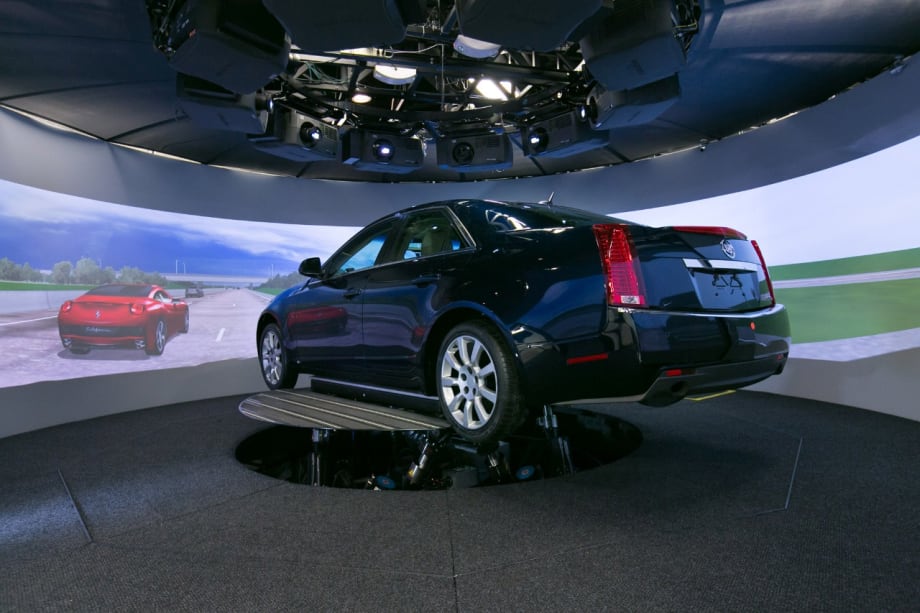
GM’s Research Driving Simulator is helping advanced technology developers study how drivers interact with Super Cruise, a semi-automated driving system. Photo courtesy of General Motors.
GM’s Research Driving Simulator is helping advanced technology developers study how drivers interact with Super Cruise, a semi-automated driving system. Photo courtesy of General Motors.
Lightning-fast refreshing of visuals inside General Motors’ Research Driving Simulator are helping advanced technology developers study how drivers interact with Super Cruise, the semi-automated driving system that could be in Cadillac models later this decade.
The upgrades to the simulator provide realistic road feel and responsiveness to driver actions, reducing the feeling of disorientation associated with driving simulators -- particularly during low-speed maneuvers, GM said.
A 360-degree high-definition projection screen, integrated with a 2-terabyte-per-second image generator, allows visuals to dynamically respond to steering and pedal force inputs within 70 milliseconds.
These enhancements let Super Cruise developers measure driver control interactions and eye-glance behavior, and also evaluate driver approaches before full system vehicles are available.
“Simulator testing helps our vehicle teams understand the consequences of design decisions quickly and early in the development cycle when it is cost-effective to do so,” said John Capp, director of GM electrical, controls and active safety research. “Ultimately, the work done here enables the rapid development of sophisticated systems like Super Cruise and leads to improved driving experiences for our customers.”
The system can load vehicle concept designs and integrate new prototype controls in the test vehicle with minimum programming or preparation. Suppliers also can load their models to test some vehicle control subsystems before building them.
Advanced driver assistance and safety features will play an increasingly important role in keeping drivers alert during semi-automated driving, Capp said. The system is designed to ease the driver’s workload on freeways only, in bumper-to-bumper traffic and on long road trips, but driver attention is still required.
Traffic crash data seems to suggest a need for automated driving systems. According to the National Highway Safety Transportation Administration, human error causes more than 90 percent of all crashes, a figure that could be lowered with widespread use of automated driving systems.
Originally posted on Automotive Fleet
More Small Fleet


Developing Budget-Friendly Driver Safety Programs
From driver training and safety meetings to one-on-one coaching and incentive programs, several small fleets share how they have developed a safety culture with their drivers using low- to no-cost resources.
Read More →
Boosting Last-Mile Fleet Uptime, Safety, and Value with AI Vehicle Inspections
AI-powered inspections are transforming last-mile fleets by replacing manual checks with highly accurate automated scans that detect defects in seconds. By giving fleet operations visibility into the daily condition of their vehicles, you can identify trends over the vehicle’s lifecycle that enable improved procurement decisions, route management, driver training and accountability.
Read More →
Five Ways Seat Belts Help Prevent Injuries
There are five ways seat belts protect occupants from injuries, according to the Tennessee Department of Safety and Homeland Security.
Read More →
It’s here: The 2026 Fleet Technology Trends Report
What does AI mean for fleets? Get the answer — and learn other top tech trends.
Read More →
Small Fleets, Big Impact: How Independent Drivers Power Wreaths Across America
Check out how small fleets and independent drivers power Wreaths Across America each December and why their impact matters more than ever.
Read More →
VMS Survey Finds 65% of Small Fleet Managers Run Operations Alone
A new VMS survey shows small fleet managers are stretched thin, with most handling operations solo and eager to adopt digital tools for relief.
Read More →
Tips for Driving Safely on Halloween Night
This video features a reminder from the Connecticut Department of Transportation (DOT) and the Connecticut Police Chiefs Association, urging drivers to prioritize safety this Halloween.
Read More →
AI, Access, and Uptime: VMS’s Next Chapter with David Prusinski
VMS’s new Co-CEO, David Prusinski, shares how an AI-first approach will give small fleets and repair shops the tools to compete like big players.
Read More →
Fleet Managers Share Winter Prep Tips: It's Never Too Early!
Three fleets share best practices to prep vehicles for winter and prevent downtime when the cold sets in.
Read More →