




Ford Looking to Electrify F-150, Transit Custom Van by 2020
Ford announced seven global electrified vehicles that it plans to introduce in the next five years, which includes hybrid versions of the F-150 pickup and a plug-in hybrid Transit Custom van.
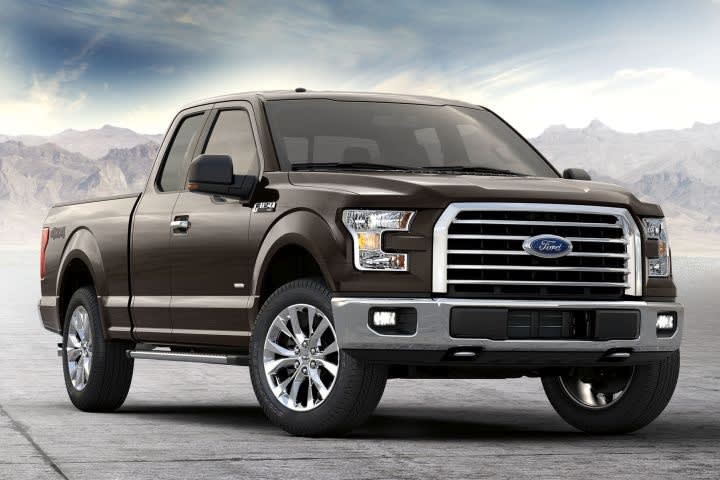
Ford has announced that the F-150 will be electrified by 2020. Pictured is a gasoline powered 2017 F-150 XLT courtesy of Ford.
Ford has announced that the F-150 will be electrified by 2020. Pictured is a gasoline powered 2017 F-150 XLT courtesy of Ford.
Ford announced seven of 13 global electrified vehicles that it plans to introduce in the next five years, which includes hybrid versions of the F-150 pickup and a plug-in hybrid Transit Custom van.
Ford also confrimed that a fully electric SUV with an expected range of at least 300 miles is in the works, along with a high-volume autonomous vehicle designed for commercial ride hailing or ride sharing, according to the automaker. These vehicles will be made available in North America, and the plug-in hybrid Transit Custom van will be available in Europe.
The company said it also plans to be aggressive in developing global electrified vehicles services and solutions, which includes electric vehicle (EV) fleet management, route planning, and telematics solutions.
Ford will test a new set of mobility services, telematics, and connectivity solutions later this year, and is currently working on a suite of services for EVs.
“Innovative services can be as important to customers as the electrified vehicles themselves,” said Hau Thai-Tang, group vice president of Purchasing and Ford’s EV champion. “We are investing in solutions to help private customers as well as commercial fleet owners seamlessly incorporate these new vehicles and technologies into their lives.”
Ford is also piloting wireless technology on company EVs in the U.S. and Europe as a means to simplify the charging process, according to the automaker.
Ford also announced plans to invest $700 million to expand its Flat Rock Assembly Plant in Michigan to support the creation of high-tech autonomous and electric vehicles. The automaker said the expansion at the assembly plant will create 700 direct new jobs over the next four years.
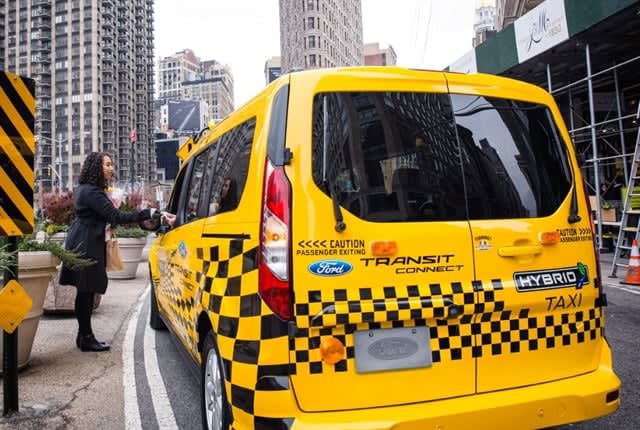
Photo of the Ford Transit Connect hybrid taxi courtesy of Ford.
“I am thrilled that we have been able to secure additional UAW-Ford jobs for American workers,” said Jimmy Settles, UAW vice president, National Ford Department. “The men and women of Flat Rock Assembly have shown a great commitment to manufacturing quality products, and we look forward to their continued success with a new generation of high-tech vehicles.”
The moves are part of a $4.5 billion investment in electrified vehicles for Ford by 2020, according to the automaker.
“As more and more consumers around the world become interested in electrified vehicles, Ford is committed to being a leader in providing consumers with a broad range of electrified vehicles, services and solutions that make people’s lives better,” said Mark Fields, Ford president and CEO. “Our investments and expanding lineup reflect our view that global offerings of electrified vehicles will exceed gasoline-powered vehicles within the next 15 years.”
Other vehicles announced by Ford include a hybrid version of the Mustang, and two new, pursuit-rated hybrid police vehicles. Ford also said it will be testing a fleet of 20 Transit Connect hybrid taxi and van prototypes in New York and several major U.S. cities.
Additionally, Ford announced that its global utility lineup will include its first hybrids powered by EcoBoost rather than naturally aspirated engines.
Originally posted on Automotive Fleet
More Green Fleet

Fleet Forward Conference Introduces One-Day Passes for 2026
New one-day registration gives fleet professionals the flexibility to attend Tuesday, Wednesday, or Thursday, with passes available for $199 through Sept. 18.
Read More →
CALSTART Rebrands as Catalyst Mobility, Will Combine with Forth in 2027
CALSTART has rebranded as Catalyst Mobility and will combine with Forth at the start of 2027. The new organization said it is poised to become one of the world's largest, strongest, and most impactful clean transportation nonprofits.
Read More →
Electric Truck and Charging Programs to Boost Sustainability at NY & NJ Ports
Together, the Port Authority of New York and New Jersey and CALSTART will electrify drayage and terminal operations serving the East Coast’s busiest container port. A pair of incentive programs totaling $45 million has launched to accelerate adoption of zero-emission drayage trucks and terminal tractors.
Read More →

The Smart Way to Build a Mixed-Energy Fleet Isn’t About Picking a Side
Mixed-energy fleets aren’t about picking a winning fuel. Sarah Booth of WEX explains how vehicle data, duty cycles, charging strategy, and real-world costs can help fleets choose the right energy source for each job.
Read More →
Xos Hub Surpasses One Gigawatt-Hour of Energy Delivered in the Field
A single Xos Hub has surpassed one gigawatt-hour of energy across more than 33,600 charging sessions in the field, demonstrating performance that supports Xos' expansion across new products and markets.
Read More →
Carrier Transicold Launches All-Electric Vector 8200 TRU for Diesel-Free On-Site Cold Storage
Carrier Transicold’s first engineless multi-temperature TRU helps fresh- and frozen-food fleets add supplemental cold storage capacity during seasonal peaks.
Read More →
Narro Trucks Introduces Electric Utility Vehicle
Narro Trucks officially launched its operations on Aug. 20 and hosted a ride and drive to showcase its electric truck, which will be produced in Virginia.
Read More →
Samsung SDI Takes Full Control of GM Battery JV as Indiana Plant Pivots to Energy Storage
Samsung SDI is taking full control of its Indiana battery plant with GM, marking a major shift from the EV-focused joint venture Charged Fleet first covered in 2023.
Read More →
NWSA Taps CALSTART to Administer Zero-Emission Drayage Assistance Program
CALSTART will provide free technical assistance services to drayage fleets serving the Ports of Seattle and Tacoma and looking to transition to cleaner technologies and help decarbonize freight hubs.
Read More →
EV Fleet Reality Check: What Operators Wish They Knew Before Electrifying Their Work Vans
Electric work truck upfits bring new compatibility questions. Learn how parts availability, OEM guidance, power demands, and route planning can affect fleet performance.
Read More →