




Ford Launches Fuel-Efficient F-150
DEARBORN, MI - Ford Motor Company is launching the all-new 3.7L V-6 engine in the 2011 F-150, according to Ford. It is projected to deliver best-in-class 23 mpg highway, pending EPA certification.
DEARBORN,MI - Ford Motor Company is launching the most fuel-efficient full-size pickup of any manufacturer - the all-new 3.7L V-6 engine in the 2011 F-150, according to Ford. It is projected to deliver best-in-class 23 mpg highway, pending EPA certification.
The new 5.0L V-8 engine is projected to deliver best-in-class 21 mpg highway, pending EPA certification.
"The all-new engine lineup for the 2011 Ford F-150 is focused on delivering what matters most to truck customers - best-in-class power, capability, durability and fuel economy," said Barb Samardzich, vice president of Powertrain Engineering. "Each engine offers an unequaled combination of these attributes."
The new 3.7L V-6 is projected to deliver 16 mpg city and 23 mpg highway in 4x2 configuration. The new 5.0L V-8 is projected to deliver 15 mpg city and 21 mpg highway in 4x2 configuration. No manufacturer offers better fuel economy numbers in these respective segments.
"Seventy percent of F-150 customers said better fuel economy is what they'd like improved most in their truck," said Doug Scott, Truck Group marketing manager. "The 2011 Ford F-150 does exactly that with best-in-class fuel economy, best-in-class capability and power, and more powertrain choices to suit their different needs."
The new V-6 and V-8 make up half of an all-new powertrain lineup for the 2011 Ford F-150, part of the most extensive engine makeover in the 62-year history of F-Series. Also new for 2011 are the 6.2L V-8 and 3.5L EcoBoost truck engine. The EcoBoost will be available in early 2011. Trucks with the 3.7L V-6, 5.0L V-8, and 6.2L V-8 will arrive in dealer showrooms later this year.
Each engine is mated to a fuel-saving six-speed automatic transmission. Ford is the only manufacturer to equip its entire full-size pickup lineup with six-speed gearboxes as standard.
This versatile new powertrain lineup enables F-150 customers to choose the engine that best suits their needs.
[PAGEBREAK]
Several other improvements help increase fuel economy
The extensive work to maximize the efficiency of each engine is complemented by additional improvements to the transmission and other areas of the new F-150.
The tried-and-true 6R80 six-speed automatic transmission has been upgraded to bring available customer conveniences such as SelectShift capability with progressive range select and manual mode to the F-150 for the first time.
The transmission has been optimized for each new engine. The transmission matched to the 3.7-liter engine, for example, has fewer clutch plates compared with the other F-150 engines.
A one-way clutch, which allows for smoother 1-2 and 2-1 shifts, faster downshifts and improved fuel economy, has been added. The gear ratios, span and shift schedule have been optimized for better off-the-line performance and improved fuel economy. The double-overdrive gear also provides better fuel economy.
Another fuel saver is the addition of class-exclusive electric power-assisted steering (EPAS) to the 3.7-liter V6, 5.0-liter V8 and 3.5-liter EcoBoost powertrains. The EPAS system replaces a conventional hydraulic system, which runs continuously off the engine, with a system that draws power only when needed. Ford is the first manufacturer to widely offer EPAS on full-size pickup trucks. EPAS contributes about a 4 percent fuel-economy benefit compared with conventional hydraulic systems.
"Our new engine lineup allows greater flexibility for customers to select the powertrain choice that best suits their needs," said Samardzich. "And each engine delivers outstanding power, capability and fuel economy."
3.7L Four-Valve Ti-VCT V-6
The 3.7L will be the most powerful, capable and fuel-efficient base V-6 of any truck in its class. Key attributes include:
Projected best-in-class 23 mpg highway (4x2 configuration), pending final EPA certification. Also delivers 16 mpg city
Best-in-class 302 horsepower at 6,500 rpm
Unsurpassed 278 lb.-ft. of torque at 4,000 rpm
Best-in-class 6,100 pounds maximum trailer tow
Ti-VCT (twin independent variable camshaft timing) creates precise, variable timing control of both the intake and exhaust camshafts to optimize power, performance and fuel economy
E-85 flex fuel capability
Piston-cooling jets, which squirt oil on the underside of the pistons to keep the piston crowns cool under extreme operating conditions
Forged-steel crankshaft for improved durability
Built at Cleveland Engine Plant
5.0L Four-Valve DOHC Ti-VCT V-8
The 5.0L V-8 in the 2011 F-150 offers many class bests compared with comparable base V-8s, including:
Projected best-in-class 21 mpg highway (4x2 configuration), pending final EPA certification
Best-in-class 360 horsepower at 5,500 rpm
Best-in-class 380 lb.-ft. of torque at 4,250 rpm
Best-in-class 10,000 pounds maximum trailer tow
New strengthened block and new cylinder head optimized for performance and enhanced cooling
Unique intake camshafts, combined with Ti-VCT, composite intake manifold and optimized compression ratio for improved low-speed torque and towing capability
Forged-steel crank and all-new oil cooler enhance durability
Piston-cooling jets, which squirt oil on the underside of the pistons to keep the piston crowns cool under extreme operating conditions
E-85 flex fuel capability
Built at Essex Engine Plant; Windsor, Ontario
6.2L Two-Valve SOHCV-8
The 6.2L V-8 is a premium engine offering on the 2011 F-150. It is now standard on F-150 SVT Raptor, with expanded offering on other specialty applications. Its attributes include:
Best-in-class 411 horsepower at 5,500 rpm and 434 lb.-ft. of torque at 4,500 rpm vs. all competitors
Best-in-class 11,300 pounds maximum trailer tow vs. all competitors
Projected 12 mpg city, 17 mpg highway (4x2 configuration), pending final EPA certification
Durability of race-proven components and technology showcased in November 2008 when a 6.2-liter Raptor R not only survived the grueling Baja 1000, it earned a podium finish. The same engine then completed every mile of the 2009 Best in the Desert series
Utilizes a large bore and shorter stroke. This approach to creating power has its roots in storied Ford racing engines. The large bore allows for larger intake and exhaust valves for improved engine airflow, and the short stroke allows higher engine speed for increased horsepower
Because of the large bore size, two spark plugs per cylinder are used to more efficiently burn the fuel-air mixture in the combustion chamber, enabling better fuel economy and increased engine torque. The twin plugs also help maintain a smooth, stable idle
Built at Romeo (Mich.) Engine Plant
3.5L Ti-VCT EcoBoost
A premium powertrain offering available after launch, the 3.5L EcoBoost has more torque than any competitors' V-8 with the fuel economy of a smaller-displacement engine. This EcoBoost engine will establish a new benchmark for its combination of performance capability and fuel efficiency. Its attributes include:
365 horsepower at 5,000 rpm on regular fuel
Best-in-class 420 lb.-ft. of torque at 2,500 rpm on regular fuel
Best-in-class 11,300 pounds maximum trailer tow vs. all competitors
Best-in-class 3,060 pounds payload vs. all competitors
Up to 90 percent of peak torque available from 1,700 rpm to 5,000 rpm
New benchmark for combination of performance capability and fuel efficiency
Ti-VCT creates precise, variable timing control of both the intake and exhaust camshafts to optimize power, performance and fuel economy
Intake and exhaust camshafts optimized for improved fuel economy and performance
Cast exhaust manifolds for heavy-duty operation and durability
Improved manifold and cylinder heads for improved performance
Direct-acting mechanical bucket (DAMB) valvetrain with polished buckets to reduce friction and improve fuel economy
Built at Cleveland Engine Plant
More Operations
A buyer's guide to fleet management software in 2027
Buying fleet management software in 2027 means looking beyond features and price. As fleet operations, technology and expectations evolve, this guide explores what today’s fleet professionals should consider when choosing a system that can deliver value now and adapt to what comes next.
Read More →
How to Build a Lasting Fleet Career by Staying Curious and Connected
Tina Kourakos never planned on a career in fleet. More than 30 years later, she says curiosity, strong relationships, and a willingness to keep learning helped turn an unexpected assignment into a career spanning fleet management and OEM leadership.
Read More →
Think You Know Trucks? Take Our 19-Question Fleet Trivia Challenge
From chicken lights to diesel engines and trucking history, test your knowledge with 19 questions from the 2026 Work Truck Exchange and Heavy Duty Trucking Exchange.
Read More →From Our Partners
Basic Tracking vs Next Generation Fleet Technology
Sponsored by AT&T Business

5 Facts Every Fleet Manager Should Know About Embedded Telematics
Sponsored by Stellantis/Mobilisights

How AI Video Telematics Boosts Driver Safety and Helps to Avoid Unnecessary Costs
Sponsored by Verizon Connect

Charting the 8 Bottom-Line Benefits of Workforce Optimization
Sponsored by Verizon Connect

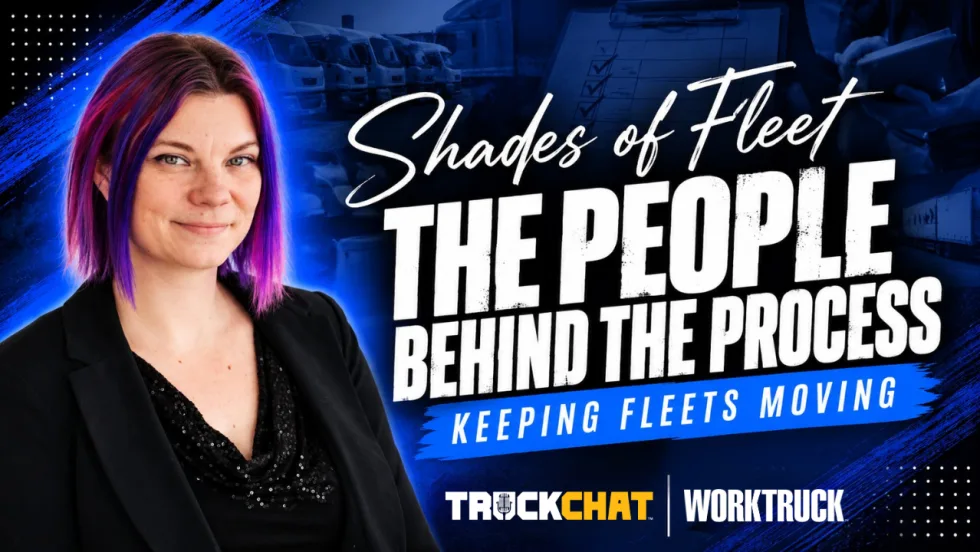
Where’s My Truck: Inside the Fleet Logistics Work Nobody Sees
Shades of Fleet video thumbnail featuring Lauren Fletcher beside the text “The People Behind the Process, Keeping Fleets Moving,” with fleet vehicles and logistics imagery in the background.
Read More →
Work Truck Seeks Fleet and Industry Insights on 2026 Trends and 2027 Forecasts
Work Truck is seeking insights from fleet leaders and industry partners on the trends that shaped 2026 and what commercial fleets should prepare for in 2027. Participate today!
Read More →
It's 10 p.m... Do You Know Who Has Access to Your Fleet?
Preventing cargo theft requires investment in technology, operational processes, and employee training. In an industry with tight margins, it can be difficult to justify investments whose value is measured by incidents that might never occur.
Read More →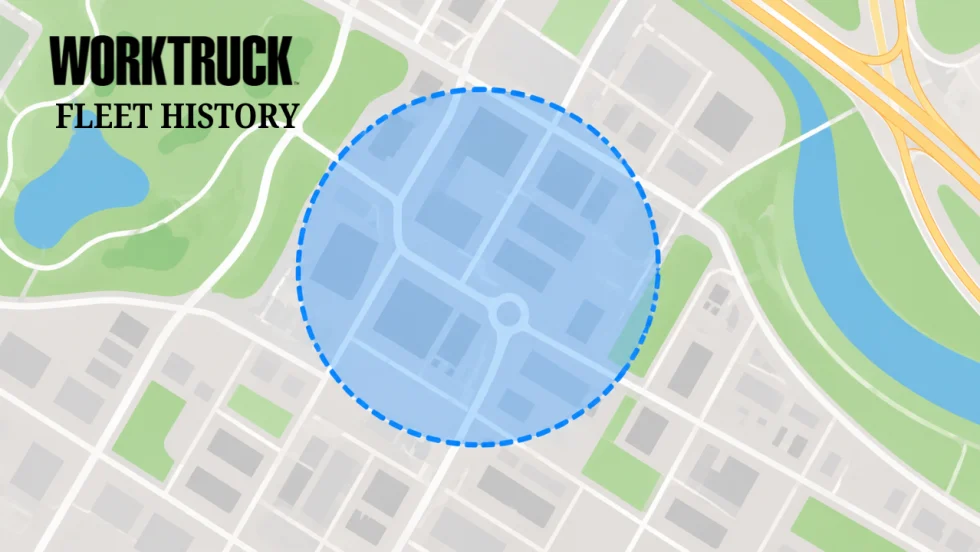
GeoFencing Adds to Your Truck Security Arsenal
Geofencing is a familiar fleet tool today, but its early adoption marked a major shift in vehicle tracking, route monitoring, and the debate over employee privacy.
Read More →
Truckers’ Strike Rumors, New GM Engines, and Hidden Idling Costs Lead This Week’s News
Truckers’ strike rumors, GM’s new 2027 engines, hidden idling costs, racing lessons, IRP rules, and more headline this week’s Truck Chat Weekly Cheat Sheet.
Read More →
Shades of Fleet Wants to Hear From You About Building a Culture of Care
Fleet leaders, we want to hear from you. Share how empathy, trust, and creating space for people can strengthen your team, improve performance, and support retention.
Read More →
What Racing Can Teach Work Truck Fleets About the Work Nobody Sees
Race car driver and mechanical engineer Isaac Johnson shares practical lessons on preparation, relationships, setbacks, and building teams that perform when it counts.
Read More →