




Ford Introduces 2013 Taurus at NY Auto Show
NEW YORK - The company said the new Taurus is more fuel efficient, offers more technology features, and shows a refined design and improved craftsmanship.
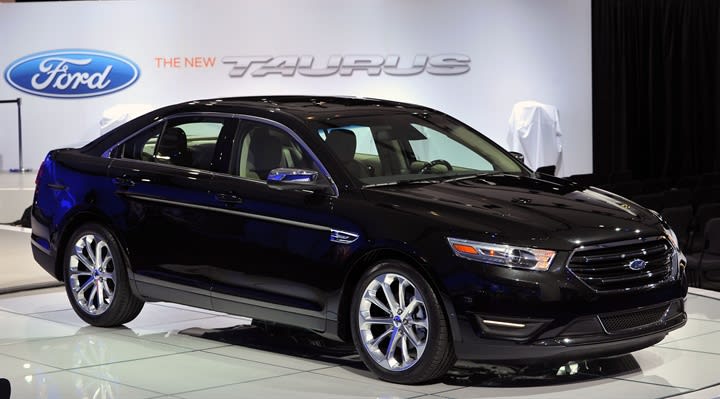
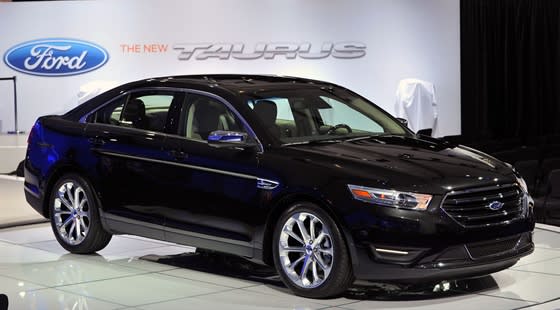
NEW YORK - Ford introduced its 2013-MY Taurus at the New York Auto Show. The company said the new model is more fuel efficient, offers more technology features, and shows a refined design and improved craftsmanship.
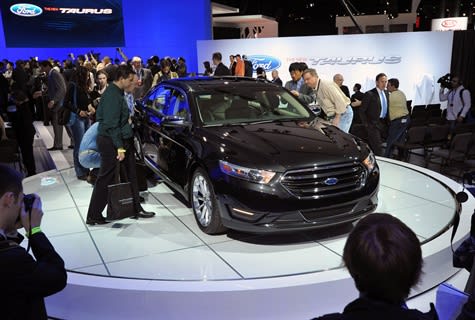
Under the Hood
Ford said the new Taurus is the first North American model to come equipped with the company’s advanced 2.0L EcoBoost engine, providing an estimated highway fuel economy of 31 mpg and delivering a company-estimated 237 horsepower and 250 lb.-ft. of torque.
The automaker said the standard 3.5L V-6 will deliver 290 hp via twin independent variable camshaft timing (Ti-VCT) and will be more fuel efficient, though Ford hasn’t yet announced mpg numbers for the V-6. The V-6 and EcoBoost engine are mated with six-speed automatic transmissions.
Ford added that each Taurus powertrain features other fuel-conserving technologies, such as:
Low-tension front end accessory drive belt
Smart battery management
Aggressive deceleration fuel shutoff
Variable-displacement air conditioning compressor
Reduced friction lubricants
Electric power-assisted steering (EPAS)
Exterior Design
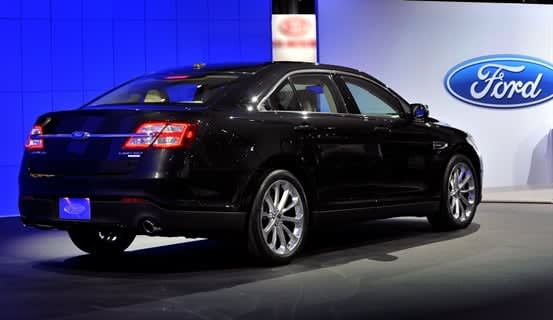
The new Taurus’ design builds in the company’s 2010 model, with a more muscular hood, larger wheels and tires, and raised rear quarter panels. Ford said the company hasn’t changed the dimensions of the vehicle or increased the Taurus’ weight with these design modifications.
Ford added its Electric Power Assist Steering (EPAS) system, which the company said allows Ford’s vehicle dynamics engineers to tune the vehicle to optimize steering feel. The company also said it improved vehicle handling and ride quality.
The automaker also added torque vectoring control to the vehicle, which applies a slight amount of braking force on the outside front wheel when the driver accelerates through a turn, and provides an effect the company said is similar to that of a limited-slip differential. This feature provides more control when increasing speed through curves and is standard.
Interior Design
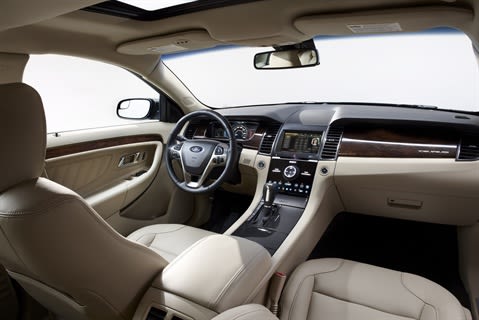
The new Ford Taurus’ interior features a number of enhancements, including the use of recyclable and environmentally friendlier materials in interior component construction. The seat cushions are made of a high concentration of soy-based foam, cloth surfaces and the headliner use recycled materials as do noise, vibration, and harshness (NVH) control components.
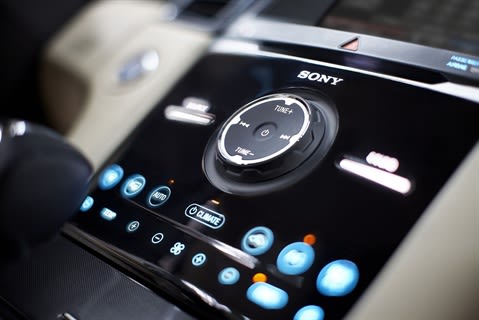
The Taurus features the company’s MyFord Touch system, which uses an 8-inch touchscreen and steering-wheel-mounted five-way toggles to control various functions in the cabin. The driver can personalize these screens to display information relevant to each driver by using voice commands. MyFord Touch is powered by a new version of Ford’s SYNC system, combining voice control for vehicle functions, enabled Bluetooth devices, MP3 players, and external media.
Other technologies and features in the vehicle include the following:
New heated steering wheel and heated and cooled leather-trimmed seats
Multicontour seats with Active Motion seat massage system
Intelligent Access with push-button start
Auto high beams employ a sensor to switch headlamps to high beam when the sensor detects no oncoming traffic
Rain-sensing wipers use an optical sensor to detect the intensity of rain and/or snowfall to automatically adjust wiper speed
Rear view camera activates when reverse gear is selected, projecting via the center stack-mounted 8-inch screen
Rear window power sunshade, a luxury-class feature that shades the rear glass at the touch of a button, helping to keep the cabin cooler
In addition, Taurus is available with other audio and navigation connectivity alternatives.
Safety Features
The new Taurus features a stiff body structure that contains much high-strength and ultra-high-strength steels, including boron. The new vehicle features the company’s Trinity front-crash architecture, named for the three elements designed to absorb and redirect crash forces away from vehicle occupants. Taurus also features Side Protection And Cabin Enhancement (SPACE) Architecture, which adds further structural enhancement.
Airbag restraints in the Taurus feature optimized tethering and venting to alter deployment force based on occupant size, position, and seat belt status. In addition, Taurus features the company’s Safety Canopy with rollover sensor. In the event of an airbag deployment, Taurus provides an SOS Post-Crash Alert System, and features Ford’s AdvanceTrac with Electronic Stability Control.
In addition, Taurus offers a complement of driver-aid technologies, such as:
Adaptive cruise control employing radar technology to monitor traffic up to 600 feet ahead, automatically adjusting Taurus speed to help maintain a safe distance
Collision warning with brake support, enabled by adaptive cruise control, provides a “heads-up” visual warning combined with an audio signal to alert the driver to slower moving traffic ahead. The system also pre-charges the brakes to aid stopping
Blind Spot Information System (BLIS) is designed to alert the driver if another vehicle is driving within a potential blind spot
Cross-traffic alert, enabled by BLIS, senses and warns the driver of oncoming traffic from either direction when the Taurus is backing out of a driveway or parking space
MyKey owner controls feature allows parents or fleet administrators to activate restricted driving modes. MyKey can limit top speeds and audio volume, provides earlier warnings and prevents deactivation of stability control systems. A new MyKey feature can prevent access to blocked satellite radio content
Originally posted on Automotive Fleet
More Small Fleet


Developing Budget-Friendly Driver Safety Programs
From driver training and safety meetings to one-on-one coaching and incentive programs, several small fleets share how they have developed a safety culture with their drivers using low- to no-cost resources.
Read More →
Boosting Last-Mile Fleet Uptime, Safety, and Value with AI Vehicle Inspections
AI-powered inspections are transforming last-mile fleets by replacing manual checks with highly accurate automated scans that detect defects in seconds. By giving fleet operations visibility into the daily condition of their vehicles, you can identify trends over the vehicle’s lifecycle that enable improved procurement decisions, route management, driver training and accountability.
Read More →
Five Ways Seat Belts Help Prevent Injuries
There are five ways seat belts protect occupants from injuries, according to the Tennessee Department of Safety and Homeland Security.
Read More →
It’s here: The 2026 Fleet Technology Trends Report
What does AI mean for fleets? Get the answer — and learn other top tech trends.
Read More →
Small Fleets, Big Impact: How Independent Drivers Power Wreaths Across America
Check out how small fleets and independent drivers power Wreaths Across America each December and why their impact matters more than ever.
Read More →
VMS Survey Finds 65% of Small Fleet Managers Run Operations Alone
A new VMS survey shows small fleet managers are stretched thin, with most handling operations solo and eager to adopt digital tools for relief.
Read More →
Tips for Driving Safely on Halloween Night
This video features a reminder from the Connecticut Department of Transportation (DOT) and the Connecticut Police Chiefs Association, urging drivers to prioritize safety this Halloween.
Read More →
AI, Access, and Uptime: VMS’s Next Chapter with David Prusinski
VMS’s new Co-CEO, David Prusinski, shares how an AI-first approach will give small fleets and repair shops the tools to compete like big players.
Read More →
Fleet Managers Share Winter Prep Tips: It's Never Too Early!
Three fleets share best practices to prep vehicles for winter and prevent downtime when the cold sets in.
Read More →