




First Aluminum F-150 Rolls off Assembly Line
Ford has built its first aluminum-body 2015 F-150 pickup truck, and production of the vehicle is now underway at the 100-year-old Ford Rouge Center in Dearborn, Mich., an event marked by the appearance of Bill Ford and other dignitaries.

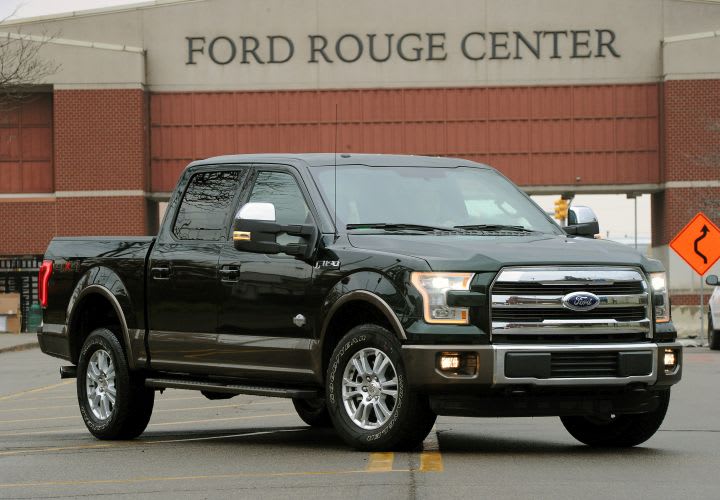
Photo of F-150 courtesy of Ford.
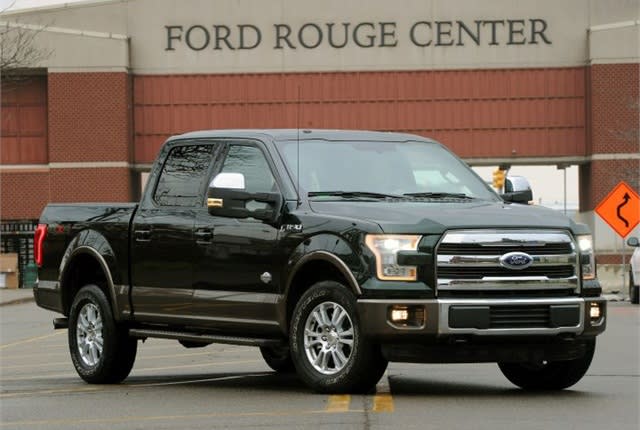
Photo of F-150 courtesy of Ford.
Ford has built its first aluminum-body 2015 F-150 pickup truck, and production of the vehicle is now underway at the 100-year-old Ford Rouge Center in Dearborn, Mich., an event marked by the appearance of Bill Ford and other dignitaries.
Ford plans to deliver the 2015 F-150 to dealers in December in the U.S. It will go on sale in 90 global markets in 2015. Fleets with special orders will get their trucks in February.
The start of production was marked with a media event, which was presided over by Bill Ford, Ford’s executive chairman and great-grandson of company founder Henry Ford. The Nov. 11 event attended by Work Truck drew hundreds of employees, senior executives, and local political leaders. Ford described the Rouge plant as “the heart of Ford, and the F-150 is the centerpiece of Rouge.”
Enthusiasm was high from executives and employees alike, when Plant Manager Brad Huff and Jimmy Settles, the plant’s UAW leader, drove the first aluminum F-150 off the assembly line.
Much has been made of Ford's gamble to revamp its top-selling vehicle, and the nation's top-selling truck for nearly four decades, with an aluminum body that reduces weight by about 700 pounds. Yet early driving impressions have been favorable, and the move is expected to significantly improve fuel economy.
When asked later about the risks of using aluminum in the body in the F-150, Ford said, “Yes, it’s a risk, but it’s a risk worth taking. You can tell the difference in the handling and performance.”
Ford noted that the use aluminum, a sustainable material, is also part of a Ford Motors tradition. Ford related how his great-grandfather reused the wood from the packing crates for the raw steel used in the early vehicles for running boards and other wooden parts.
Ford has lightened the weight of the truck and increased its capabilities over the 2014 model. The 2015 F-150 can tow up to 1,100 more pounds and haul up to 530 more pounds in payload, according to Ford.
Truck Communications Manager Mike Levine echoed Ford by noting that “the all-new F-150 is the best F-150 we’ve ever made. It’s tougher, more capable, and more efficient.”
For instance, the aluminum alloy is more dent and ding resistant and if paint is chipped away, it will not form red rust. Even in these days of falling fuel prices, fleets will be able to improve mpg by 5 to 20 percent, according to Levine.
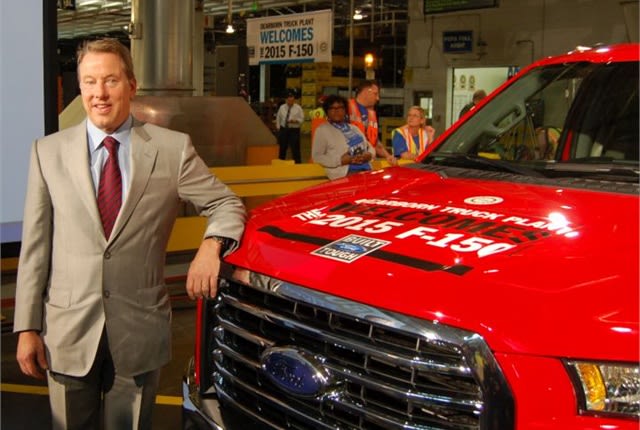
Photo of Bill Ford with 2015 F-150 by Chris Wolski.
Fleet interest in the new F-150 is high, according to Levine. But, beyond delivering power, efficiency, and capability, the transformation of both the Rouge plant and the F-150 speaks to a more fundamental success.
“This transformation shows the strength of the 1 Ford Plan,” said CEO Mark Fields during the launch ceremony.
Prices will rise modestly for the 2015-MY F-150 by at least $395 and as much as $3,615 depending on the model.
The all-new iteration of the 60-year-old truck is the result of a $359 million retooling of the Dearborn Truck Plant, which will also be built at the Kansas City Assembly Plant starting in early 2015.
By Chris Wolski
Originally posted on Automotive Fleet
More Operations
Family Ties Inside the Fleet Families Building Careers Across Generations
Three fleet families share what it really takes to work together, learn across generations, and keep business from following them home.
Read More →
Shades of Fleet Call for Voices: Fleet's Hidden Heroes
Fleet’s hidden heroes are often the ones keeping everything moving behind the scenes. September’s Shades of Fleet is looking for dispatchers, coordinators, parts specialists, and other support pros to share their stories.
Read More →
Truck Centers, Inc. Celebrates National Truck Driver Appreciation Week with $1,000 Fuel Card Giveaways
During National Truck Driver Appreciation Week, Truck Centers, Inc. is offering customers a chance to fuel up for free. Customers at all Truck Centers locations can enter to win one of four $1,000 fuel cards from Sept. 14 - 18.
Read More →
Fleet Guides, AI Time-Savers, Truck Tariffs & Fuel Strategy Lead the News
This week’s Truck Chat Cheat Sheet covers new fleet vehicle guides, practical AI use cases, U.S.-Canada truck production, mixed-energy strategy, and more.
Read More →
What Fleet Employers Are Missing When Hiring Veterans
What if some of the strongest candidates for fleet are already out there, but their experience is written in a language our industry does not always recognize?
Read More →
Automotive Fleet Opens 2026 Personal Use Survey for Commercial Fleet Managers
Less than two weeks left! Commercial and corporate fleet managers are invited to share how their organizations handle company vehicle personal-use policies, charges, and driver eligibility.
Read More →
What Resilient Fleets Do Differently When Conditions Change
Fleet resilience is about more than reacting to disruption. Lauren Fletcher talks with AP Fleet’s Alex Coveney about flexibility, planning, scaling, and what helps fleets adapt when business conditions shift.
Read More →
If We Want the Next Generation in Automotive, We Have to Give Them a Reason to Care
The automotive industry talks constantly about its workforce shortage. But before we can recruit the next generation, we may need to do a better job giving kids a reason to care about automotive in the first place.
Read More →
Ram ProMaster City Under $40K, Truck Tariffs, and AI Maintenance Lead the News
A sub-$40K commercial van, tariff questions, AI-powered maintenance, and a new EV production strategy headline this week’s Truck Chat Cheat Sheet.
Read More →
Bob Adamsky Shares the Fleet Lessons You Usually Learn the Hard Way
After more than 30 years in fleet, Arrow International’s Bob Adamsky has learned that the job is about far more than vehicles. He shares the lessons he wishes every fleet manager could learn a little earlier.
Read More →