




Drivers Feel Pressured to 'Stay Connected'
A new survey from the National Safety Council finds that perceived expectations from family and work are making Americans more prone to distracted driving.
Despite growing efforts to educate the public about the dangers of distracted driving, a new National Safety Council survey suggests that most American drivers still feel pressured by family and work to constantly stay connected so they can respond to calls and messages.
The survey, released in conjunction with the beginning of Distracted Driving Awareness Month, found that 82% of Americans feel the most pressure from their families. A total of 54% of drivers indicated they still feel pressure from work.
“The finding not only sheds light on why Americans continue to drive distracted, but also underscores their ongoing struggle to accurately assess risk,” the National Safety Council said in a released statement about the survey. “Two-thirds of drivers felt unsafe because of another driver’s distraction, but far fewer — just 25% — recognized that their own distractions have put themselves or others at risk.”
Other key findings of the survey include:
74% of drivers would use Facebook behind the wheel.
One in four drivers would feel much better about their drive if there were no way to use technology behind the wheel.
66% of drivers would talk on the phone while driving through a parking lot — a chaotic environment with many hazards.
Of the teen drivers surveyed, 73% said their friends put the most pressure on them to drive distracted — slightly higher than family (71%).
"It is a sad irony that the people we love are actually jeopardizing our safety,” said Deborah A.P. Hersman, president and CEO of the National Safety Council. “If you really care, don’t call to say, ‘I love you.’ Instead, encourage your family to set everything else aside, disconnect and focus only on the road.”
Thousands have died in distracted driving crashes. The dangers of using cell phones — even hands-free phones — while driving have been understood for years. But there are more ways than ever to stay connected behind the wheel, the National Safety Council pointed out. In-vehicle systems allow drivers to call, text, email, update social media and browse the Internet, despite research showing such systems cause distraction that can linger long after the driver finishes the task.
But there is some good news. A total of 55% of drivers said that if their vehicle or phone came with a technology solution to prevent distraction, they would not turn it off.
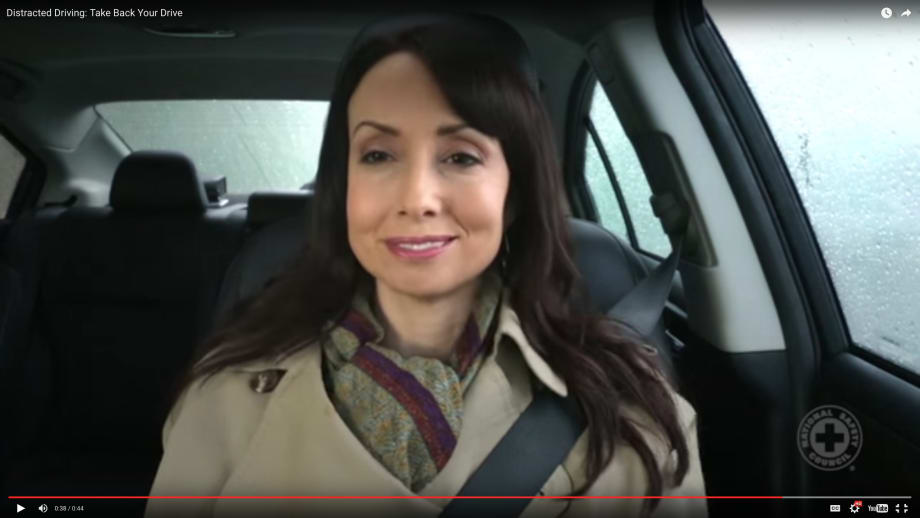
To view a National Safety Council video produced for Distracted Driving Awareness Month, click on the photo or link below the headline.
Originally posted on Automotive Fleet
More Small Fleet


Developing Budget-Friendly Driver Safety Programs
From driver training and safety meetings to one-on-one coaching and incentive programs, several small fleets share how they have developed a safety culture with their drivers using low- to no-cost resources.
Read More →
Boosting Last-Mile Fleet Uptime, Safety, and Value with AI Vehicle Inspections
AI-powered inspections are transforming last-mile fleets by replacing manual checks with highly accurate automated scans that detect defects in seconds. By giving fleet operations visibility into the daily condition of their vehicles, you can identify trends over the vehicle’s lifecycle that enable improved procurement decisions, route management, driver training and accountability.
Read More →
Five Ways Seat Belts Help Prevent Injuries
There are five ways seat belts protect occupants from injuries, according to the Tennessee Department of Safety and Homeland Security.
Read More →
It’s here: The 2026 Fleet Technology Trends Report
What does AI mean for fleets? Get the answer — and learn other top tech trends.
Read More →
Small Fleets, Big Impact: How Independent Drivers Power Wreaths Across America
Check out how small fleets and independent drivers power Wreaths Across America each December and why their impact matters more than ever.
Read More →
VMS Survey Finds 65% of Small Fleet Managers Run Operations Alone
A new VMS survey shows small fleet managers are stretched thin, with most handling operations solo and eager to adopt digital tools for relief.
Read More →
Tips for Driving Safely on Halloween Night
This video features a reminder from the Connecticut Department of Transportation (DOT) and the Connecticut Police Chiefs Association, urging drivers to prioritize safety this Halloween.
Read More →
AI, Access, and Uptime: VMS’s Next Chapter with David Prusinski
VMS’s new Co-CEO, David Prusinski, shares how an AI-first approach will give small fleets and repair shops the tools to compete like big players.
Read More →
Fleet Managers Share Winter Prep Tips: It's Never Too Early!
Three fleets share best practices to prep vehicles for winter and prevent downtime when the cold sets in.
Read More →