




Coca-Cola Beefs Up Hybrid Van Fleet
The Coca-Cola Company plans to more than double the number of hybrid full-size vans in its service fleet by early 2015 and eventually reach a 10 percent replacement level for the fleet.
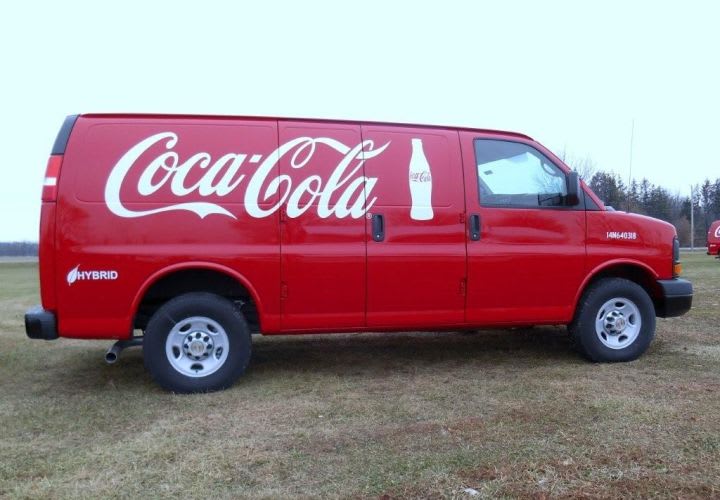
Photo courtesy of XL Hybrids.
Photo courtesy of XL Hybrids.
The Coca-Cola Company plans to more than double the number of hybrid full-size vans in its service fleet by early 2015 and eventually reach a 10 percent replacement level for the fleet, the company's fleet manager told AutomotiveFleet.com.
Coca-Cola is adding 140 additional gasoline-electric hybrid Chevrolet Express 3500 vans by early 2015 to go with the 103 it had in the fleet at the end of 2013, said Tony Eiermann, Coca-Cola's fleet manager of assets and value management. Coca-Cola is partnering with XL Hybrids to add the XL3 parallel hybrid-electric drive system.
The company's investment in the conversions has added more than 20 percent to the range the vehicles can travel on a single tank of gasoline. The system also reduces carbon emissions by about 20 percent, according to XL Hybrids.
After the initial order, Coca-Cola ordered 70 more converted vans in the spring and an additional 70 earlier this month. The company is now taking delivery of vans ordered in the spring. The vans will be assigned to Coca-Cola service technicians that make calls to repair vending and fountain machines serving the company's beverages.
The vans upfitted with the XL Hybrids system feature regenerative braking technology, which is charge-sustaining and doesn't require a plug. During operation, the van’s OEM engine continues to run with help from the XL3 electric motor, thereby using less fuel.
"The reason we went with this technology is because it's very simple," said Eiermann. "The biggest thing for Coca-Cola is if for any reason this system fails, we can still operate the van. It goes into a bypass mode."
The company can service the vans at any of its more than 200 fleet garages around the country by ordering readily-available replacement parts. The van's lithium-ion battery pack, for example, is sourced from Johnson Controls.
"From a fleet manager's perspective, having a low risk technical solution is a good selling point," said Clay Siegert, vice president and co-founder of XL Hybrids. "We source our hybrid components from large component suppliers, and have achieved a 99.9 percent vehicle uptime over 4 million miles with our customers."
The 240 hybrid vans are included within Coca-Cola's 3,600-vehicle service fleet. Coca-Cola also operates a delivery fleet of heavy-duty trucks. Coca-Cola operates about 26,000 on-road vehicles, including the single-axle and tandem-axle trailers.
Related:
Originally posted on Automotive Fleet
More Green Fleet

Fleet Forward Conference Introduces One-Day Passes for 2026
New one-day registration gives fleet professionals the flexibility to attend Tuesday, Wednesday, or Thursday, with passes available for $199 through Sept. 18.
Read More →
CALSTART Rebrands as Catalyst Mobility, Will Combine with Forth in 2027
CALSTART has rebranded as Catalyst Mobility and will combine with Forth at the start of 2027. The new organization said it is poised to become one of the world's largest, strongest, and most impactful clean transportation nonprofits.
Read More →
Electric Truck and Charging Programs to Boost Sustainability at NY & NJ Ports
Together, the Port Authority of New York and New Jersey and CALSTART will electrify drayage and terminal operations serving the East Coast’s busiest container port. A pair of incentive programs totaling $45 million has launched to accelerate adoption of zero-emission drayage trucks and terminal tractors.
Read More →
Xos Hub Surpasses One Gigawatt-Hour of Energy Delivered in the Field
A single Xos Hub has surpassed one gigawatt-hour of energy across more than 33,600 charging sessions in the field, demonstrating performance that supports Xos' expansion across new products and markets.
Read More →
Carrier Transicold Launches All-Electric Vector 8200 TRU for Diesel-Free On-Site Cold Storage
Carrier Transicold’s first engineless multi-temperature TRU helps fresh- and frozen-food fleets add supplemental cold storage capacity during seasonal peaks.
Read More →
Narro Trucks Introduces Electric Utility Vehicle
Narro Trucks officially launched its operations on Aug. 20 and hosted a ride and drive to showcase its electric truck, which will be produced in Virginia.
Read More →
Samsung SDI Takes Full Control of GM Battery JV as Indiana Plant Pivots to Energy Storage
Samsung SDI is taking full control of its Indiana battery plant with GM, marking a major shift from the EV-focused joint venture Charged Fleet first covered in 2023.
Read More →
NWSA Taps CALSTART to Administer Zero-Emission Drayage Assistance Program
CALSTART will provide free technical assistance services to drayage fleets serving the Ports of Seattle and Tacoma and looking to transition to cleaner technologies and help decarbonize freight hubs.
Read More →
EV Fleet Reality Check: What Operators Wish They Knew Before Electrifying Their Work Vans
Electric work truck upfits bring new compatibility questions. Learn how parts availability, OEM guidance, power demands, and route planning can affect fleet performance.
Read More →
Peterbilt Expands Sourcewell Partnership with Electric Vehicle Lineup
Peterbilt Motors Company’s cooperative purchasing agreement with Sourcewell and its Canadian partner, Canoe Procurement Group, now includes including Peterbilt's battery-electric vehicle lineup.
Read More →