




Chrysler Expands Availability of Crash-Warning Tech
Chrysler's Full-Speed Forward Collision Warning-Plus, a driver-assist feature once reserved for luxury vehicles, becomes available for more models.
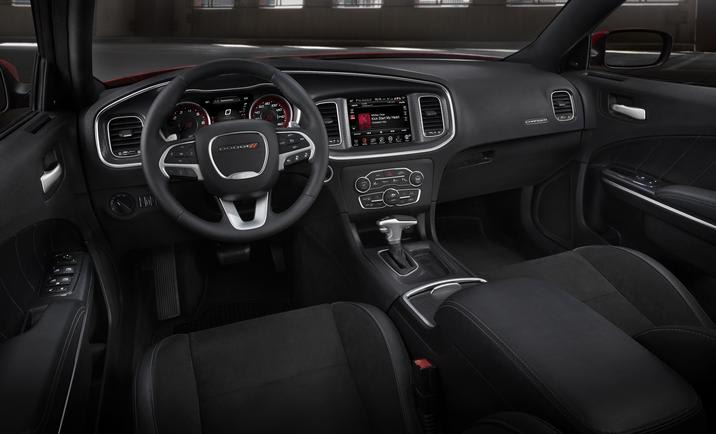
Photo of 2015 Dodge Charger interior courtesy of Chrysler Group.
Photo of 2015 Dodge Charger interior courtesy of Chrysler Group.
For the 2015 model year, Chrysler Group’s Full-Speed Forward Collision Warning-Plus system will be available on the redesigned Dodge Charger full-size sedan, the all-new Chrysler 200 mid-size sedan and the Jeep Cherokee mid-size SUV.
Full-Speed Forward Collision Warning-Plus, the latest iteration of Chrysler Group’s most advanced driver-assist feature, benefits from a “unique pairing of radar and camera technologies,” the automaker said.
“Chrysler Group takes seriously its commitment to providing innovative and intuitive driver-assistance features to the mainstream market segments,” said Mark Chernoby, senior vice president of engineering and vice president of the Product Committee. “Accordingly, our engineers seek to develop the most effective means to deliver on that commitment.”
Chrysler Group’s radar and camera technologies combine to determine whether a frontal impact with another vehicle is imminent. The two must agree or the system will not activate. Such redundancy is designed to prevent false-positive readings.
Once Full-Speed Forward Collision Warning-Plus determines a frontal impact appears imminent, the system pre-fills the vehicle’s brakes and transmits two simultaneous warnings to alert the driver that intervention is required. One warning is audible, and the other appears on the brightly lit, thin-film transistor (TFT) display of the vehicle’s instrument cluster.
If the driver doesn’t respond, the system triggers a brief brake application as a tactile alert. If the driver remains unresponsive and the collision risk persists, the vehicle’s brakes are steadily and firmly applied to slow forward progress. This intervention is intended to provide more driver-reaction time and, if there is no response, help reduce crash energy in the event of a collision.
If the driver responds with inadequate brake force, Full-Speed Forward Collision Warning-Plus triggers Advanced Brake Assist. This automatically increases brake force for better performance.
If an imminent collision is detected at speeds below 20 mph, the system may deploy maximum brake force and bring the vehicle to a full stop.
Full-Speed Forward Collision Warning-Plus joins a growing list of autonomous-intervention features available on Chrysler Group vehicles. That list includes Lane-Departure Warning with Lane-Keep Assist and Adaptive Cruise Control-Plus with Full Stop.
Originally posted on Automotive Fleet
More Small Fleet


Developing Budget-Friendly Driver Safety Programs
From driver training and safety meetings to one-on-one coaching and incentive programs, several small fleets share how they have developed a safety culture with their drivers using low- to no-cost resources.
Read More →
Boosting Last-Mile Fleet Uptime, Safety, and Value with AI Vehicle Inspections
AI-powered inspections are transforming last-mile fleets by replacing manual checks with highly accurate automated scans that detect defects in seconds. By giving fleet operations visibility into the daily condition of their vehicles, you can identify trends over the vehicle’s lifecycle that enable improved procurement decisions, route management, driver training and accountability.
Read More →
Five Ways Seat Belts Help Prevent Injuries
There are five ways seat belts protect occupants from injuries, according to the Tennessee Department of Safety and Homeland Security.
Read More →
It’s here: The 2026 Fleet Technology Trends Report
What does AI mean for fleets? Get the answer — and learn other top tech trends.
Read More →
Small Fleets, Big Impact: How Independent Drivers Power Wreaths Across America
Check out how small fleets and independent drivers power Wreaths Across America each December and why their impact matters more than ever.
Read More →
VMS Survey Finds 65% of Small Fleet Managers Run Operations Alone
A new VMS survey shows small fleet managers are stretched thin, with most handling operations solo and eager to adopt digital tools for relief.
Read More →
Tips for Driving Safely on Halloween Night
This video features a reminder from the Connecticut Department of Transportation (DOT) and the Connecticut Police Chiefs Association, urging drivers to prioritize safety this Halloween.
Read More →
AI, Access, and Uptime: VMS’s Next Chapter with David Prusinski
VMS’s new Co-CEO, David Prusinski, shares how an AI-first approach will give small fleets and repair shops the tools to compete like big players.
Read More →
Fleet Managers Share Winter Prep Tips: It's Never Too Early!
Three fleets share best practices to prep vehicles for winter and prevent downtime when the cold sets in.
Read More →