




Cable Provider Joins Clean Cities to Improve Efficiency
To further reduce its petroleum use and increase efficiency within its fleet of 20,000 services trucks and vehicles, Time Warner Cable has joined the Department of Energy's Clean Cities' National Clean Fleet Partnership.

Photo: Time Warner Cable

Photo: Time Warner Cable
To further reduce its petroleum use and increase efficiency within its fleet of 20,000 services trucks and vehicles, Time Warner Cable (TWC) has joined the Department of Energy's Clean Cities' National Clean Fleet Partnership.
Participation in the Clean Fleet Partnership is part of the company's "Go Green" initiative and overall commitment to corporate responsibility, which is targeting a 15-percent or more reduction in total carbon intensity by the end of 2014.
“One of TWC’s core values is a commitment to responsible business practices that positively impact the communities we serve,” said Rob Marcus, chairman and CEO of Time Warner Cable. “We are very pleased to join this important DOE partnership to help our fleet achieve greater levels of environmental efficiencies. TWC looks forward to working with other large national fleet owners to share best practices that will drive down our fuel consumption, overall vehicle costs and environmental impact.”
TWC’s fleet is one of the largest private sector fleets in the country — listed as number six on the 2014 Top 300 list compiled by Automotive Fleet — and, in recent years, has taken action to utilize more fuel-efficient vehicles.
TWC said it is replacing service vehicles with Ford Transit and Ford Transit Connect vehicles that are capable of achieving a 40-percent fuel performance improvement over replaced fleet. The Ford Fusion Hybrid has been made the standard TWC passenger car, which brings a 33-percent increase in fuel efficiency. The company has also doubled the number of Electric Power Take Off devices within its fleet of bucket trucks, which reduces idle time as it allows the vehicle to be shut down when the bucket is in use.
The Clean Cities’ National Clean Fleets Partnership establishes strategic alliances with large private fleets to help them explore and adopt alternative fuels and fuel economy measures to reduce petroleum use.
TWC will be provided with technical services, data and assistance to develop a petroleum reduction plan, and be given access to tools and resources to navigate alternative fuels and advanced vehicles. TWC will also have access to information exchange among other Fortune 500 companies that are Clean Fleet Partners.
Originally posted on Automotive Fleet
More Green Fleet

Fleet Forward Conference Introduces One-Day Passes for 2026
New one-day registration gives fleet professionals the flexibility to attend Tuesday, Wednesday, or Thursday, with passes available for $199 through Sept. 18.
Read More →
CALSTART Rebrands as Catalyst Mobility, Will Combine with Forth in 2027
CALSTART has rebranded as Catalyst Mobility and will combine with Forth at the start of 2027. The new organization said it is poised to become one of the world's largest, strongest, and most impactful clean transportation nonprofits.
Read More →
Electric Truck and Charging Programs to Boost Sustainability at NY & NJ Ports
Together, the Port Authority of New York and New Jersey and CALSTART will electrify drayage and terminal operations serving the East Coast’s busiest container port. A pair of incentive programs totaling $45 million has launched to accelerate adoption of zero-emission drayage trucks and terminal tractors.
Read More →
Xos Hub Surpasses One Gigawatt-Hour of Energy Delivered in the Field
A single Xos Hub has surpassed one gigawatt-hour of energy across more than 33,600 charging sessions in the field, demonstrating performance that supports Xos' expansion across new products and markets.
Read More →
Carrier Transicold Launches All-Electric Vector 8200 TRU for Diesel-Free On-Site Cold Storage
Carrier Transicold’s first engineless multi-temperature TRU helps fresh- and frozen-food fleets add supplemental cold storage capacity during seasonal peaks.
Read More →
Narro Trucks Introduces Electric Utility Vehicle
Narro Trucks officially launched its operations on Aug. 20 and hosted a ride and drive to showcase its electric truck, which will be produced in Virginia.
Read More →
Samsung SDI Takes Full Control of GM Battery JV as Indiana Plant Pivots to Energy Storage
Samsung SDI is taking full control of its Indiana battery plant with GM, marking a major shift from the EV-focused joint venture Charged Fleet first covered in 2023.
Read More →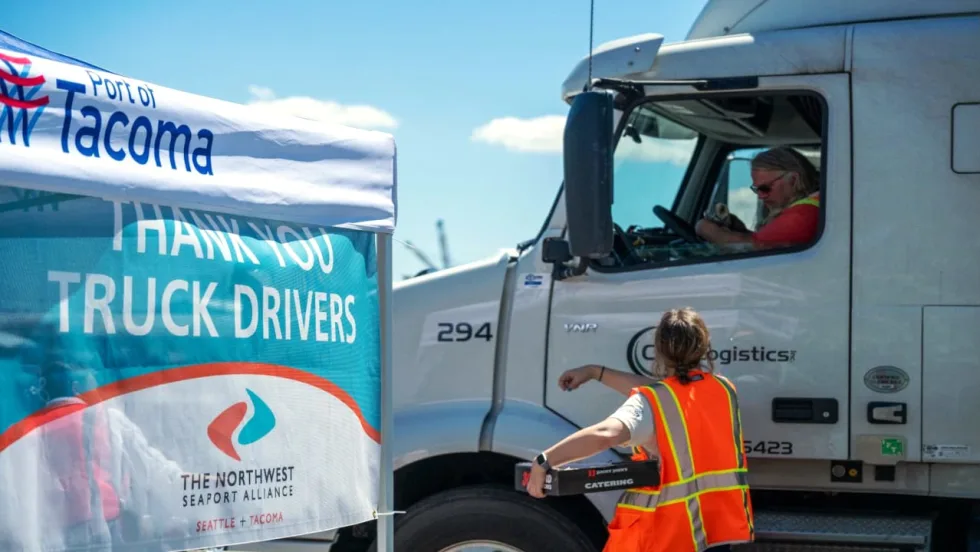
NWSA Taps CALSTART to Administer Zero-Emission Drayage Assistance Program
CALSTART will provide free technical assistance services to drayage fleets serving the Ports of Seattle and Tacoma and looking to transition to cleaner technologies and help decarbonize freight hubs.
Read More →
EV Fleet Reality Check: What Operators Wish They Knew Before Electrifying Their Work Vans
Electric work truck upfits bring new compatibility questions. Learn how parts availability, OEM guidance, power demands, and route planning can affect fleet performance.
Read More →
Peterbilt Expands Sourcewell Partnership with Electric Vehicle Lineup
Peterbilt Motors Company’s cooperative purchasing agreement with Sourcewell and its Canadian partner, Canoe Procurement Group, now includes including Peterbilt's battery-electric vehicle lineup.
Read More →