




Brazilian Fleet Market Overview Aimed at Global Fleet Decision Makers
A new report into the current state of the Brazilian fleet market has been launched to help international fleet managers manage their fleets more effectively in the rapidly growing country, now the world’s sixth largest economy.
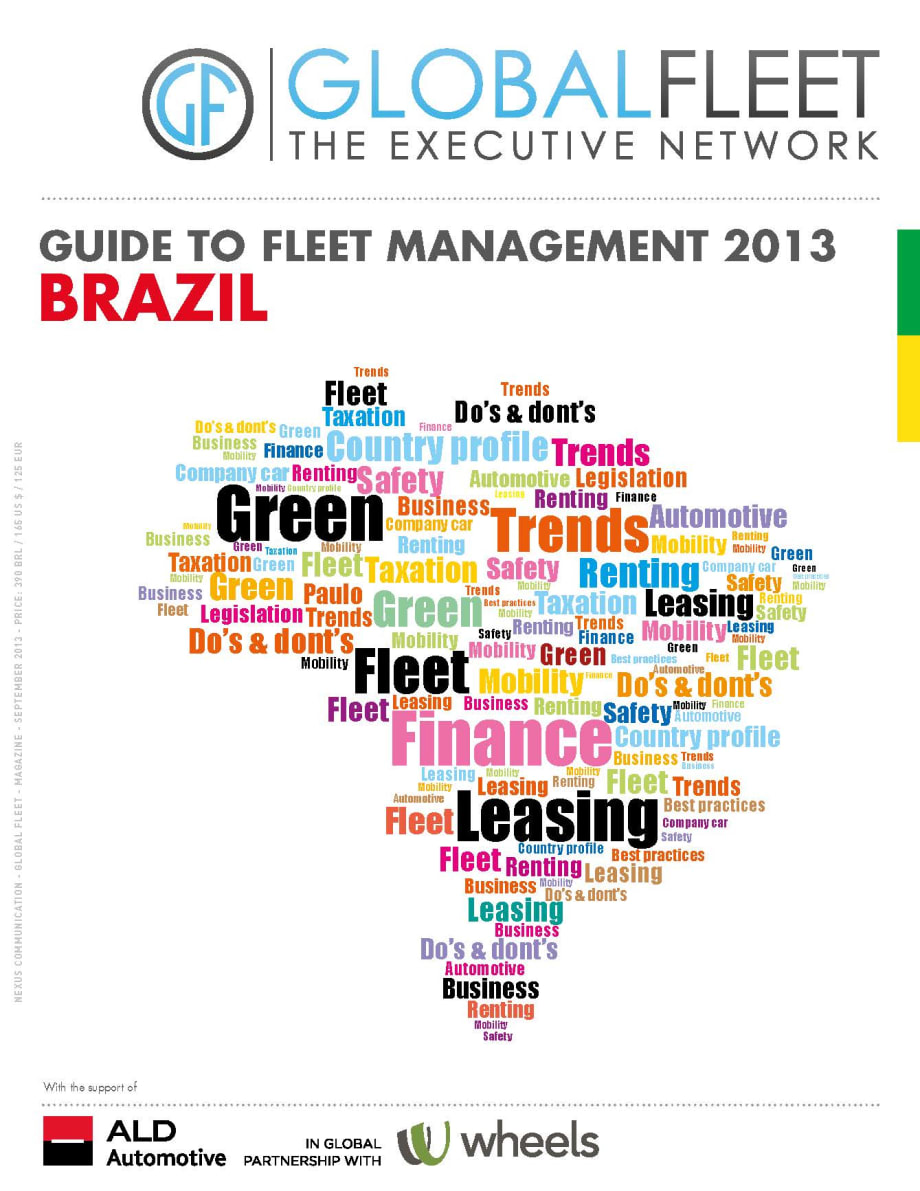
A new report into the current state of the Brazilian fleet market has been launched to help international fleet managers manage their fleets more effectively in the rapidly growing country, now the world’s sixth largest economy.
The new Guide to Fleet Management in Brazil is the first in a series of national fleet reports from the Global Fleet website and has been produced in conjunction with major leasing and fleet management providers, ALD Automotive and Wheels.
Global Fleet conducted a survey of international fleet managers last year to ask what their priority countries where in relation to fine tuning the management of their fleets at a global level. Brazil was voted number one, followed by Turkey and China.
As a result, the comprehensive new report is designed to help managers of large global fleets, who operate in a number of different countries around the world, better understand the fleet picture and run their fleets more effectively in Brazil.
The guide outlines the main differences between the Brazilian and European and U.S. fleet markets, and contains detailed market specifics, such as automotive data and fleet statistics, company car taxation and legislation in Brazil, along with the latest trends and forecasts, according to Global Fleet.
The report, which includes interviews with Brazilian fleet managers and major leasing companies operating in the country, says that Brazil’s economy continues to experience rapid growth with the rise of a large, urban middle-class. But, the country still lacks good infrastructure and governance, and is plagued by high levels of inequality, poverty and corruption, according to the guide's authors.
The authors found that fleet managers also need to understand other local issues, such as the differential pricing that exists in Brazil between indigenously manufactured cars and imports, which can be up to 35 percent more expensive because of a punitive system of import tariffs.
As a result, there are now some 20 manufacturers assembling cars in 39 different cities in Brazil to try and circumvent the Brazilian taxation system. This year a total of 3.6 million cars are forecast to be produced, rising to 5.0 million by 2017.
Brazil also has a flourishing new car market, the fourth largest in the world behind China, the U.S., and Japan, and, at around 3.8 million units, the projected total for this year, bigger than Germany, the UK, and France, according to the guide. New car sales are expected to reach 4.9 million by 2017.
Most Brazilian companies employ a full-time in-house fleet manager, about 30 percent of which are women. But, there is little to suggest, according to the report, that these in-house fleet managers are aware of some of the industry pitfalls experienced in Europe.
Caroline Thonnon, Head of Business Development and Global Fleet Leader, said: “The new Guide to Fleet Management in Brazil is the first fleet management report produced by our Global Fleet division and is in direct response to the requests of global fleet managers. The new publication aims to present some basic and essential information on fleet management in the country, together with do’s and don’ts that will help you in making the right choices when managing your fleet in Brazil. By providing this comprehensive overview in both English and Portuguese, we aim to narrow the gap between local and global fleet managers. The complexities of local taxation, safety policy, fuel and maintenance management, as well as the peculiarities of the local culture and bureaucracy, add to the already daunting difficulties facing fleet management in Brazil. It is therefore our sincere hope that this new and comprehensive guide will successfully navigate international fleet managers through the murky waters of fleet management in Brazil.”
The new Guide to Fleet Management in Brazil will be available in both English and Portuguese from the Global Fleet eshop at: http://shop.globalfleet.com/
Originally posted on Automotive Fleet
More Small Fleet


Developing Budget-Friendly Driver Safety Programs
From driver training and safety meetings to one-on-one coaching and incentive programs, several small fleets share how they have developed a safety culture with their drivers using low- to no-cost resources.
Read More →
Why Fleet Managers Are Replacing Departmental Vehicles with Shared Motor Pools
Departmentally assigned vehicles often create hidden costs through underutilization, poor visibility, and increased administrative burden. This white paper explores how shared motor pool strategies help fleets reduce costs, improve accountability, and optimize vehicle utilization.
Read More →
Boosting Last-Mile Fleet Uptime, Safety, and Value with AI Vehicle Inspections
AI-powered inspections are transforming last-mile fleets by replacing manual checks with highly accurate automated scans that detect defects in seconds. By giving fleet operations visibility into the daily condition of their vehicles, you can identify trends over the vehicle’s lifecycle that enable improved procurement decisions, route management, driver training and accountability.
Read More →
Five Ways Seat Belts Help Prevent Injuries
There are five ways seat belts protect occupants from injuries, according to the Tennessee Department of Safety and Homeland Security.
Read More →
It’s here: The 2026 Fleet Technology Trends Report
What does AI mean for fleets? Get the answer — and learn other top tech trends.
Read More →
Small Fleets, Big Impact: How Independent Drivers Power Wreaths Across America
Check out how small fleets and independent drivers power Wreaths Across America each December and why their impact matters more than ever.
Read More →
VMS Survey Finds 65% of Small Fleet Managers Run Operations Alone
A new VMS survey shows small fleet managers are stretched thin, with most handling operations solo and eager to adopt digital tools for relief.
Read More →
Tips for Driving Safely on Halloween Night
This video features a reminder from the Connecticut Department of Transportation (DOT) and the Connecticut Police Chiefs Association, urging drivers to prioritize safety this Halloween.
Read More →
AI, Access, and Uptime: VMS’s Next Chapter with David Prusinski
VMS’s new Co-CEO, David Prusinski, shares how an AI-first approach will give small fleets and repair shops the tools to compete like big players.
Read More →