





Read More: How to Calculate EV vs. ICE Vehicle Cost Per Mile
Are EVs or ICE Vehicles More Energy Efficient?
A Yale study analyzes how energy is converted to powering the drivetrains of both electric and gas-powered vehicles, and how much energy is lost in each process.
January 3, 2023
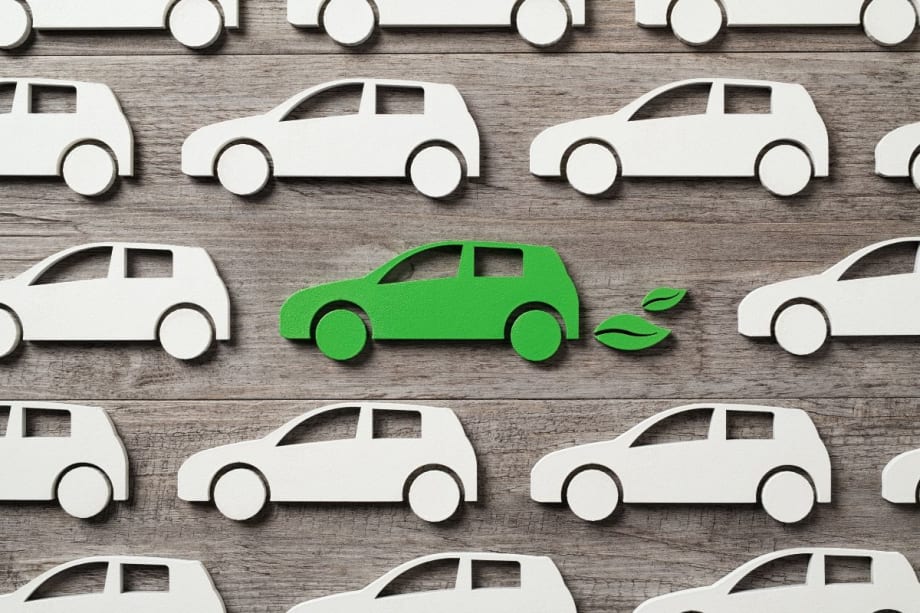
Gas-powered vehicles consume about 80% of the energy in their fuel, while EVs lose only around 11% of the original energy.
Photo: Canva
2 min to read
A Yale Climate Connections report says internal combustion engine (ICE) vehicles are “fundamentally inefficient,” primarily due to the vast amount of original energy that is wasted in gas-powered vehicles.
For every $5 gallon of gasoline, only $1 of it is used to move an ICE vehicle along the road. However, the cost of charging an EV is equivalent to $1.41 per gallon in the U.S., making it cheaper to operate than an ICE vehicle.
Gas-powered vehicles waste about 80% of the energy in their fuel. Most of the energy is consumed by the heat produced in the engine. Other energy inefficiencies stem from pumps and fans cooling the engine, mechanical friction within the transmission and drivetrain, and auxiliary electrical components such as heated seats, lights, and audio system. Only about 20% of the original energy ends up going to the wheels.
Gas-Powered Vehicle Energy Loss from 100% of Original Fuel
75-84% of original energy is lost
68-72% engine losses
4-6% parasitic losses
3-5% drivetrain losses
0-2% auxiliary electricity use
By contrast, energy enters the EV as electricity, which powers the drivetrain. Since EVs do not need to convert one form of energy to another, it is more energy efficient than ICE vehicles. But EVs are not completely efficient, since roughly 11% of the energy is lost. Energy loss is due to the recharging of the battery, and electricity used for cooling and power steering, as well as drivetrain and auxiliary components. About 87-91% of the original energy ultimately goes to the wheels.
Electric Vehicle Energy Loss from 100% of Original Fuel
31-35% of original energy is lost, but 22% is returned through regenerative braking
10% charging loss
18% drivetrain losses
3% power train cooling and steering
0-4% auxiliary electricity use
Originally posted on Automotive Fleet
More Small Fleet


Developing Budget-Friendly Driver Safety Programs
From driver training and safety meetings to one-on-one coaching and incentive programs, several small fleets share how they have developed a safety culture with their drivers using low- to no-cost resources.
Read More →
Sponsored•March 9, 2026
Boosting Last-Mile Fleet Uptime, Safety, and Value with AI Vehicle Inspections
AI-powered inspections are transforming last-mile fleets by replacing manual checks with highly accurate automated scans that detect defects in seconds. By giving fleet operations visibility into the daily condition of their vehicles, you can identify trends over the vehicle’s lifecycle that enable improved procurement decisions, route management, driver training and accountability.
Read More →
Five Ways Seat Belts Help Prevent Injuries
There are five ways seat belts protect occupants from injuries, according to the Tennessee Department of Safety and Homeland Security.
Read More →
Sponsored•January 14, 2026
It’s here: The 2026 Fleet Technology Trends Report
What does AI mean for fleets? Get the answer — and learn other top tech trends.
Read More →
Small Fleets, Big Impact: How Independent Drivers Power Wreaths Across America
Check out how small fleets and independent drivers power Wreaths Across America each December and why their impact matters more than ever.
Read More →
VMS Survey Finds 65% of Small Fleet Managers Run Operations Alone
A new VMS survey shows small fleet managers are stretched thin, with most handling operations solo and eager to adopt digital tools for relief.
Read More →
Tips for Driving Safely on Halloween Night
This video features a reminder from the Connecticut Department of Transportation (DOT) and the Connecticut Police Chiefs Association, urging drivers to prioritize safety this Halloween.
Read More →
AI, Access, and Uptime: VMS’s Next Chapter with David Prusinski
VMS’s new Co-CEO, David Prusinski, shares how an AI-first approach will give small fleets and repair shops the tools to compete like big players.
Read More →
Fleet Managers Share Winter Prep Tips: It's Never Too Early!
Three fleets share best practices to prep vehicles for winter and prevent downtime when the cold sets in.
Read More →