





Related: Lytx Offers Driver Identification Solution to Improve Workflow
Analyzing Risky Behavior in Utility Fleets
Lytx analyzed and labeled more than 50 million risky driving events in 2019, including a specific focus on utility fleets.
June 11, 2020
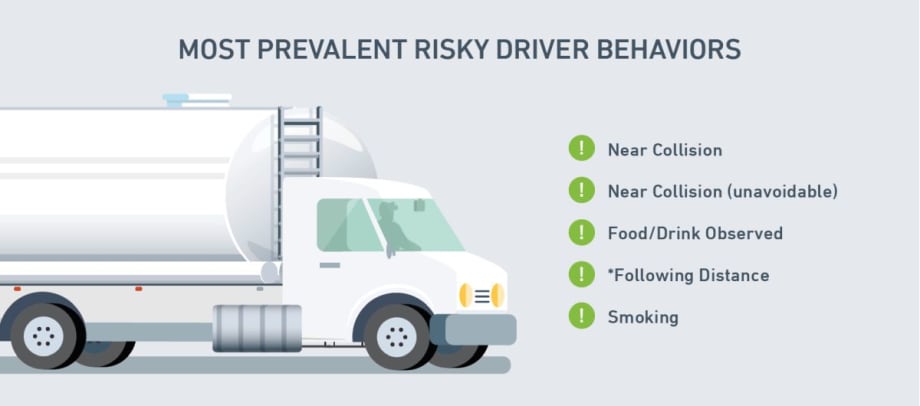
Near collisions were the top most risky behavior seen in Utility Fleets in 2019.
Source: Lytx
2 min to read
Lytx analyzed and labeled more than 50 million risky driving events in 2019. By combining machine vision and artificial intelligence with professional review, the fleet technologies company was able to present a customized and accurate view of risk with greater than 95% accuracy across more than 60 risky driving behaviors.
Lytx derived insights on the most prevalent risky behaviors and the most improved driving behaviors at the industry-level, for fleets in each industry it serves, including utility fleets. The Lytx database includes 120 billion miles of driving data and is the largest of its kind, according to the company.
Lytx’s findings include the five risky behaviors seen most often among utilities drivers, most improved driving behaviors, and insights on how driving habits in the utilities industry compare to those in other industries. This data was captured from fleets of all sizes and types within the utilities industry, including cable and telecommunication fleets and oil- and gas-hauling vehicles.
The Top Risky Behaviors for Utility Fleets in 2019:
Near collision.
Near collision (unavoidable).
Food/drink observed.
Following distance.
Smoking.
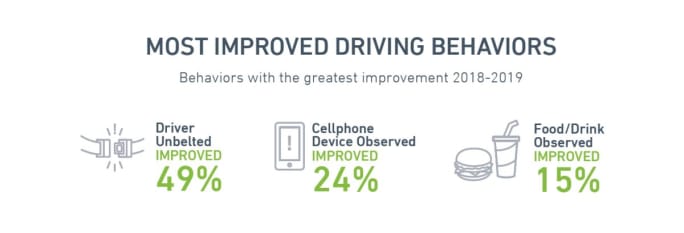
Wearing a seat belt was the top most improved behavior in utility fleets.
Source: Lytx
Most improved driving behaviors from 2018-2019:
Driver unbelted – improved 49%.
Cellphone observed – improved 24%.
Food/drink observed – improved 15%.
Lytx compared the prevalence of behaviors seen in utilities fleets against behavior averages of fleets across all its other protected industries. Comparatively, utilities fleets excelled in the following areas:
Cellphone use, which was observed 54% less often.
Late response, which occurred 62% less often.
While cell phone use is improving in the utilities industry, it remains a risk. Lytx found that driver distraction was present in 63% of rear-end collisions in this segment, with one-third of those attributed to cell phone use.

Source: Lytx
These insights were derived from Lytx’s proprietary database of utilities driving data from 2019, including 202,000 risky utilities driving events captured last year. For comparisons across industries, Lytx calculated behavior averages from its global database, which contains driving data from trucking, distribution, concrete, construction, services, transit, government, and waste industries. Lytx maintains the fastest-growing proprietary database of professional driving data in the world, currently surpassing 120 billion miles of driving data. The data is anonymized, normalized, and in instances of behavior prevalence, generalizable to utilities fleets at large.
More Utility Fleet
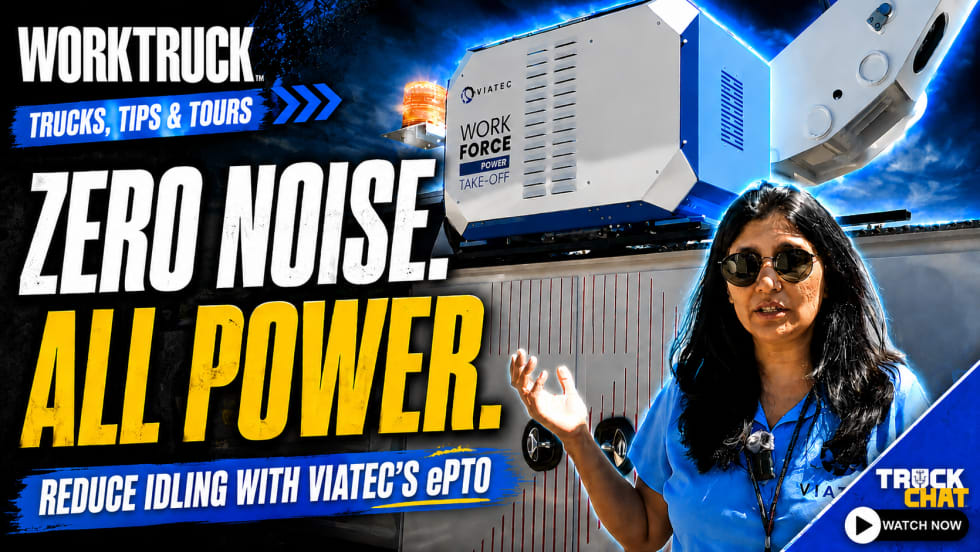
Reduce Noise & Idling with Viatec’s ePTO
Viatec's Workforce ePTO lets utility trucks power booms, outriggers, and auxiliary equipment using battery power instead of idling the engine. Learn how this technology helps reduce fuel use, noise, engine wear, and emissions while improving operator comfort.
Read More →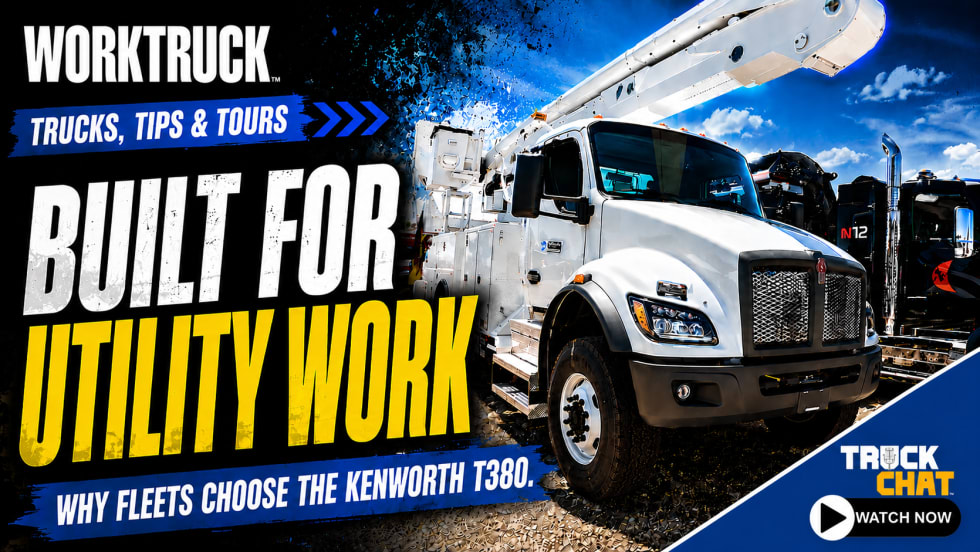
Why Utility Fleets Choose the Kenworth T380
The Kenworth T380 is engineered for utility fleets with custom chassis layouts, optimized frame rails, 4x4 capability, and improved driver visibility. See how its design helps maximize upfit flexibility and field performance.
Read More →
PALFINGER PB 38 AT P: Purpose-Built for Telecom Fleets
Purpose-built for telecommunications crews, the PALFINGER PB 38 ATP combines a 43-foot working height, flexible basket stowage, integrated cameras, and operator communication systems to improve productivity and safety during fiber and overhead cable installation.
Read More →
Inside Terex Utilities' Latest Work Truck Innovations
Terex Utilities is advancing utility fleet operations with its new TRX aerial platforms, Flex Pro controls, and AI-powered 3rd Eye safety technology. See how these innovations are helping fleets work safer, smarter, and more productively.
Read More →
Walkaround of International MV607 Digger Derrick
The International MV607 combines advanced safety technologies, excellent visibility, vocational flexibility, and seamless body integration to create a powerful platform for utility fleet operations. Take a closer look at this Altec digger derrick configuration from EUFMC.
Read More →
Inside the Electric Utility Fleet Managers Conference
What is EUFMC? For more than seven decades, the Electric Utility Fleet Managers Conference has served as a hub for collaboration, education, and innovation within the utility fleet industry. In this video, Work Truck talks to EUFMC President Greg Loew to learn more.
Read More →
Inside the EUFMC Equipment Expo & Drive-Through
Follow Work Truck as we check out the trucks and other vehicles that were showcased at the Electric Utility Fleet Managers Conference in Williamsburg, Virginia. Whether looking for something on tires or treads, it was there for fleet managers to see.
Read More →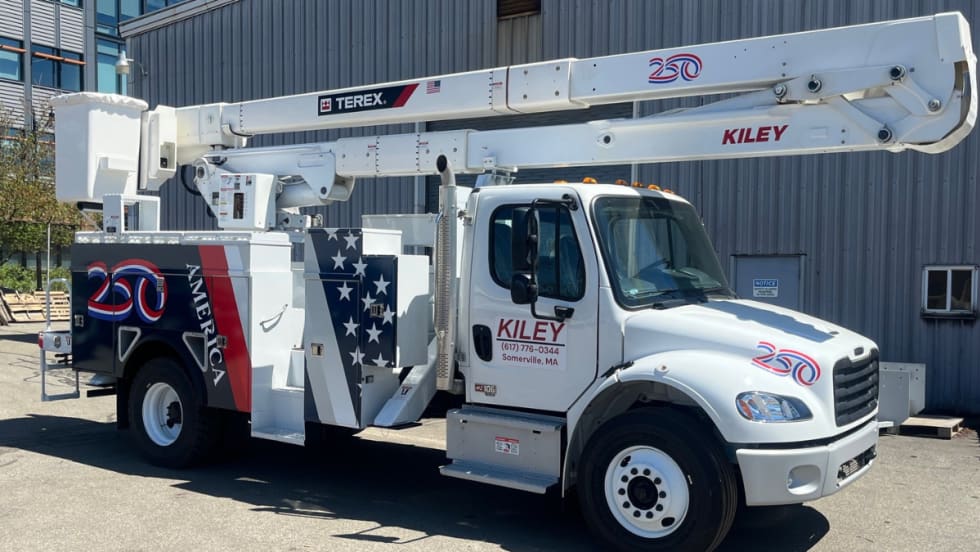
Terex Utilities & Kiley Unveil Custom America 250 Bucket Trucks at EUFMC 2026
Terex Utilities showcased a patriotic spirit in its booth this week during the Electric Utility Fleet Managers Conference in Williamsburg, Virginia, by debuting two custom-wrapped bucket trucks celebrating America’s upcoming 250th anniversary.
Read More →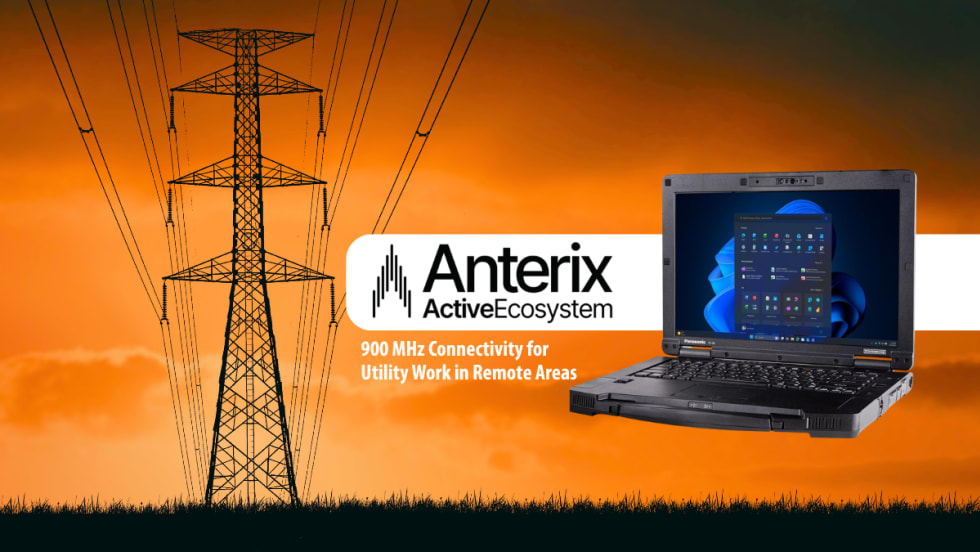
Panasonic Connect & Anterix Strengthen Connectivity Options for Utilities and Field Workers
The Panasonic Connect Toughbook 56 is the first Toughbook to earn the AnterixActive badge, which means it can connect to and operate on Anterix’s 900 MHz network even in the most remote locations.
Read More →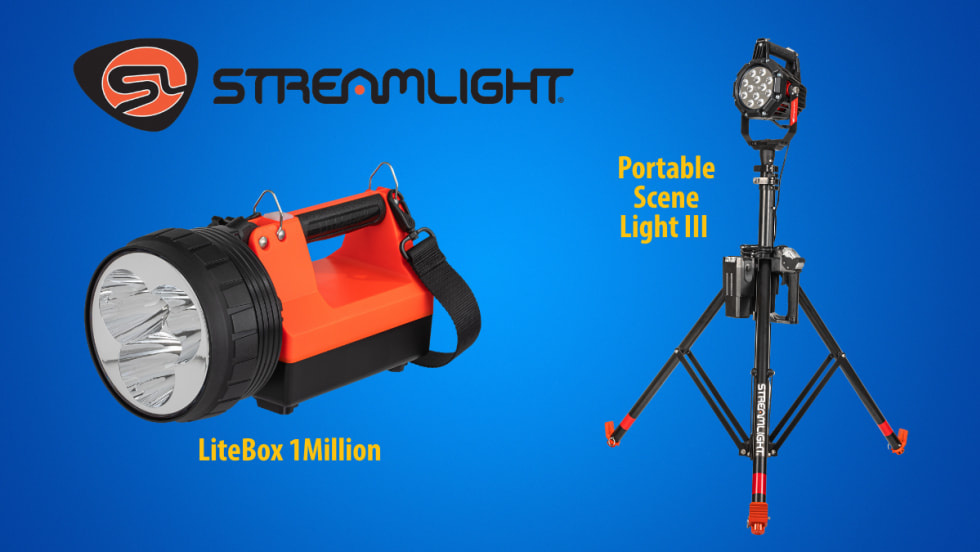
Streamlight Launches Portable Scene Light III & LiteBox 1Million
Streamlight has launched its Portable Scene Light III (PSL III), which delivers up to 10,000 lumens, and the LiteBox 1Million, a long-range search light that delivers one million candela.
Read More →