




Americans Still Distrustful of Autonomous Car Tech
On the other hand, U.S. drivers show interest in many advanced driver assistance features, a new study from J.D. Power finds.
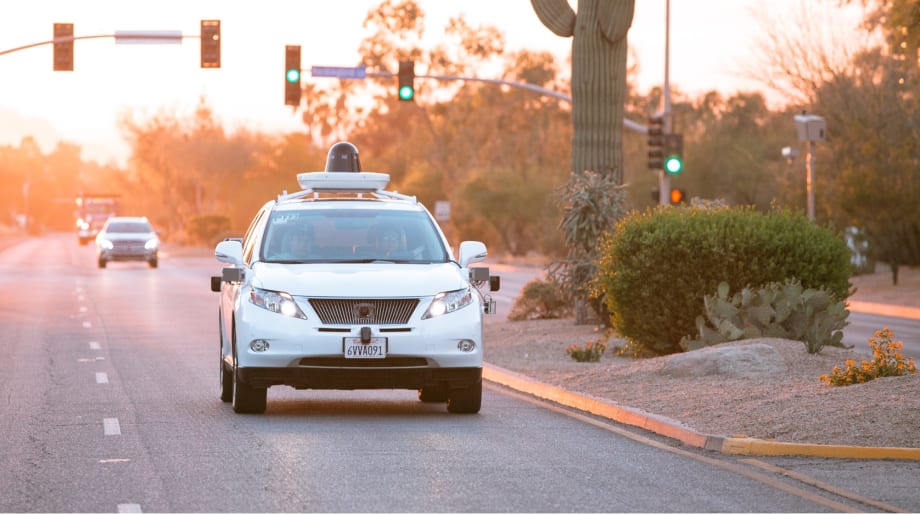
A Waymo (Google) self-driving Lexus RX450h on a California street. Photo courtesy of Waymo.
A Waymo (Google) self-driving Lexus RX450h on a California street. Photo courtesy of Waymo.
With the exception of people in the 23- to 40-year-old age group (Gen Y or Millennials), American drivers are becoming increasingly skeptical of self-driving technology, according to a new study from research firm J.D. Power. And the widespread doubtfulness and apprehension represent a marketing hurdle for manufacturers and technology developers.
“In most cases, as technology concepts get closer to becoming reality, consumer curiosity and acceptance increase,” said Kristin Kolodge, executive director of driver interaction and human-machine interface research at J.D. Power. “With autonomous vehicles, we see a pattern where trust drives interest in the technology and right now, the level of trust is declining.”
Compared with the 2016 survey, 11% more Gen Z consumers (ages 13-22) and 9% more Pre-Boomers (age 72 and older) said they “definitely would not” trust automated technology.
However, similar to the 2016 study, consumers this year show great interest in collision protection and driving assistance technology. Six of the top 10 features that consumers were most interested in before learning the price — smart headlights, camera rear-view mirror, emergency braking and steering system, lane change assist, camera side-view mirrors and advanced windshield display — come from these two categories.
“Along with collision mitigation, there are many benefits to autonomous vehicles, including allowing those who are unable to drive in today’s vehicles to experience freedom of mobility,” Kolodge said. “Interestingly, though, 40% of Boomers do not see any benefits to self-driving vehicles. Automated driving is a new and complex concept for many consumers; they’ll have to experience it firsthand to fully understand it.”
Kolodge predicted, however, that as features such as adaptive cruise control, automatic braking and blind-spot warning systems become mainstream, drivers will gain more confidence in taking their hands off the steering wheel and allowing the vehicle to assume control.
The U.S. Tech Choice Study, now in its third year, examines consumer awareness, interest and price elasticity of various technologies by vehicle make and consumer demographic. This year’s study, conducted in January and February, was based on an online survey of more than 8,500 consumers who had purchased or leased a new vehicle in the past five years.
Originally posted on Automotive Fleet
More Small Fleet


Developing Budget-Friendly Driver Safety Programs
From driver training and safety meetings to one-on-one coaching and incentive programs, several small fleets share how they have developed a safety culture with their drivers using low- to no-cost resources.
Read More →
Boosting Last-Mile Fleet Uptime, Safety, and Value with AI Vehicle Inspections
AI-powered inspections are transforming last-mile fleets by replacing manual checks with highly accurate automated scans that detect defects in seconds. By giving fleet operations visibility into the daily condition of their vehicles, you can identify trends over the vehicle’s lifecycle that enable improved procurement decisions, route management, driver training and accountability.
Read More →
Five Ways Seat Belts Help Prevent Injuries
There are five ways seat belts protect occupants from injuries, according to the Tennessee Department of Safety and Homeland Security.
Read More →
It’s here: The 2026 Fleet Technology Trends Report
What does AI mean for fleets? Get the answer — and learn other top tech trends.
Read More →
Small Fleets, Big Impact: How Independent Drivers Power Wreaths Across America
Check out how small fleets and independent drivers power Wreaths Across America each December and why their impact matters more than ever.
Read More →
VMS Survey Finds 65% of Small Fleet Managers Run Operations Alone
A new VMS survey shows small fleet managers are stretched thin, with most handling operations solo and eager to adopt digital tools for relief.
Read More →
Tips for Driving Safely on Halloween Night
This video features a reminder from the Connecticut Department of Transportation (DOT) and the Connecticut Police Chiefs Association, urging drivers to prioritize safety this Halloween.
Read More →
AI, Access, and Uptime: VMS’s Next Chapter with David Prusinski
VMS’s new Co-CEO, David Prusinski, shares how an AI-first approach will give small fleets and repair shops the tools to compete like big players.
Read More →
Fleet Managers Share Winter Prep Tips: It's Never Too Early!
Three fleets share best practices to prep vehicles for winter and prevent downtime when the cold sets in.
Read More →