




American Power Group Recieves First EPA Engine Family Approval
LYNNFIELD, MA -American Power Group, Inc. has been notified by the U.S. EPA that its first Clean Alternative Fuel Vehicle and Engine Conversion Submission was approved for the Outside Useful Life Heavy Duty 2004 Caterpillar C-15 engine family.
LYNNFIELD, MA - GreenMan Technologies, Inc. announced that its American Power Group, Inc. subsidiary has been notified by the U.S. Environmental Protection Agency that its first Clean Alternative Fuel Vehicle and Engine Conversion Submission has been approved per the EPA Final Rule 40CFR Parts 85 and 86: EPA420-F-11-006, for the Outside Useful Life ("OUL") Heavy Duty 2004 Caterpillar C-15 engine family.
The submission utilized APG's latest V5000 Dual Fuel Turbocharged Natural Gas technology which had to meet specific design, componentry, and emission compliance criteria. This first OUL Heavy Duty Diesel EPA approval provides APG a clear path for additional conversion approval submissions on a wide-array of heavy-duty aftermarket diesel truck engines.
Lyle Jensen, GreenMan's president and CEO stated, "The magnitude and strategic impact of this initial EPA approval is without a doubt one of the most important events in the Company's history. Our focus over the next several quarters will be to work with interested fleet owners of the most popular OUL model years so that we can expand the number of approved engine families we can sell. With the current approved EPA protocol, we believe we can accelerate the preparation and submission timeline of subsequent vehicle family submissions. In addition, during this timeframe, we also intend to file our initial intermediate age ("IUL") vehicle submission, which will be subject to different regulatory requirements and would expand our product offerings to include IUL vehicles."
Power Systems Research, a global supplier of business information to the engine, power products and components industries, estimates that approximately 4.6 million medium and heavy duty diesel vehicles, representing approximately 93% of all medium to heavy duty vehicles in service, fit into either the IUL or OUL classifications.
Jensen added, "Based on our research, we believe we have identified the top 40 heavy duty engine families operating on the U.S. roads today, representing nearly 400,000 vehicles and an identified market potential in excess of $3.9 billion. We are first to market with a reliable low-cost system that is generating significant fleet owner interest in EPA approved aftermarket conversions"
In April 2011, the EPA announced it had amended its alternative fuel conversion regulations for light, medium and heavy-duty vehicles which built upon the concept that it is appropriate to either certify or approve conversions differently based on the age of the vehicle or the engine being converted. Under the new regulations, testing and compliance procedures differ based on the age category of the vehicle or engine that is being converted: (1) new or relatively new; (2) intermediate age, or IUL, or (3) outside useful life, or OUL.
APG's aftermarket dual fuel system converts diesel engines (On-Road, Off-Road, and Stationary) to function more efficiently and at a lower operating cost (average net fuel cost savings of 20-30 percent) by seamlessly displacing 40-60 percent of the normal diesel fuel consumption with compressed natural gas, liquid natural gas, pipeline gas, well-head gas, or bio-methane gas. APG's system is non-invasive to the OEM engine and operates within all OEM performance controls, with the flexibility to return to 100% diesel operation at any time. APG's dual fuel conversion and emissions reduction systems can help users achieve their sustainability goals through lower carbon monoxide, nitrogen oxide and particulate matter emissions. In addition, the introduction of natural gas through APG's dual fuel system does not impact diesel engine power or pulling torque and, because natural gas burns more cleanly than diesel fuel, will assist in extending the engine's oil life.
More Green Fleet

Fleet Forward Conference Introduces One-Day Passes for 2026
New one-day registration gives fleet professionals the flexibility to attend Tuesday, Wednesday, or Thursday, with passes available for $199 through Sept. 18.
Read More →
CALSTART Rebrands as Catalyst Mobility, Will Combine with Forth in 2027
CALSTART has rebranded as Catalyst Mobility and will combine with Forth at the start of 2027. The new organization said it is poised to become one of the world's largest, strongest, and most impactful clean transportation nonprofits.
Read More →
Electric Truck and Charging Programs to Boost Sustainability at NY & NJ Ports
Together, the Port Authority of New York and New Jersey and CALSTART will electrify drayage and terminal operations serving the East Coast’s busiest container port. A pair of incentive programs totaling $45 million has launched to accelerate adoption of zero-emission drayage trucks and terminal tractors.
Read More →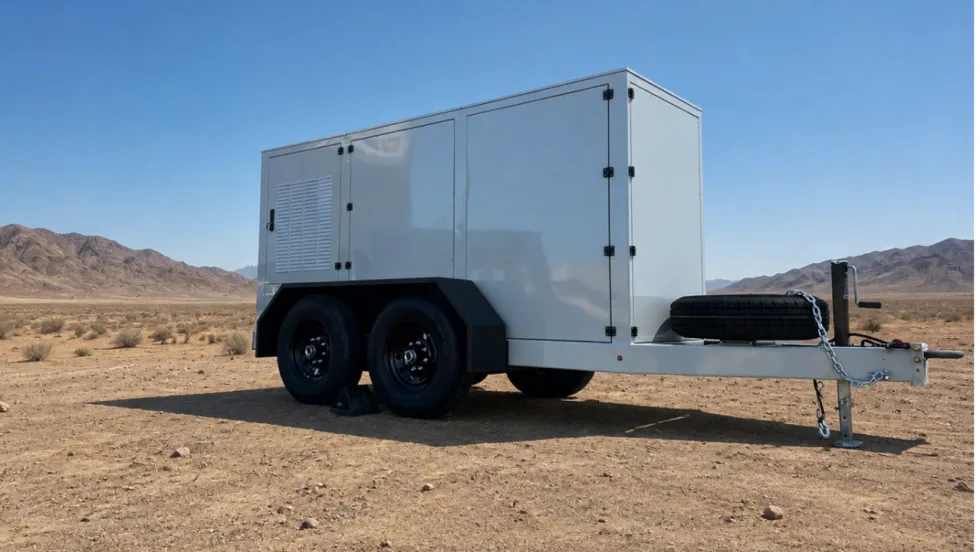
Xos Hub Surpasses One Gigawatt-Hour of Energy Delivered in the Field
A single Xos Hub has surpassed one gigawatt-hour of energy across more than 33,600 charging sessions in the field, demonstrating performance that supports Xos' expansion across new products and markets.
Read More →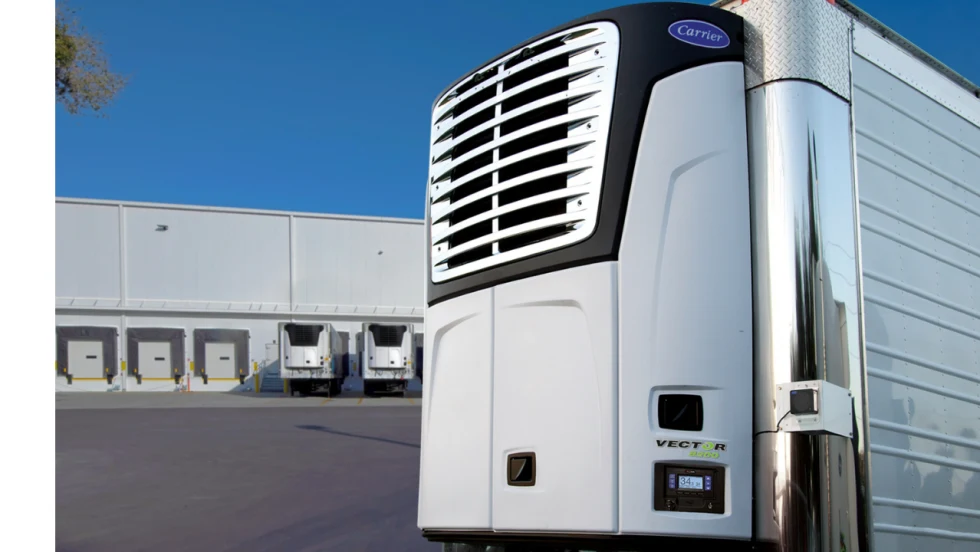
Carrier Transicold Launches All-Electric Vector 8200 TRU for Diesel-Free On-Site Cold Storage
Carrier Transicold’s first engineless multi-temperature TRU helps fresh- and frozen-food fleets add supplemental cold storage capacity during seasonal peaks.
Read More →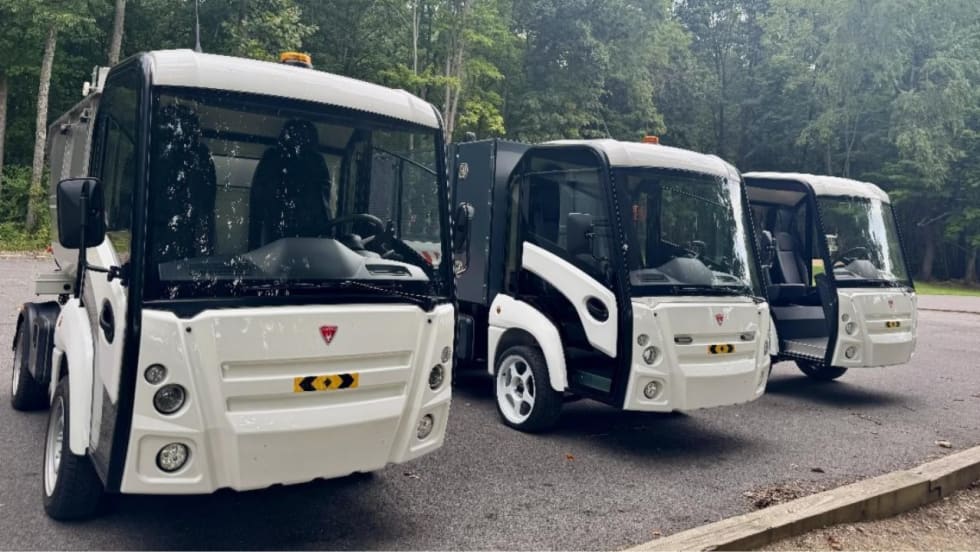
Narro Trucks Introduces Electric Utility Vehicle
Narro Trucks officially launched its operations on Aug. 20 and hosted a ride and drive to showcase its electric truck, which will be produced in Virginia.
Read More →
Samsung SDI Takes Full Control of GM Battery JV as Indiana Plant Pivots to Energy Storage
Samsung SDI is taking full control of its Indiana battery plant with GM, marking a major shift from the EV-focused joint venture Charged Fleet first covered in 2023.
Read More →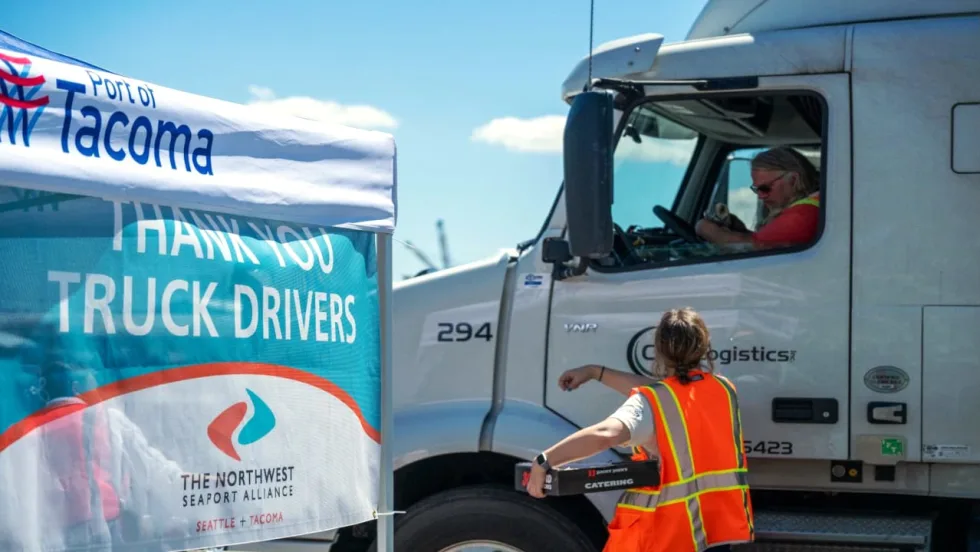
NWSA Taps CALSTART to Administer Zero-Emission Drayage Assistance Program
CALSTART will provide free technical assistance services to drayage fleets serving the Ports of Seattle and Tacoma and looking to transition to cleaner technologies and help decarbonize freight hubs.
Read More →
EV Fleet Reality Check: What Operators Wish They Knew Before Electrifying Their Work Vans
Electric work truck upfits bring new compatibility questions. Learn how parts availability, OEM guidance, power demands, and route planning can affect fleet performance.
Read More →
Peterbilt Expands Sourcewell Partnership with Electric Vehicle Lineup
Peterbilt Motors Company’s cooperative purchasing agreement with Sourcewell and its Canadian partner, Canoe Procurement Group, now includes including Peterbilt's battery-electric vehicle lineup.
Read More →