





Related: Advanced Safety Tech Could Reduce Fatalities by 29%
Advanced Safety Systems Cost Twice as Much to Repair
Vehicles equipped with advanced driver assistance systems (ADAS) can add on average an extra $3,000 to the repair bill after a crash due to pricey sensors and their calibration requirements, according to new research from AAA.
October 26, 2018
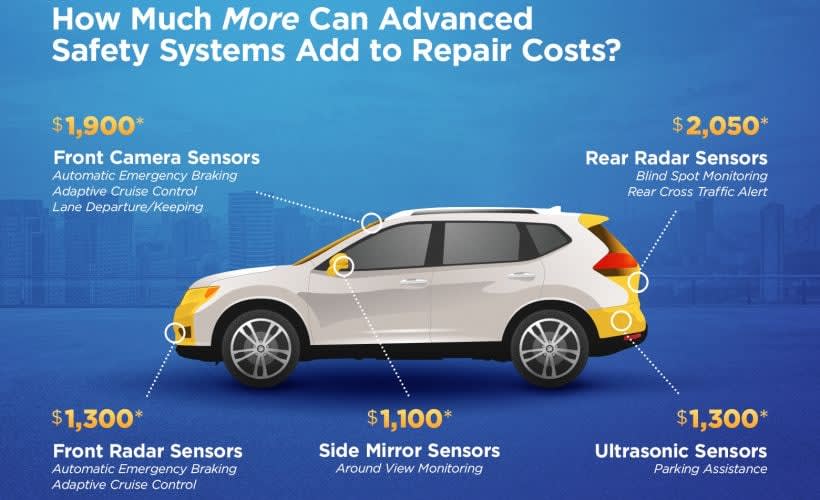
Advanced driver assistance technology is very costly to repair following a collision, according to AAA.
Graphic courtesy of AAA.
2 min to read
Vehicles equipped with advanced driver assistance systems (ADAS) can add on average an extra $3,000 to the repair bill after a crash due to pricey sensors and their calibration requirements, according to new research from AAA.
The report found that ADAS technology — for example, automatic emergency braking, blind spot monitoring, and lane departure warning systems — can double the cost of repairs following a collision.
According to the study, the repair cost for a minor front or rear collision on a car with ADAS can run as high as $5,300 — that's nearly two and a half times the repair cost for a vehicle without these systems.
Replacing a windshield is a common post-crash necessity with more than 14.5 million replacements annually.
However, windshield replacement on a vehicle equipped with a camera behind the glass typically costs $1,500, which is three times the amount of money required to replace the windshield on a car without the safety system technology.
The report point outs that vehicles with ADAS may also have radar, cameras and ultrasonic sensors in or behind the front or rear bumpers and bodywork, and also built into the side mirrors. These components can easily be damaged as a driver exits a garage or hits a mailbox — resulting in significant repair fees.
While variables such as vehicle make and model, the type and location of the sensors and where the repair is performed can affect ADAS repair expenses, AAA's research determined ranges above and beyond normal bodywork following a collision for typical ADAS repairs.
Here are a few specific items:
Front radar sensors used with automatic emergency braking and adaptive cruise control systems: $900 to $1,300
Rear radar sensors used with blind spot monitoring and rear cross traffic alert systems: $850 to $2,050
Front camera sensors used with automatic emergency braking, adaptive cruise control, lane departure warning and lane keeping systems (but not replacement windshield): $850 to $1,900
Front, side mirror or rear camera sensors used with around-view systems: $500 to $1,100
Front or rear ultrasonic sensors used with parking assist systems: $500 to $1,300
Originally posted on Automotive Fleet
More Small Fleet


Developing Budget-Friendly Driver Safety Programs
From driver training and safety meetings to one-on-one coaching and incentive programs, several small fleets share how they have developed a safety culture with their drivers using low- to no-cost resources.
Read More →
Sponsored•March 9, 2026
Boosting Last-Mile Fleet Uptime, Safety, and Value with AI Vehicle Inspections
AI-powered inspections are transforming last-mile fleets by replacing manual checks with highly accurate automated scans that detect defects in seconds. By giving fleet operations visibility into the daily condition of their vehicles, you can identify trends over the vehicle’s lifecycle that enable improved procurement decisions, route management, driver training and accountability.
Read More →
Five Ways Seat Belts Help Prevent Injuries
There are five ways seat belts protect occupants from injuries, according to the Tennessee Department of Safety and Homeland Security.
Read More →
Sponsored•January 14, 2026
It’s here: The 2026 Fleet Technology Trends Report
What does AI mean for fleets? Get the answer — and learn other top tech trends.
Read More →
Small Fleets, Big Impact: How Independent Drivers Power Wreaths Across America
Check out how small fleets and independent drivers power Wreaths Across America each December and why their impact matters more than ever.
Read More →
VMS Survey Finds 65% of Small Fleet Managers Run Operations Alone
A new VMS survey shows small fleet managers are stretched thin, with most handling operations solo and eager to adopt digital tools for relief.
Read More →
Tips for Driving Safely on Halloween Night
This video features a reminder from the Connecticut Department of Transportation (DOT) and the Connecticut Police Chiefs Association, urging drivers to prioritize safety this Halloween.
Read More →
AI, Access, and Uptime: VMS’s Next Chapter with David Prusinski
VMS’s new Co-CEO, David Prusinski, shares how an AI-first approach will give small fleets and repair shops the tools to compete like big players.
Read More →
Fleet Managers Share Winter Prep Tips: It's Never Too Early!
Three fleets share best practices to prep vehicles for winter and prevent downtime when the cold sets in.
Read More →