




5 Tips from Rotary Lift for Choosing a 4-Point Lift
Four-post drive-on vehicle lifts are easy to install, use, and maintain. The only hard part about four-post lift ownership is the initial decision about which configuration to buy.
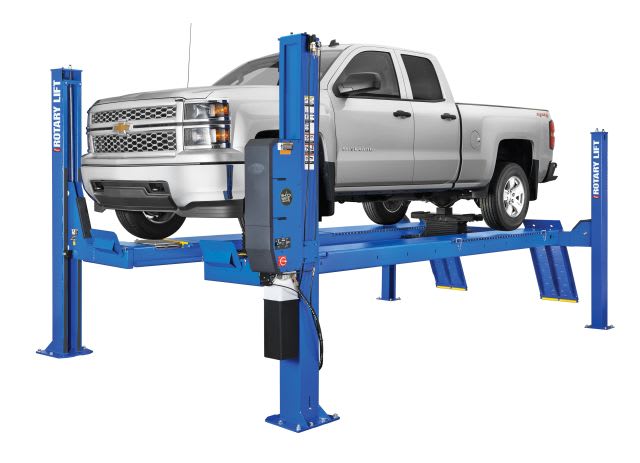
Rotary Lift ARO14 Shockwave four-post lift. (PHOTO: ROTARY LIFT)
Four-post drive-on vehicle lifts are easy to install, use, and maintain, according to Rotary Lift. The only hard part about four-post lift ownership is the initial decision about which configuration to buy.
“Four-post lifts play an integral role in the vehicle service industry because not all vehicles can be serviced by using a lift with arms or pads,” said Jim Dirksen, vice president of light-duty for Rotary Lift.
“Sometimes, the size and weight distribution of a vehicle necessitates that it be driven onto runways. Four-post lifts are also ideal for simple maintenance, inspection procedures, and general service because they have easy drive-on access and feature an open space between the runways that provides access for technicians along the complete length of the runway for vehicle underbody viewing. If the customer can determine the right configuration during the buying process, the lift should provide years of worry-free service.”
The company shares five factors to consider when buying a four-post lift:
1. Length. The wheelbases of the vehicles being lifted will play the most important role in four-post lift selection. First, the lift buyer should determine the wheelbase of the longest vehicle he or she is going to service. This number will determine the length of the lift. To accommodate a variety of wheelbase requirements, four-post lift runways can be ordered in many different lengths. When setting up a four-post lift bay, it is important to plan for adequate space in front of and behind the lift, taking the runways and any ramps into account. Most light- and medium-duty four-post lifts will fit in the Equipment & Tool Institute’s recommended 25-foot long bay, but tight drive-on/drive-off clearances can frustrate technicians and reduce productivity. That’s why Rotary Lift facility planning experts recommend a 28-foot-long bay for the company’s extended-length SM Series four-post lift, even though the lift is less than 24 feet long from end to end.
2. Capacity. Once it is determined what length will be sufficient for the shop's wheelbase needs, it is time to consider the weight of the vehicles that will be lifted. Four-post lift capacities range from 14,000 lbs. all the way up to 60,000 pounds. Since most vehicles – up to and including Class 3 pickup trucks such as the Ford F-350 – weigh less than 14,000 pounds, a 14,000-pound capacity lift will be sufficient for many facilities. If a shop services work trucks and other heavy fleet vehicles, it might be beneficial to select a four-post lift with 18,000 or 30,000 pounds of capacity. A four-post lift’s physical footprint and rise time will typically increase with capacity, so the ability to lift heavier vehicles may come with space and efficiency tradeoffs. In general, 40,000-60,000 pound capacity four-post lifts should be reserved for buses, RVs, and Class 8 trucks.
3. Speed. When it comes to a facility’s productivity and profitability, every second counts. The faster the technician can raise the vehicle, the sooner he or she can get to work and complete each job. While all four-post lifts are quick and easy to set up, Rotary Lift says it provides the world’s fastest rise times. The company says its Shockwave-equipped 14,000-pound capacity SM Series and AR Series four-post lifts require just 35 seconds to reach full lifting height, which is twice as fast as a traditional four-post lift. Shockwave-equipped lifts also come with the exclusive Spotline laser spotting guide to make it even easier to drive onto the lift. To further increase productivity, the company suggests a drive-thru model that has ramps on each end. This enables the vehicle to be driven on and off the lift in one direction, preventing congestion on the shop floor.
4. Accessibility. Four-post lifts are available with either an open front or closed front design. An open front design eliminates the crossbeam between the runways at the front of the lift, which makes it easier for technicians to access engine and front suspension components. Increased accessibility and work space can be beneficial, but they are not necessary for all applications. Since open front lifts have wider footprints than closed front lifts, facilities with space restrictions and narrow bays may be better served by a closed front design.
5. Versatility. While length, capacity, and configuration selections will be primarily determined by the types of vehicles serviced, other options are available that can greatly increase the versatility of a four-post lift. For instance, if a shop plans on using the lift for wheels-free tire and brake work, rolling jacks are a must-have. These jacks travel along tracks located on the inside of each runway and engage the vehicle by its frame or pick-up points. If technicians will be performing alignments, choose a four-post lift with an alignment kit. The jacks, turntables and slip plates that come with these lifts are compatible with most alignment systems because it is ideal to order your lift from a dedicated lift manufacturer and your alignment instrumentation from a company that specializes in alignments. Bolt-on retrofit kits are available, making it easy to increase the versatility of four-post lifts already in place.
Rotary Lift's free "Buyers Guide: Four-Post Lifts" is available for download on their website.
More Maintenance
Les Schwab Expands Commercial Tire Footprint Into Arizona
Les Schwab Tires has expanded into Arizona with two commercial tire locations in Phoenix and Tucson, strengthening its fleet service footprint in the Southwest.
Read More →
Volvo Trucks’ 'Lock and Leave' Software Updates Go Live Across North America
Unattended over-the-air software updates are now available in Volvo trucks across the U.S. and Canada. The new capability lets trucks stay current with the latest software without interrupting operations or requiring a dealership visit.
Read More →
Why Technician Appreciation Can’t Be a Once-a-Year Thought
For fleets trying to keep skilled technicians, recognition cannot begin and end with Technician Appreciation Week. Learn what year-round appreciation really looks like and why the everyday technician experience matters just as much as pay when fleets are trying to keep good people.
Read More →
How Faster Driver Reporting Can Keep Small Truck Problems Small
When minor damage, warning lights, or equipment issues are reported late, small problems can quickly become bigger maintenance headaches. Conversational AI can help shorten the path from what a driver notices in the field to the person who can act on it.
Read More →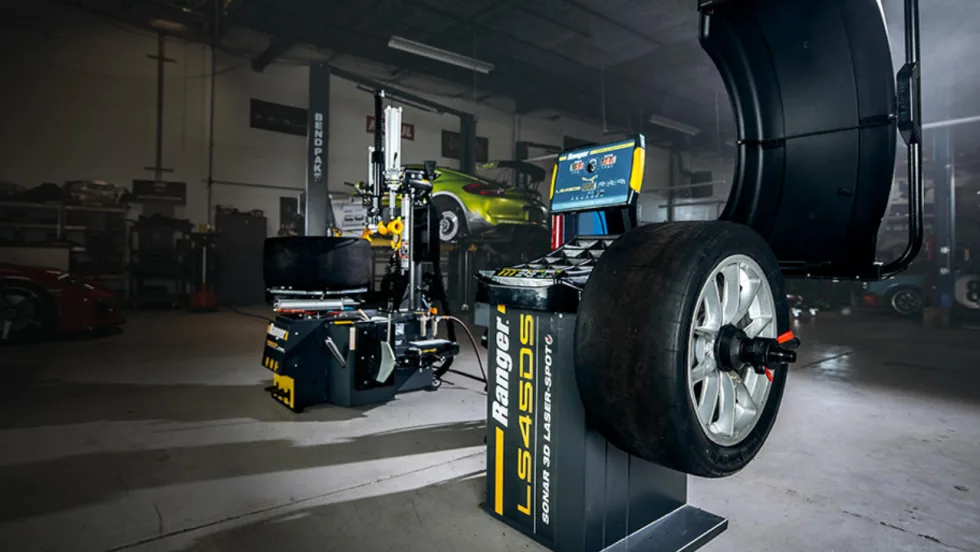
BendPak’s Ranger Wheel Service Equipment Achieves North American Safety Certification
BendPak’s full line of Ranger tire changers and wheel balancers has been ETL certified to UL and CSA standards to improve operator safety.
Read More →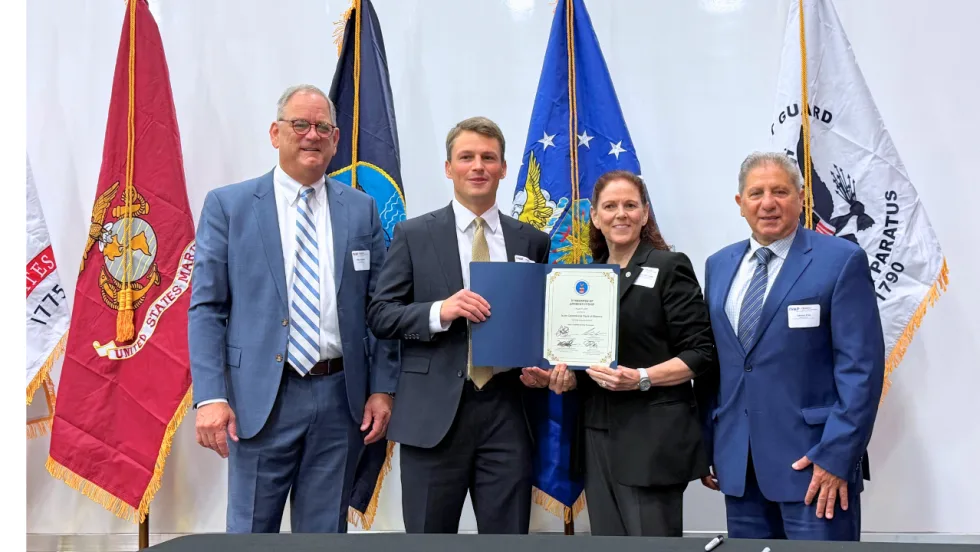
Isuzu & U.S. Department of Labor Celebrate Milestone for Veterans Apprenticeship Program
The Isuzu Veterans Apprenticeship Program (IVAP) signing ceremony highlighted Isuzu’s long-term commitment to veterans, Isuzu dealers, and the skilled workforce supporting its customers and the commercial transportation industry.
Read More →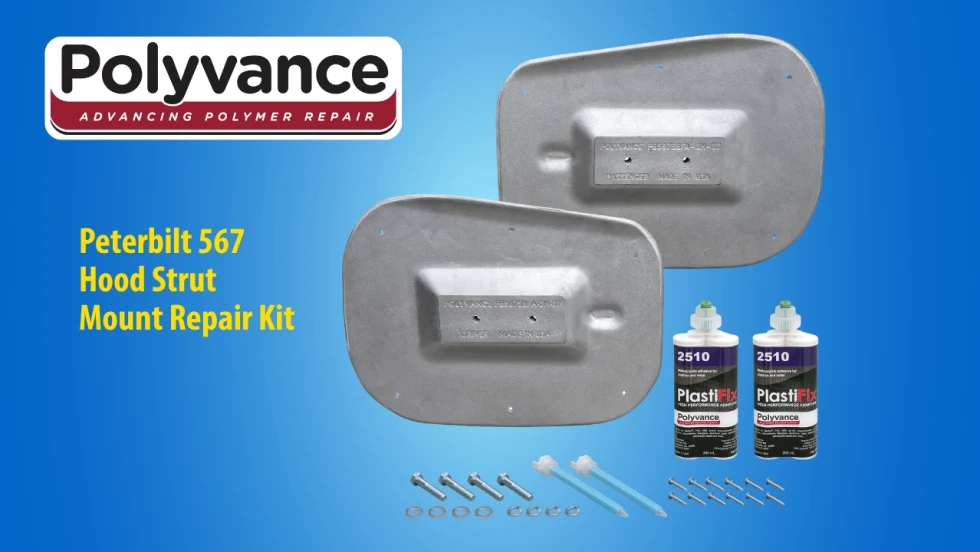
Polyvance Introduces New Peterbilt 567 Hood Strut Mount Repair Kit
Polyvance has launched a repair solution for Peterbilt 567 hood struts, helping truck owners and repair facilities avoid costly hood replacements.
Read More →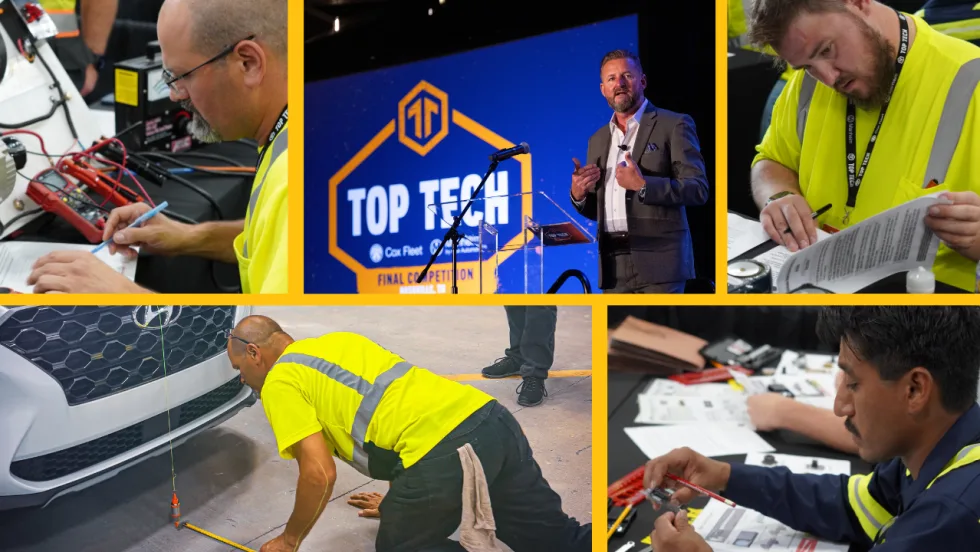
Cox Automotive Celebrates Technical Excellence at 2026 Top Tech Finals
The top technicians from Cox Fleet and Manheim tested their skills in Nashville, Tennessee, at Cox Automotive’s 2026 Top Tech Finals. The overall winners will advance to compete at the American Trucking Association’s TMC SuperTech competition.
Read More →
Grote Industries Appoints Vice President of North American Operations
Grote Industries has appointed Patrick Smith as vice president of North American operations as it celebrates 125 years of innovation and manufacturing excellence. He has more than 20 years of manufacturing leadership experience.
Read More →
Winter Fleet Prep: Expert Tips to Keep Vehicles Running Smoothly
Cold weather can expose weak batteries, tires, fuel systems, and maintenance gaps fast. Use this winter fleet checklist to prepare trucks and drivers before temperatures drop.
Read More →