




4 Automakers Offer Auto-Braking Standard on Most Cars
Tesla, Mercedes-Benz, Volvo and Toyota already offer automatic emergency braking as a standard feature on most of their vehicles, according to a new progress report.
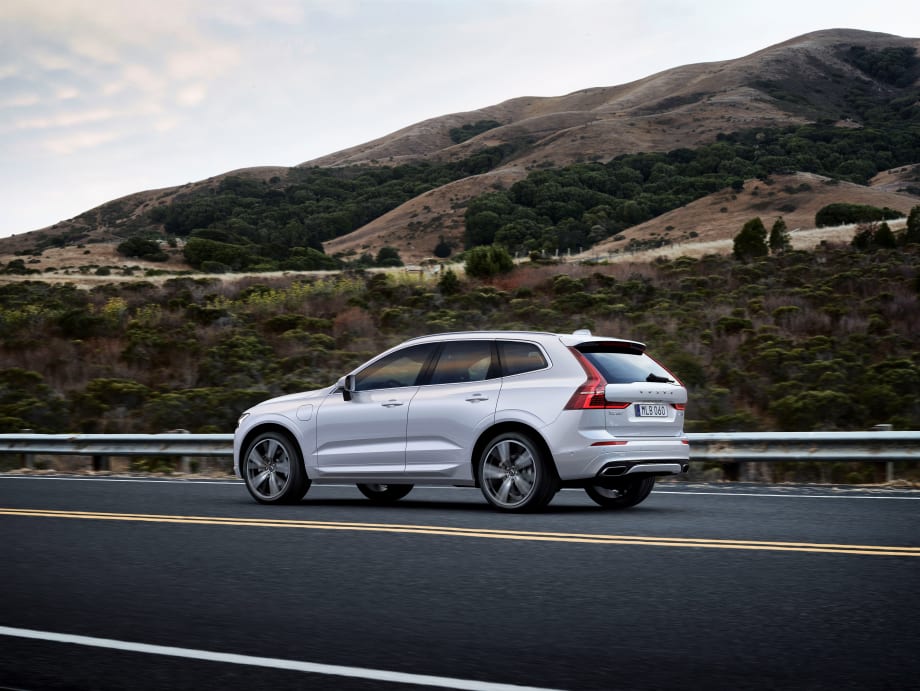
The 2017 Volvo XC60 SUV includes an updated City Safety AEB system. Photo courtesy of Volvo.
The 2017 Volvo XC60 SUV includes an updated City Safety AEB system. Photo courtesy of Volvo.
Four of 20 automakers reported that automatic emergency braking (AEB) is standard on more than half of their 2017 model-year vehicles, according to an update released jointly by the National Highway Traffic Safety Administration and the Insurance Institute for Highway Safety.
The four automakers are Tesla (99.8% of fleet), Mercedes-Benz (96%), Volvo (68%) and Toyota (56%). They are followed by Honda (30%), Hyundai (9%) and Kia (5%).
Even without making AEB standard, another five automakers reported that at least 30% of vehicles they produced in 2017 are equipped with AEB. They are Audi (73%), BMW (58%), Subaru (47%), Volkswagen (36%) and Maserati/Alfa Romeo (30%).
The 20 automakers previously agreed to voluntarily equip virtually all of their new passenger vehicles with a low-speed AEB system by September 2022. These systems will include forward collision warning. The technology is designed to prevent and mitigate front-to-rear crashes.
“The growing number of vehicles offering automated emergency braking is good news for America’s motorists and passengers,” said U.S. Transportation Secretary Elaine L. Chao. “With each model year, manufacturers will increasingly utilize technology to allow vehicles to ‘see’ the world around them and navigate it more safely.”
The voluntary agreement to make AEB standard was announced in March 2016. The goal is to get the technology into a wider swath of the vehicle fleet faster.
“IIHS is pleased to see that automakers are steadily moving toward the shared goal of putting standard AEB into every new car they sell,” said David Zuby, executive vice president and chief research officer of IIHS. “This is a big win for safety on our nation’s roads, which will see fewer crashes and injuries because of this commitment.”
By 2025, the commitment will prevent 28,000 crashes and 12,000 injuries, IIHS estimated. Consumer Reports has agreed to assist in monitoring automaker progress.
“This progress is great news for luxury car buyers and many others, but many automakers still need to do more, as Consumer Reports analysis indicates that only 19% of 2017 models included these lifesaving technologies as standard features,” said David Friedman, director of cars and product policy and analysis at Consumers Union. Consumers Union is the policy and mobilization division of Consumer Reports.
“Automakers, safety groups and the government should also work together to make highway operation and pedestrian detection standard features on all AEB systems,” Friedman added.
Manufacturers recently submitted their first yearly AEB agreement progress reports for vehicles manufactured from Sept. 1, 2016, through Aug. 31, 2017, for the U.S. market.
The participating automakers include Audi, BMW, Fiat Chrysler, Ford, General Motors, Honda, Hyundai, Jaguar Land Rover, Kia, Maserati, Mazda, Mercedes-Benz, Mitsubishi Motors, Nissan, Porsche, Subaru, Tesla Motors, Toyota, Volkswagen and Volvo. These companies represent more than 99% of the U.S. automobile market.
Toyota is the frontrunner when it comes to having the largest number of 2017 vehicles with standard AEB. The automaker equipped 56% of its 2017 fleet — 1.4 of 2.5 million vehicles — with AEB. General Motors has the second-highest number of 2017 models with AEB — 551,777 of 2.8 million vehicles, representing 20% of its 2017 fleet. Honda is third-highest with 492,330 of 1.6 million vehicles with AEB, representing 30% of its 2017 fleet.
Other manufacturers have yet to make significant progress. Fewer than 10% of 2017 vehicles sold by Fiat Chrysler, Ford, Hyundai, Kia and Mitsubishi have AEB. Jaguar Land Rover and Porsche didn’t offer the feature at all on 2017 vehicles.
Originally posted on Automotive Fleet
More Small Fleet


Developing Budget-Friendly Driver Safety Programs
From driver training and safety meetings to one-on-one coaching and incentive programs, several small fleets share how they have developed a safety culture with their drivers using low- to no-cost resources.
Read More →
Boosting Last-Mile Fleet Uptime, Safety, and Value with AI Vehicle Inspections
AI-powered inspections are transforming last-mile fleets by replacing manual checks with highly accurate automated scans that detect defects in seconds. By giving fleet operations visibility into the daily condition of their vehicles, you can identify trends over the vehicle’s lifecycle that enable improved procurement decisions, route management, driver training and accountability.
Read More →
Five Ways Seat Belts Help Prevent Injuries
There are five ways seat belts protect occupants from injuries, according to the Tennessee Department of Safety and Homeland Security.
Read More →
It’s here: The 2026 Fleet Technology Trends Report
What does AI mean for fleets? Get the answer — and learn other top tech trends.
Read More →
Small Fleets, Big Impact: How Independent Drivers Power Wreaths Across America
Check out how small fleets and independent drivers power Wreaths Across America each December and why their impact matters more than ever.
Read More →
VMS Survey Finds 65% of Small Fleet Managers Run Operations Alone
A new VMS survey shows small fleet managers are stretched thin, with most handling operations solo and eager to adopt digital tools for relief.
Read More →
Tips for Driving Safely on Halloween Night
This video features a reminder from the Connecticut Department of Transportation (DOT) and the Connecticut Police Chiefs Association, urging drivers to prioritize safety this Halloween.
Read More →
AI, Access, and Uptime: VMS’s Next Chapter with David Prusinski
VMS’s new Co-CEO, David Prusinski, shares how an AI-first approach will give small fleets and repair shops the tools to compete like big players.
Read More →
Fleet Managers Share Winter Prep Tips: It's Never Too Early!
Three fleets share best practices to prep vehicles for winter and prevent downtime when the cold sets in.
Read More →