




End-User Input Key to All Successful Upfits
The cornerstone to spec’ing a productive and safe upfit is for the fleet manager to fully understand the application. This involves talking with the end-users who will actually be using the equipment These are the people who know the equipment needed to perform their jobs safely, effectively, and efficiently.

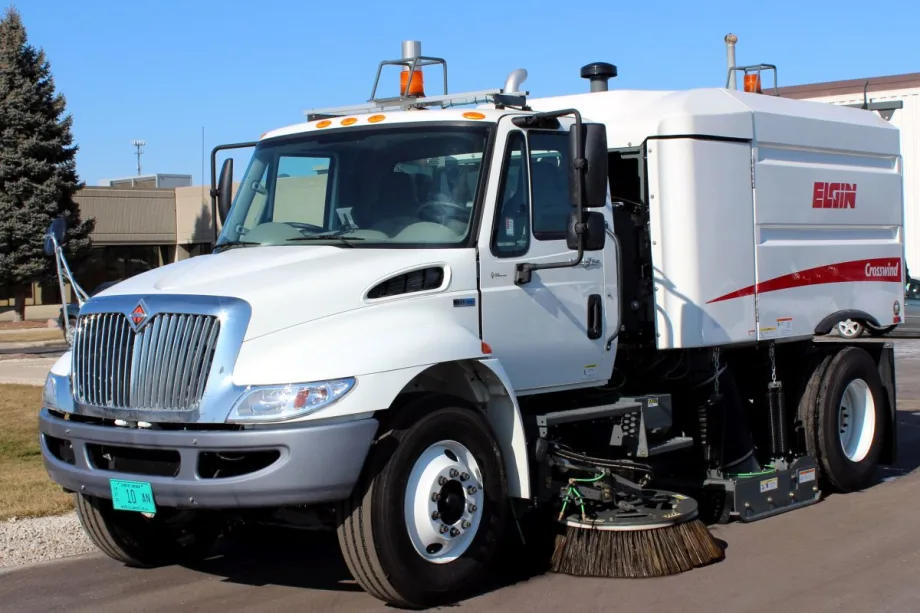
The cornerstone to spec’ing a productive and safe upfit is for the fleet manager to fully understand the application. A street sweeper is not used in the same way a delivery truck is.
Photo: Fontaine Modification
It can’t be emphasized enough that to properly spec a vocational vehicle; you need to talk with the people in the field to understand what type of application a truck or van is expected to perform and the conditions in which it will operate. It is critical to solicit input from field personnel to ensure that all local needs and requirements affecting the updated vehicle’s operation are considered.
The cornerstone to spec’ing a productive and safe upfit is for the fleet manager to fully understand the application. This involves talking with the end-users who will actually be using the equipment These are the people who know the equipment needed to perform their jobs safely, effectively, and efficiently. The more information you can collect from end-users about the fleet application, the greater the likelihood that a truck or van will be properly engineered to successfully perform the intended operation.
If possible, schedule site visits to see firsthand how a truck is being used in specific work environments. This will give you the opportunity to confirm firsthand what is really needed as opposed to what a user may want. By understanding the day-to-day application, you will be able to build a truck that meets their needs and get an idea of tomorrow’s needs.
Type of Upfit Considerations
Upfitting a vehicle to perform specific tasks is one of the more complicated aspects of fleet management. And, as such, it is an area fraught with opportunities to make mistakes. Missed details can add up and cost fleet managers money, time, and create long-term work inefficiencies. Consequently, upfitting a vehicle is a process that requires much thought and careful consideration.
The key objective of your discussions with end-users is to match the truck with the fleet application. Once you have completed your discussions, make sure the completed upfit specs have been reviewed and approved by all parties prior to order placement. It is critical to have a documented sign-off between parties to avoid misunderstandings that result in after-the-fact upfitting modifications.
Below are considerations for specific types of upfits.
Service Body: For light-duty fleets, a common upfit for a truck chassis is a service body. There are four factors that determine the size of a service body. The first is the chassis itself, which is determined by the required gross vehicle weight. The other three factors are cab-to-axle dimensions, service body floor width, and required compartment depth. Additional service body considerations are whether it is enclosed or open and the type of bin configuration. If you need to install equipment in a service body, such as winches, generators, or compressors, it may require compartment cutouts or access doors. These decisions should be made in consultation with the vehicle and equipment users.
Storage Equipment: If you operate a pickup fleet requiring storage equipment, it is critical to examine the various configurations from the user’s perspective in order to provide good ergonomic accessibility to stored items. The type of pickup selected and its bed length will determine the size of the tool storage box. There are three types of pickup storage boxes: a crossbed box, side-mount box, and interbed-mount box. In addition, the type of storage box is usually determined by the size and number of items that require lockable, dry storage space. A crossbed box mounted directly behind the pickup cab, is favored when there is a minimum number of items to be stored. Side-mount boxes can be configured for large bins to carry shovels, pipes, or conduits. Interbed-mounted boxes are installed inside a pickup bed against the fender walls and are primarily used to carry large items.
Ladder Rack: One of the most common upfits is the installation of ladder racks. When specifying ladder racks, it is important to first determine the size of the ladder to be carried. Look for ease of maneuverability. Locate a rack that allows a ladder to be easily removed by the driver. How difficult is it to lock or unlock the ladder rack? This is important when service technicians have a quota of stops that need to be made each day. Also, a ladder rack location determines whether a driver will remove a ladder from the driver side or curbside, which is important when working in an urban environment.
Liftgate: The first consideration when selecting a liftgate is to determine whether one is actually required. Sometimes company policy will dictate the necessity of a liftgate, especially if there are limitations on how much weight a driver is allowed to lift. When selecting liftgates, the key consideration is to determine the required lifting capacity. Also, examine the mounting requirements of a liftgate. If vehicles are frequently replaced, select liftgates that bolt on to facilitate transfer to replacement vehicles.
Lead Time Planning
It is important to find a balance that will keep the upfit process as simple as possible, while spec’ing the capability to fulfill the intended fleet application. One mistake is to begin the planning cycle too late. You should start your planning cycle early enough to leave adequate time for production, upfitting, and transportation. By establishing a requested delivery date upfront, proper planning will help meet your fleet’s needs.
Make sure you plan for sufficient lead time between the time you order and ultimately put the upfitted truck into fleet service. Make sure the lead time for the body is concurrent with the lead time for the chassis and not in addition to it. Also, if possible, avoid negotiating with multiple component suppliers and installation vendors. For example, some companies will order racks and bins from one vendor, ladder racks from another, and decals from a third. While this sourcing strategy may initially save money, it increases overall lead-time, which ultimately increases costs. Late deliveries are an expensive hidden cost to fleet management, since you are paying interest on equipment that is not in service.
Let me know what you think.
More Blog Posts

Trucks Are Corporate Assets, but so too Are Drivers & Technicians
Over the years, work trucks have evolved into mobile offices equipped with a variety of in-cab devices, however, these devices and equipment take space, creating an increasingly cramped cab, restricting the body movement of a driver, which can potentially lead to ergonomic injuries.
Read More →
10 Upfitting Proverbs From the School of Hard Knocks
A proverb is a phrase that gives real-world advice learned from practical experience. Upfitting is complicated and there are many opportunities to make mistakes, sometimes very expensive ones. Here are 10 proverbs for a successful upfit.
Read More →
Downtime Truism: If the Wheels Don't Turn, You Don't Earn
Time in the shop, instead of on the road, means lost sales and less face time with customers, putting downward pressure on the bottom line. Downtime mitigation is key to controlling costs and helping to maximize fleet uptime.
Read More →
Upfitter Backlogs Created by Strong Truck Demand
Strong demand for light- and medium-duty trucks in the 2018 model-year increased order-to-delivery (OTD) times, resulting in widespread upfitter backlogs despite reduced fleet allocation availability due to competing strong retail demand for trucks.
Read More →