





On Display: Ideanomics & Via Show VTRUX Platform at Work Truck Week
Wireless Charging for Electric Work Trucks
All of your wireless power transfer FAQs answered: how it works, benefits, challenges, applications, and more!
April 25, 2023
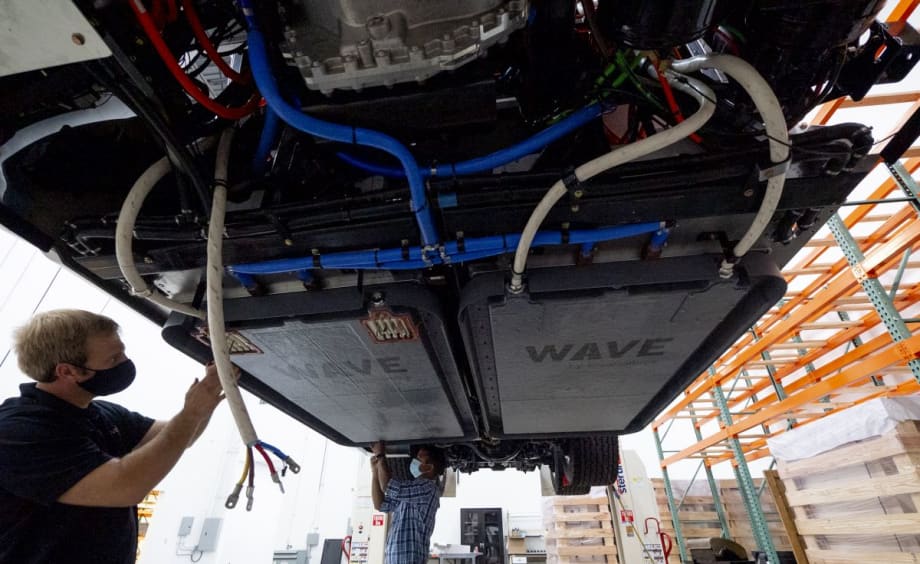
Wireless charging for EVs is based on the principle of electromagnetic induction. It involves two main components: a charging pad and a receiving pad (pictured).
Photo: Ideanomics
6 min to read
When adding electric trucks to the fleet, the first concern might be how far they can travel on a single charge and what charging infrastructure best supports their operations. With advancements in electric vehicle (EV) charging and infrastructure, there are multiple charging options available now for fleet managers.
Some EVs can run their routes and charge overnight with cost-effective AC low-power charging solutions. Others can charge between shifts with short dwell times supported by high-power DC fast chargers — also called wireless charging.
High-power wireless charging complements Level 1 and 2 AC charging and Level 3 DC fast charging as the zero-emission vehicle population grows, including medium- and heavy-duty vehicles.
But what exactly is wireless charging, and would it work for your fleet?
In 2021, Ideanomics signed a definitive agreement to acquire Utah-based wireless charging provider WAVE. Work Truck spoke with Jan Freimann, senior vice president of Ideanomics Energy, to help answer those questions and get down to business on wireless charging.
“BloombergNEF predicts there could be more than 1 million electric work trucks in the U.S. by 2030,” Freimann said. “For this to happen, fleet operators need access to the charging solutions that can be deployed fast, grow with the fleet, and deliver a positive return on investment.”
How Does Wireless Charging Work?
Wireless charging for EVs is based on the principle of electromagnetic induction. It involves two main components: a charging pad and a receiving pad.
The main benefit of wireless charging is that it requires no physical connection. It is free of moving parts, connectors, or cables. This provides a safer operating environment and prevents the risk of damage to the system from inclement weather or other incidents.
To start, an electric truck pulls up or parks in the spot for charging. No plug-ins or physical contacts are necessary. An onboard display confirms alignment, and charging begins only after the driver places the vehicle in neutral and applies the parking brake.
A current is sent through the pavement-embedded charging pad to induce a magnetic field, which induces an electrical current in a receiver plate mounted on the bottom of the vehicle.
That power is then sent to the onboard battery. The system is unaffected by snow, ice, moisture, and heat and is nearly as invisible as it is indestructible. Free of moving parts, connectors, or cables means there is nothing to break or freeze.
“When vehicles are equipped with high-power wireless charging systems, charging is as simple as parking your vehicle. And the best aspect is that you’re future-proofed as vehicles in the commercial sector could become increasingly autonomous,” said Freimann.
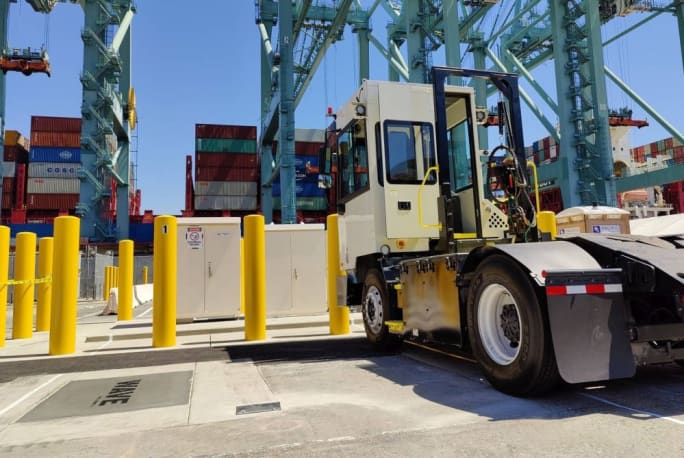
When vehicles are equipped with wireless charging systems, charging is as simple as pulling on top of a wireless charging pad.
Photo: Ideanomics
What About Operations With Longer Duty Cycles?
High-power wireless charging can reduce concerns regarding EV range and related range anxiety.
By placing wireless charging pads at locations along specific routes (in-route), the technology allows vehicle batteries to be partially recharged every time the vehicle stops at the strategically placed chargers.
This allows the vehicle to run continuously throughout the day without returning to a depot. It’s also beneficial in scenarios where charging is not planned.
Port or distribution center applications where loading/unloading goods from EVs are often not plannable allow for opportunistic charging. They are a perfect use case for a high-power wireless charging solution, such as the WAVE wireless charging system.
When vehicles are equipped with wireless charging systems, charging is as simple as pulling on top of a wireless charging pad. For work trucks, this could mean charging at a loading dock, warehouse, port, or depot.
Is Wireless Charging Ready for Work Trucks?
Although Wireless charging can make charging easier for passenger vehicles by eliminating charging plugs, the question is whether it is powerful enough to charge vehicles with greater energy demands, medium- and heavy-duty trucks.
While low-power inductive charging is not strong enough for work trucks with bigger battery capacities, other options are available.
WAVE has commercial fleet-optimized inductive charging systems that can charge vehicles with 125kW or 250kW of charging power with around 90% efficiency.
Work truck fleets can learn from transit fleets, such as the Antelope Valley Transit Authority, which operates one of the largest electric bus fleets in the country. In addition, the Port of Los Angeles already uses the WAVE wireless charging system for daily operations. This allows for quick recharging of a K9 Transit bus by gaining 20-25 miles in 15 minutes.
Ideanomics has also taken strides to offer wireless charging for commercial fleet operators.
“We pair VIA’s electric Class 2-5 light commercial vehicles with our fleet charging solutions (both wired and wireless) to ensure seamless and reliable operations for fleet operators,” Freimann said.
What Are the Benefits of Wireless Charging?
The benefits of wireless charging include the following:
Wireless charging adds range. It allows for in-route charging (for example, transit buses or Mid-Mile Logistic operations).
Opportunity charging. This enables fleet operators to run vehicles with limited electric range without returning to a charging port.
Lower operating and maintenance (O&M) costs vs. traditional DC Fast charging infrastructure. Wireless charging can lower your fleet costs by keeping smaller batteries topped off throughout the day. This delivers saving through the purchase and operation of lighter vehicles featuring smaller and fewer batteries. Automated wireless charging removes the labor and maintenance costs associated with plug-in and mechanized overhead charging infrastructure.
Hassle and break-free —zero manual handling of cables.
What Are Wireless Charging Challenges?
The two biggest challenges for wireless charging are the longer payback and deployment time.
Location: Wireless charging can be installed in facilities where space is at a premium, such as warehouses and ports. It can reduce or eliminate the need for centralized depot charging, topping off EVs through opportunity charging while the work is happening.
Time to deploy: Because wireless charging is installed in the ground, it typically requires 12-18 months (similar to conductive charging infrastructure) between planning, engineering, permitting, and construction.
Return on Investment: Upfront hardware costs are higher than wired charging solutions. However, this will be offset by lower O&M costs and operational improvements. Ideanomics is solving the cost challenge with “as-a-service” financing. “This eliminates the high upfront cost, replacing it with a predictable and easy-to-manage fee,” Freimann explained. “This is an essential solution because not every fleet operator wants to spend CapEx dollars.”

Because wireless charging is installed in the ground, it typically requires 12-18 months (similar to conductive charging infrastructure) between planning, engineering, permitting, and construction.
Photo: Ideanomics
Which Applications Are Wireless Charging Best Suited For?
Freimann cited three situations in which wireless charging works well.
Transit: Wireless charging pads installed along fixed points on a route allow for quick charging a few minutes at a time when a vehicle is stopped. “This allows operators, for example, to reach the same range with EVs as diesel vehicles,” Freimann said.
Logistics/Distribution: Space is at a premium at warehouses and distribution centers; wireless charging works well because charging starts and stops automatically without any driver interaction. “Electric commercial trucks can top off their battery and get additional range while loading and unloading, using the ‘opportunity’ to charge,” Freimann said.
Ports: Ports (including airports) have limited space and are ideal settings for opportunity charging. In addition, safety concerns make wireless charging the perfect solution, avoiding tripping hazards. “We power vehicles in the Port of Los Angeles with WAVE wireless charging pads during short interruptions so that the full shift can be run without swapping vehicles,” Freimann said.
Freimann said it’s important for fleets to pair the EVs with the charging infrastructure that best suits their operations.
“This is critically important. Otherwise, fleet operations can be impacted by broken chargers, insufficient power availability, and high costs through electricity demand charges,” he said.
Subscribe to Our Newsletter
More Vehicle Research
2026 Ram 1500 Tradesman Put to a Real-World Fleet Test
A few days behind the wheel of a 2026 Ram 1500 Tradesman turned into a test of visibility, parking, work-ready features, and even severe-weather driving.
Read More →
Isuzu N-Series Gas Fleet Guide: Specs, Capability and 2027 Model-Year Updates
Explore Isuzu Truck North America’s N-Series Gas fleet specs, engine performance, GVWR and payload capability, configurations, chassis dimensions, work-focused features, and 2027 model-year information.
Read More →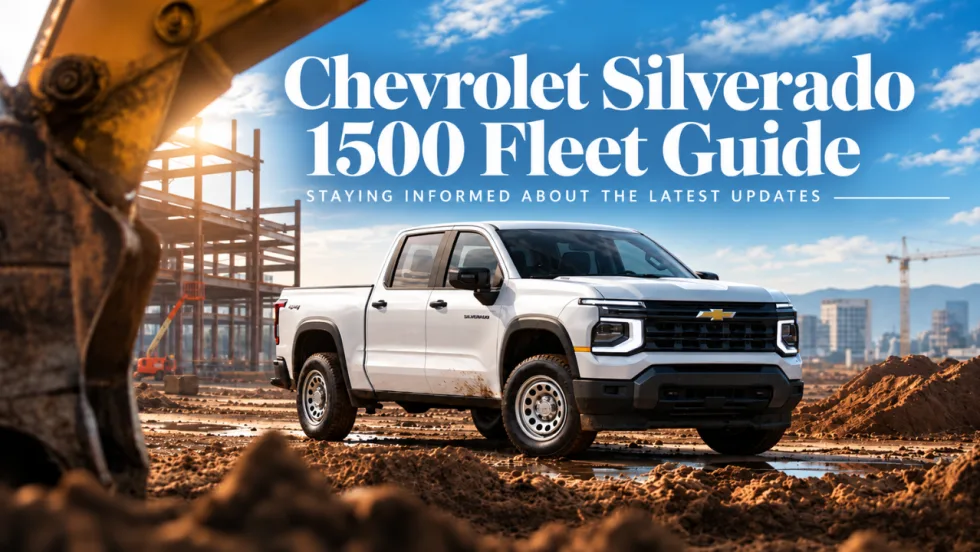
Chevrolet Silverado 1500 Fleet Guide Specs Capability and 2027 Model-Year Updates
The next-generation 2027 Chevrolet Silverado 1500 brings new V-8 engines, updated technology, expanded safety features, and a fleet-focused Work Truck. Here’s what commercial fleets need to know so far.
Read More →
Ram ProMaster City Fleet Guide Specs Cargo Capacity and 2027 Updates
Work Truck’s Ram ProMaster City Fleet Guide tracks the latest specifications, cargo capability, configurations, fleet technology, pricing, and model-year updates for Ram’s mid-size commercial van.
Read More →
Ford F-150 Fleet Guide Specs Capability and 2026 Model-Year Updates
Explore 2026 Ford F-150 fleet specs, engines, towing and payload capability, configurations, work features, technology, and model-year updates.
Read More →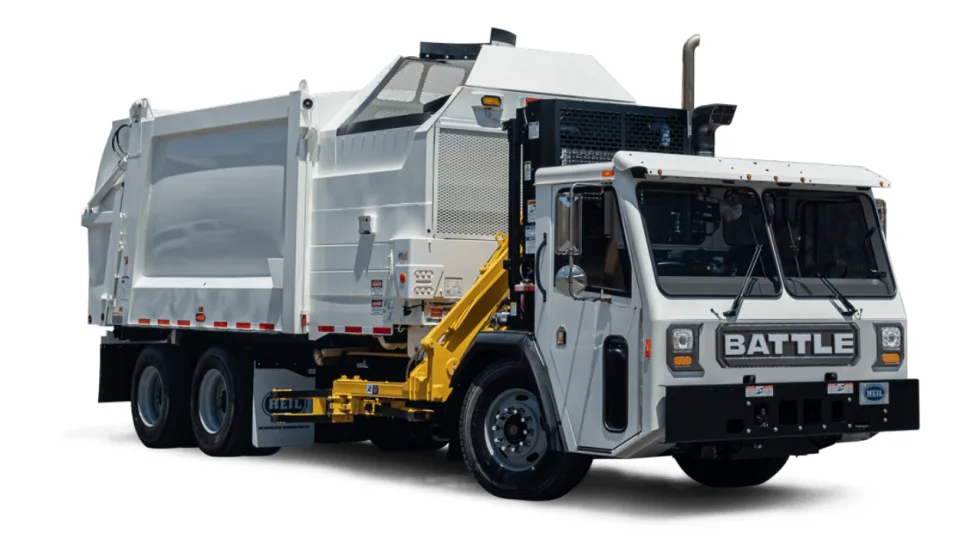
TCI Now Sells & Supports Battle Motors’ Vocational Trucks
Midwest truck dealer Truck Centers, Inc. (TCI) has expanded its transportation solutions with sales and service support for Battle Motors’ heavy-duty vocational trucks at locations in locations in Indiana, Illinois, and Missouri
Read More →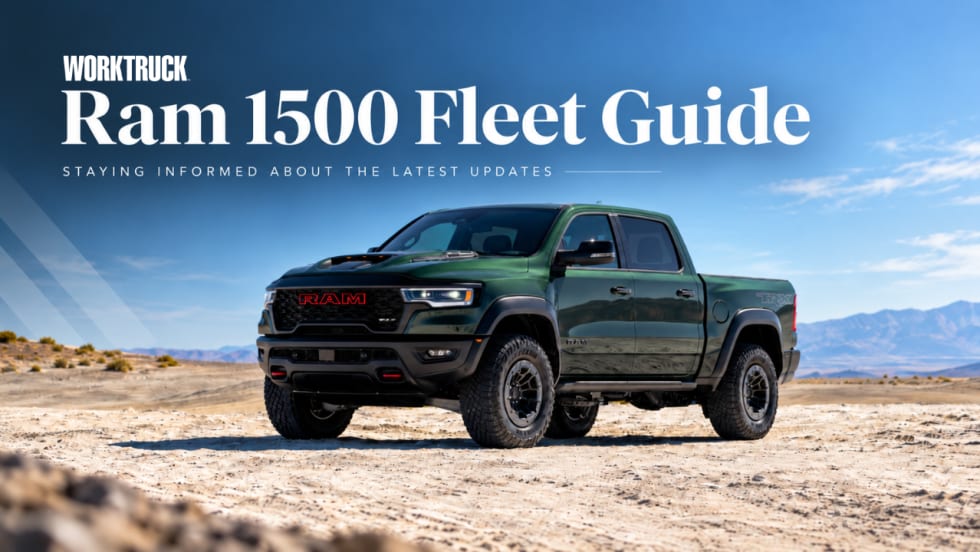
Ram 1500 Fleet Guide Specs, Capability and 2027 Model-Year Updates
Explore always up-to-date Ram 1500 fleet specs, engines, towing and payload capability, configurations, technology, pricing updates, and model-year changes.
Read More →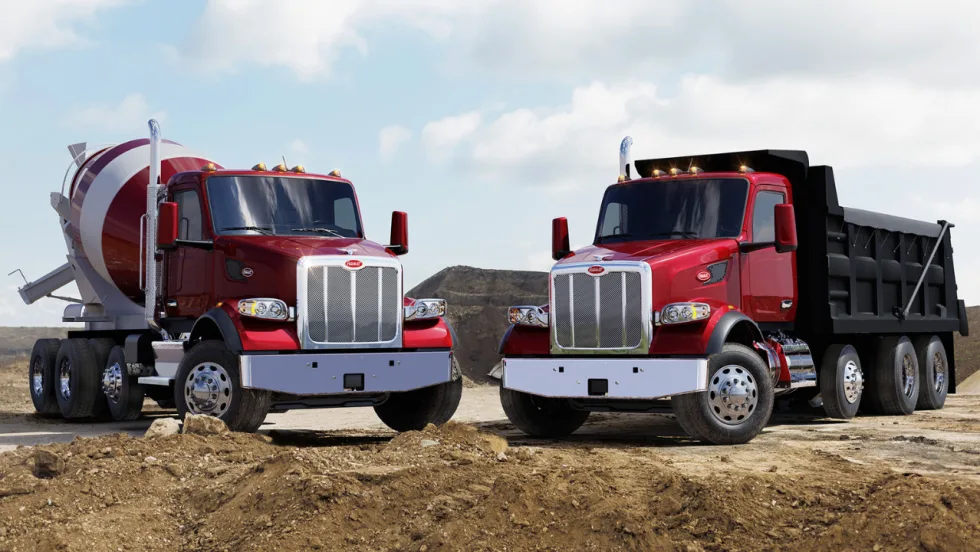
Peterbilt Trucks Equipped with Paccar TX-18 Pro Boost Efficiency for Maryland Fleet
Patuxent Companies is replacing aging trucks with the Peterbilt Model 567 and Model 589, specified with the Paccar TX-18 Pro 18-speed automated transmissions, and is reporting an 8% to 10% improvement in fuel economy.
Read More →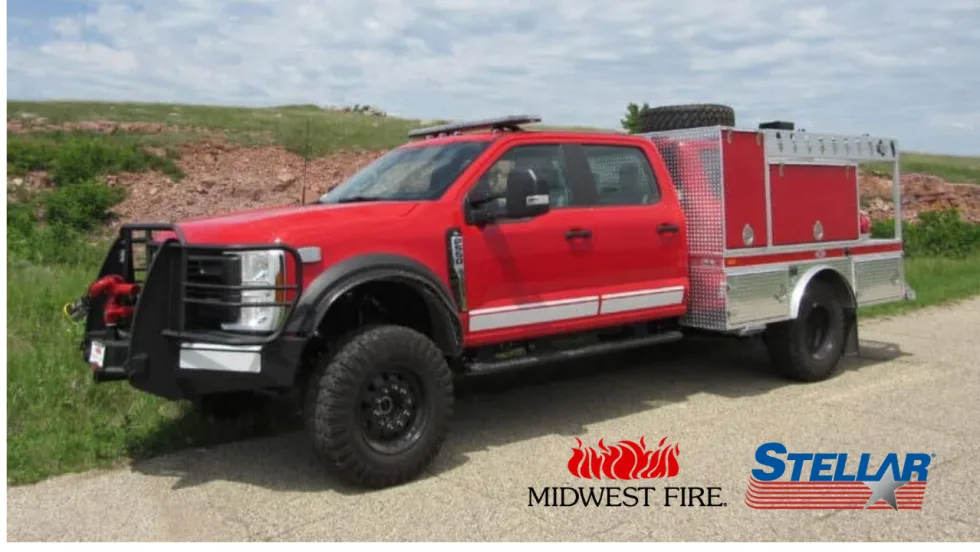
Stellar Expands into Fire Apparatus Market with Acquisition of Midwest Fire
Stellar Industries has acquired Midwest Fire, a custom fire apparatus manufacturer headquartered in Luverne, Minnesota, with nearly four decades of specialized apparatus experience.
Read More →
Recalls You Need to Know About in August 2026
If you have Altec, Chrysler, Ford, Heil, General Motors, International, Mack Trucks, Paccar, Rivian, Royal Truck, Toyota, US Truck Body, or Volvo Trucks vehicles in your fleet, you should check these important recalls issued by the National Highway Safety Administration.
Read More →