




5 Things to Know When Selecting Charging Solutions for Work Truck Fleets
Where Propane and Electric Trucks Intersect: Implications for Fleet Operators in 2024 and 2025
Making informed choices on alternative fuels is crucial for fleet operators as sustainability becomes more important. Are you making the right choices for your operations?
by Todd Mouw, ROUSH CleanTech
July 22, 2024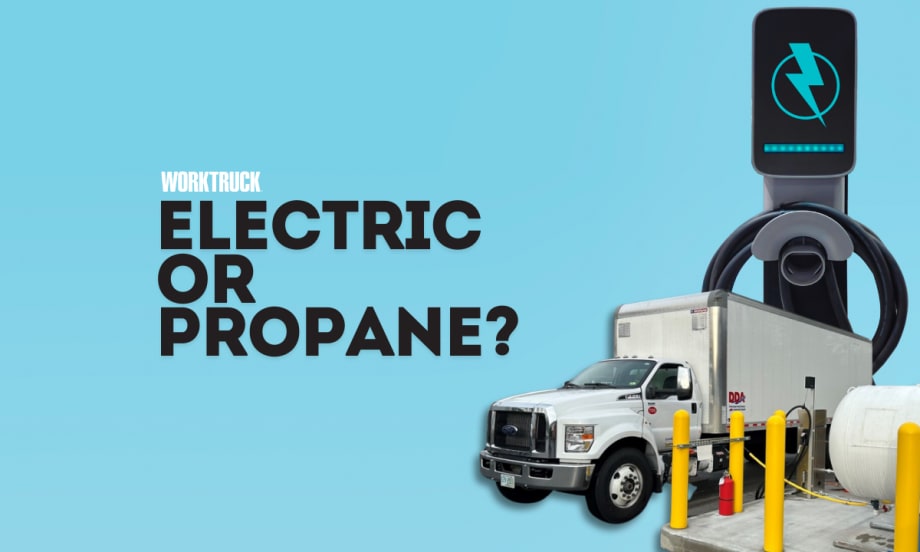
Fleet operators must consider various factors when choosing between alternative fuels: vehicle class, range, payload, infrastructure, and available grants.
Photo: Work Truck | ROUSH CleanTech
3 min to read
As the push for sustainable practices intensifies, fleet operators face crucial decisions regarding alternative fuels. Propane and electric vehicles (EVs) are the two pre-eminent options. Understanding where these fuels intersect and how they will impact fleet operations in the coming years is essential for making informed choices.
Propane, particularly for Class 4-7 trucks and buses, offers a "no compromise" solution. It provides versatility with minimal impact on payload and range, comparable to traditional fuels. Propane is abundant, ensuring stable fuel prices and significant savings.
Advantages of Propane for Fleet Operations
Proven technology makes propane a reliable option. The alternative-fuel industry has evolved significantly, offering extensive data and proven solutions. Fleet operators can make confident decisions backed by concrete information and peer experiences.
Electric vehicles, while improving, primarily serve lighter-duty categories. EVs like Ford's Lightning and E-Transit are suitable for municipal and last-mile fleets where range and payload are less critical. However, EVs' zero tailpipe emissions do not equate to zero overall emissions.
The electricity generation process, especially in coal-dependent regions, can negate some environmental benefits. In fact, there are some states where a fleet would be better off running a diesel truck based on how the electricity is generated.
Considerations for Choosing Between Alternative Fuels
Fleet operators must consider various factors when choosing between alternative fuels: vehicle class, range, payload, infrastructure, and available grants. Case studies and peer experiences provide valuable insights. For example, compressed natural gas (CNG) is a proven domestic energy source, yet its popularity has waned amid the EV buzz.
Hydrogen fuel cells, despite their potential, face high costs and are likely to be viable for class 8 trucks in the long term due to the necessary infrastructure and mileage justification.
For fleet operators mandated to reduce emissions, the first step is to consult OEM partners and local Clean Cities. These entities offer access to technology providers and peer fleets. For those considering propane, ROUSH CleanTech provides tools and 3 billion miles of data to evaluate available options. Operators should use this data and total cost of ownership assessments to showcase the most practical technology, considering both propane and EVs, especially if incentives are available.
Charging times for electric trucks vary based on battery capacity and charger types. The emission and size footprint of charging stations depends on the duty cycle, number of vehicles, and state-specific electricity carbon intensity. Some, like South Carolina (nuclear) or Vermont (hydro), provide very clean power. At the same time, the majority of the country still has a long way to go to produce clean and reliable electricity for transportation.
Propane fuel stations offer flexible solutions, from small skid-mounted systems (the size of two parking spaces) to large tanks for extensive deployments (similar in size to a conventional fuel station). Propane's non-toxic nature allows for underground tank installation, saving space. Propane fueling requires minimal energy, and off-grid options provide added resilience.
Both fuels offer viable paths toward sustainability, with propane providing immediate versatility and EVs holding future potential as technology advances. By leveraging available resources and data, operators can make informed decisions that align with environmental goals and operational needs for 2024 and beyond.
About the Author: Todd Mouw is executive vice president for ROUSH CleanTech, an advanced fuel system technology industry leader. Mouw has served as president of NTEA's Green Truck Association and is currently a Board member of NTEA. This article was authored and edited according to WT editorial standards and style. Opinions expressed may not reflect that of WT.
Subscribe to Our Newsletter
More Green Fleet

Fleet Forward Conference Introduces One-Day Passes for 2026
New one-day registration gives fleet professionals the flexibility to attend Tuesday, Wednesday, or Thursday, with passes available for $199 through Sept. 18.
Read More →
CALSTART Rebrands as Catalyst Mobility, Will Combine with Forth in 2027
CALSTART has rebranded as Catalyst Mobility and will combine with Forth at the start of 2027. The new organization said it is poised to become one of the world's largest, strongest, and most impactful clean transportation nonprofits.
Read More →
Electric Truck and Charging Programs to Boost Sustainability at NY & NJ Ports
Together, the Port Authority of New York and New Jersey and CALSTART will electrify drayage and terminal operations serving the East Coast’s busiest container port. A pair of incentive programs totaling $45 million has launched to accelerate adoption of zero-emission drayage trucks and terminal tractors.
Read More →
Xos Hub Surpasses One Gigawatt-Hour of Energy Delivered in the Field
A single Xos Hub has surpassed one gigawatt-hour of energy across more than 33,600 charging sessions in the field, demonstrating performance that supports Xos' expansion across new products and markets.
Read More →
Carrier Transicold Launches All-Electric Vector 8200 TRU for Diesel-Free On-Site Cold Storage
Carrier Transicold’s first engineless multi-temperature TRU helps fresh- and frozen-food fleets add supplemental cold storage capacity during seasonal peaks.
Read More →
Narro Trucks Introduces Electric Utility Vehicle
Narro Trucks officially launched its operations on Aug. 20 and hosted a ride and drive to showcase its electric truck, which will be produced in Virginia.
Read More →
Samsung SDI Takes Full Control of GM Battery JV as Indiana Plant Pivots to Energy Storage
Samsung SDI is taking full control of its Indiana battery plant with GM, marking a major shift from the EV-focused joint venture Charged Fleet first covered in 2023.
Read More →
NWSA Taps CALSTART to Administer Zero-Emission Drayage Assistance Program
CALSTART will provide free technical assistance services to drayage fleets serving the Ports of Seattle and Tacoma and looking to transition to cleaner technologies and help decarbonize freight hubs.
Read More →
EV Fleet Reality Check: What Operators Wish They Knew Before Electrifying Their Work Vans
Electric work truck upfits bring new compatibility questions. Learn how parts availability, OEM guidance, power demands, and route planning can affect fleet performance.
Read More →
Peterbilt Expands Sourcewell Partnership with Electric Vehicle Lineup
Peterbilt Motors Company’s cooperative purchasing agreement with Sourcewell and its Canadian partner, Canoe Procurement Group, now includes including Peterbilt's battery-electric vehicle lineup.
Read More →