




Understanding Webasto’s Modular Battery System
When you step onto the show floor at The Work Truck Show 2020, you may ask yourself – who on earth brought a Ford Mustang to a truck show? And why? Hint: It's all about the power.

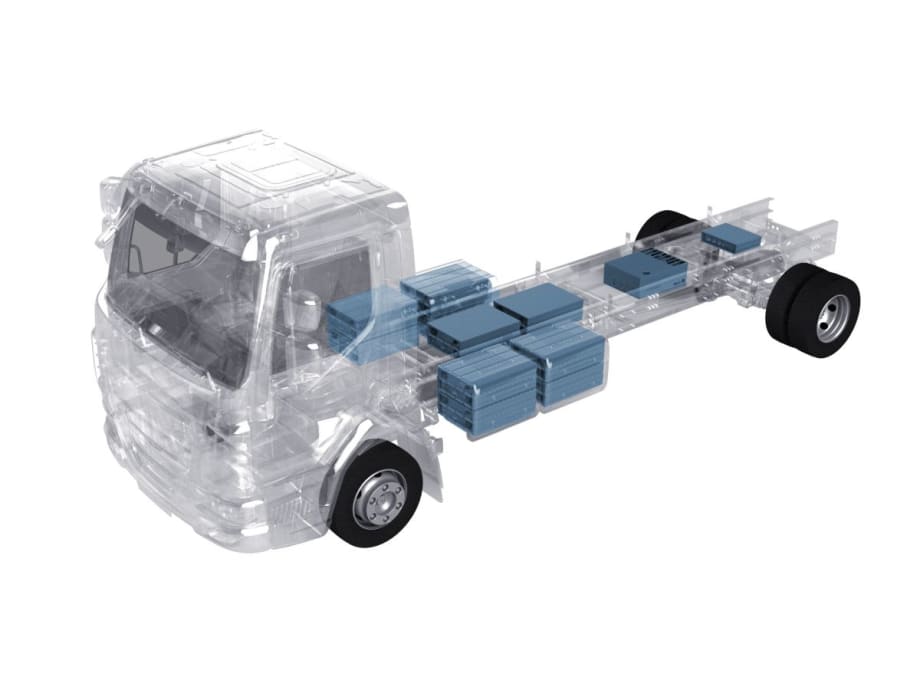
An added benefit: the standard battery system is designed for scalability.
Image: Webasto
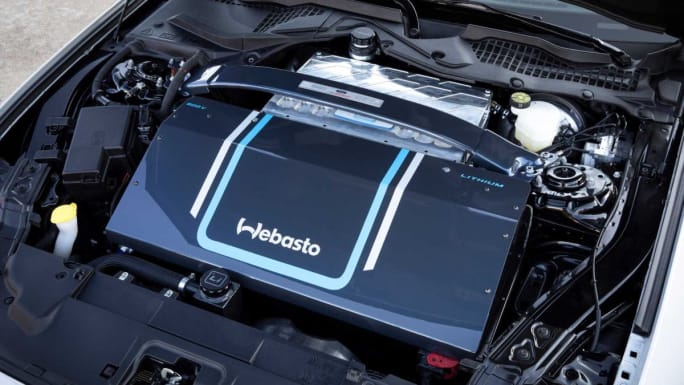
Webasto's Mustang Lithium demonstrates the combination of high-performance and custom solutions.
Image: Webasto
When you step onto the show floor at The Work Truck Show 2020, you may ask yourself – who on earth brought a Ford Mustang to a truck show? And why?
Using the Mustang Lithium to show their capabilities of both designing custom energy storage solutions and supplying off-the-shelf standard battery packs, Webasto set the stage for its CV Standard Battery System in North America. The system brings the best of both worlds of high-performance and custom solutions for the future of electric commercial vehicles.
Although the Mustang is fully electric, it still houses a 6-speed manual transmission – vertically integrating into the automotive e-mobility space.
“Webasto is committed to further expanding our product offering in the e-Mobility segment. This vehicle serves as a display of our capabilities, presenting our battery solutions and high-voltage heater (HVH) systems in a unique setting. It pushes the limits of electric performance and brings a new perspective to the future of electromobility. Webasto brings the same passion, quality and innovation that was put into the Mustang prototype to our commercial vehicle solutions,” said Webasto's Director of Marketing, Josh Lupu.
Demonstrating Expertise & Scalability
The Mustang is intended to show fleets how Webasto used its combined expertise in the automotive industry and system supplier for complex technical solutions to develop a high-voltage battery system suited for commercial vehicles.
“Our CV Standard Battery System is a plug-and-play solution and can easily be scaled from 35 kWh to 350 kWh to fit a wide array of vehicle applications. The system is robust and engineered to live up to the rigors of commercial vehicle duty cycles,” Lupu explained.
Why go modular? The modular concept is more of a benefit for manufacturers, upfitters, and body builders.
“The modular concept allows these groups to choose the number of packs that best fits their application without high development costs. Range, energy, and power needs to be factored in. That’s beauty of the modular system – whether it’s a last mile delivery vehicle, work truck or passenger van – the batteries, combined with the vehicle interface box (master BMS and power distribution box) make spec’ing the application painless,” Lupu said.
Thermal management is crucial for battery health and life. Webasto’s thermal management solutions heat and cool the batteries to keep them in the safe operating range.
An added benefit: the CV Standard Battery System is designed for scalability.
“Each battery pack provides 35 kWh of energy, and up to 10 packs can be used for a combined 350 kWh. The standard battery system can be configured for 400V and 800V version and offers a plug-and-play style setup,” Lupu concluded.
Check out the Mustang and new modular battery system ideal for commercial vehicle applications at Booth #641 at The Work Truck Show 2020, held March 3-6 in Indianapolis.
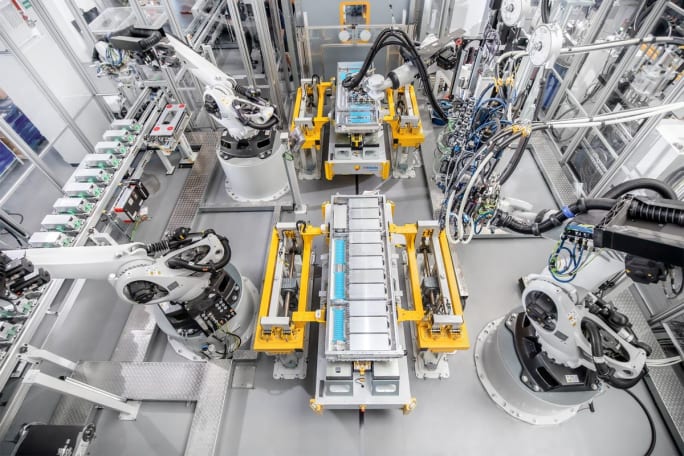
Manufacturing plant for the CV Standard batteries.
Image: Webasto
More Green Fleet

Fleet Forward Conference Introduces One-Day Passes for 2026
New one-day registration gives fleet professionals the flexibility to attend Tuesday, Wednesday, or Thursday, with passes available for $199 through Sept. 18.
Read More →
CALSTART Rebrands as Catalyst Mobility, Will Combine with Forth in 2027
CALSTART has rebranded as Catalyst Mobility and will combine with Forth at the start of 2027. The new organization said it is poised to become one of the world's largest, strongest, and most impactful clean transportation nonprofits.
Read More →
Electric Truck and Charging Programs to Boost Sustainability at NY & NJ Ports
Together, the Port Authority of New York and New Jersey and CALSTART will electrify drayage and terminal operations serving the East Coast’s busiest container port. A pair of incentive programs totaling $45 million has launched to accelerate adoption of zero-emission drayage trucks and terminal tractors.
Read More →
Xos Hub Surpasses One Gigawatt-Hour of Energy Delivered in the Field
A single Xos Hub has surpassed one gigawatt-hour of energy across more than 33,600 charging sessions in the field, demonstrating performance that supports Xos' expansion across new products and markets.
Read More →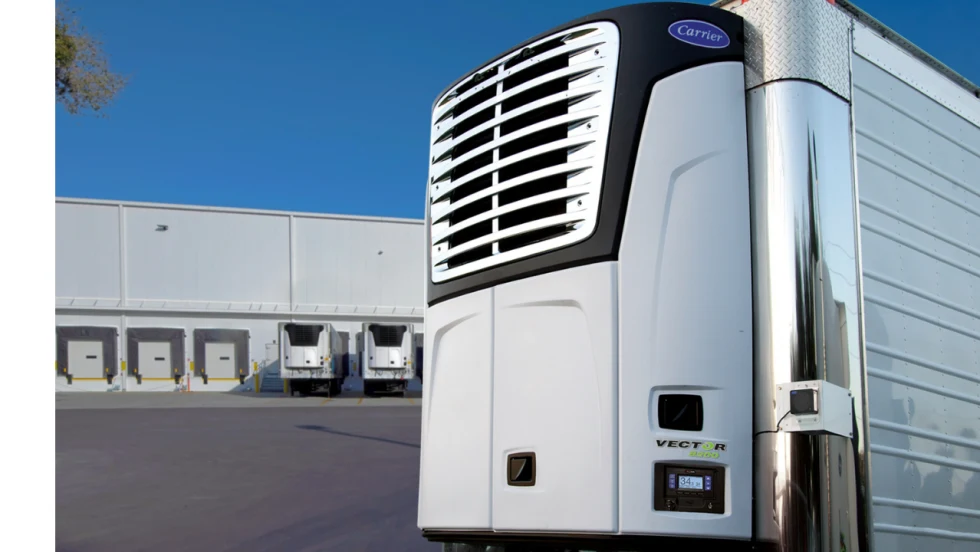
Carrier Transicold Launches All-Electric Vector 8200 TRU for Diesel-Free On-Site Cold Storage
Carrier Transicold’s first engineless multi-temperature TRU helps fresh- and frozen-food fleets add supplemental cold storage capacity during seasonal peaks.
Read More →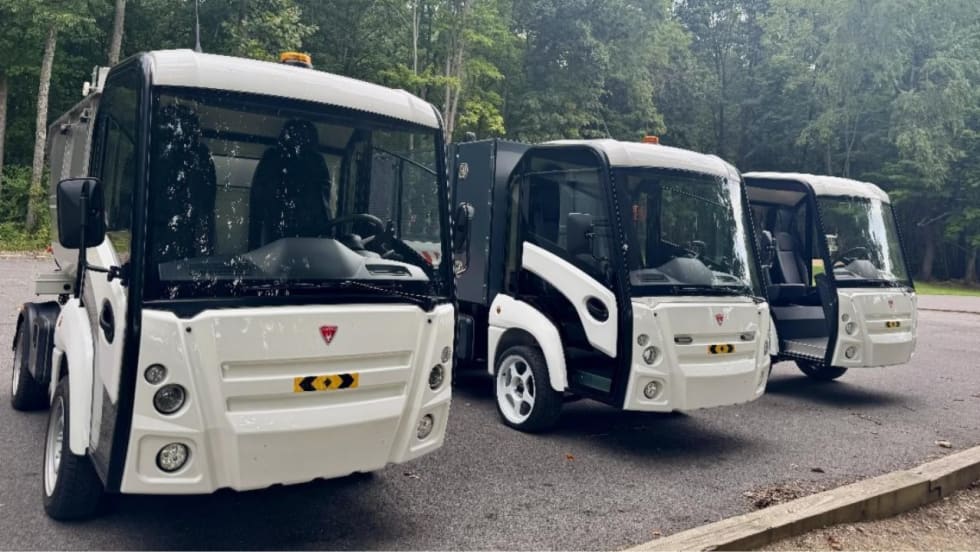
Narro Trucks Introduces Electric Utility Vehicle
Narro Trucks officially launched its operations on Aug. 20 and hosted a ride and drive to showcase its electric truck, which will be produced in Virginia.
Read More →
Samsung SDI Takes Full Control of GM Battery JV as Indiana Plant Pivots to Energy Storage
Samsung SDI is taking full control of its Indiana battery plant with GM, marking a major shift from the EV-focused joint venture Charged Fleet first covered in 2023.
Read More →
NWSA Taps CALSTART to Administer Zero-Emission Drayage Assistance Program
CALSTART will provide free technical assistance services to drayage fleets serving the Ports of Seattle and Tacoma and looking to transition to cleaner technologies and help decarbonize freight hubs.
Read More →
EV Fleet Reality Check: What Operators Wish They Knew Before Electrifying Their Work Vans
Electric work truck upfits bring new compatibility questions. Learn how parts availability, OEM guidance, power demands, and route planning can affect fleet performance.
Read More →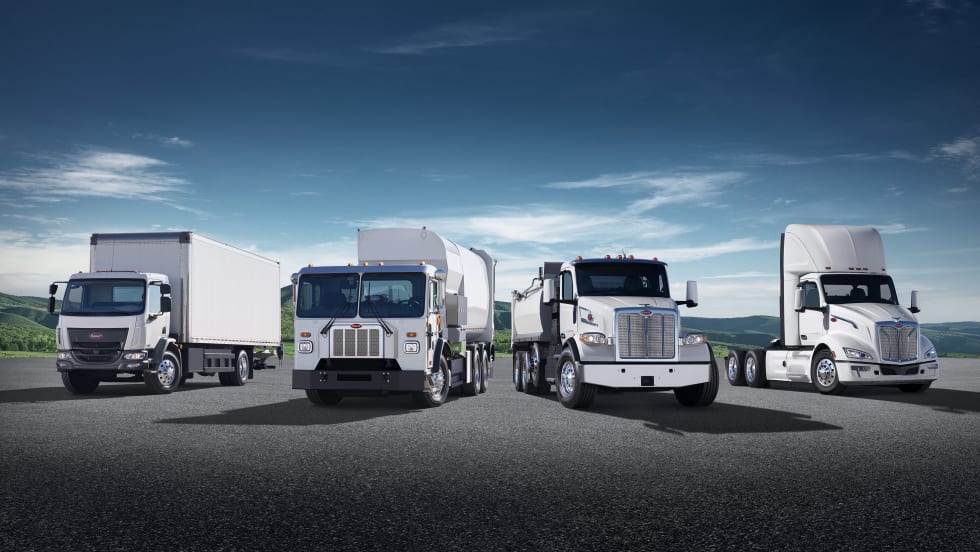
Peterbilt Expands Sourcewell Partnership with Electric Vehicle Lineup
Peterbilt Motors Company’s cooperative purchasing agreement with Sourcewell and its Canadian partner, Canoe Procurement Group, now includes including Peterbilt's battery-electric vehicle lineup.
Read More →