




Dig Deeper: Getting the Most Out of Your ePTO Today and Tomorrow
Understanding the Value of ePTOs
By enabling engine-off operation, ePTOs can significantly reduce fuel consumption, emissions, engine wear, and noise.
by Justin Hernan, Parker Hannifin
August 21, 2025
Many vocational trucks rely on hydraulic functions to get the job done. Traditionally powered by a mechanical PTO system, work truck fleets are shifting to electric PTOs (ePTOs) to cut fuel use, reduce noise, and eliminate the need for engine idling during work operations.
Photo: Work Truck
7 min to read
As more fleets convert to hybrid or fully electric options, there are new terms and products that specifiers, fleet owners/managers, and OEMs need to understand relative to how these vehicles work and are maintained, as well as the many benefits they provide financially, environmentally, and operationally.
One previously unheard-of term that is quickly making its way into a wide array of technical articles is an Electric Power Take-Off, more commonly referred to as an ePTO.
What are the Differences Between an ePTO and a Traditional PTO System?
An ePTO system refers to a technology that uses electrical energy to power auxiliary functions on vehicles, unlike traditional PTO systems that rely on mechanical energy from the vehicle’s engine. It allows vehicles to harness electrical power to operate and includes the electric motor, inverter, and a power source.
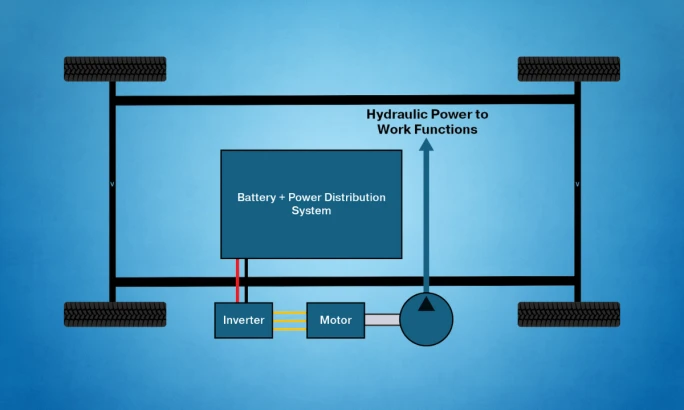
Meet the modern upgrade: an ePTO system pulls power from a battery instead of the engine, driving the same hydraulic functions with way less noise, fuel, and fuss.
Photo: Parker Hannifin | Work Truck
A conventional PTO system is a mechanical assembly that transmits power from the engine or transmission to power auxiliary equipment. In these configurations, the engine’s crankshaft drives the PTO shaft via a series of gears, delivering rotational power taken from the drivetrain whenever the engine is operational.
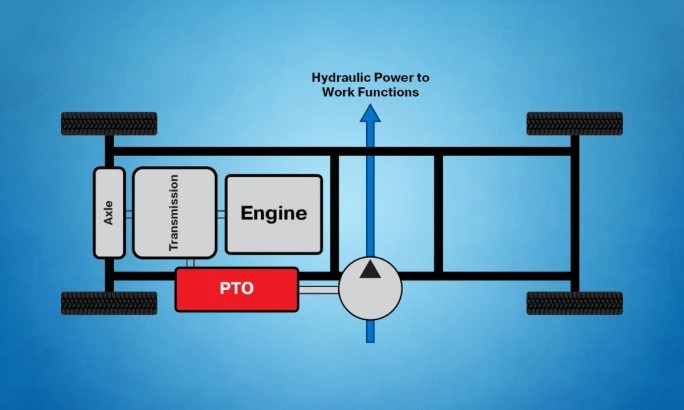
A traditional PTO system uses engine power to drive a hydraulic pump through the transmission, meaning the engine must stay running to operate work functions. Cue the fuel use, noise, and emissions.
Photo: Parker Hannifin | Work Truck
Upon engagement, the mechanical linkage transfers this rotational energy to hydraulic pumps responsible for controlling auxiliary functions, such as a boom. As increasingly stringent emissions regulations come into effect, fleet operators face the challenge of optimizing productivity and operational capabilities while ensuring regulatory compliance.
Although zero-emission vehicles and fully electric systems represent the longer-term industry objective, battery electric PTO (ePTO) units present a more accessible and cost-effective pathway toward vehicle electrification by enabling engine-off work applications.
Digging into the Benefits of ePTO Systems for Work Truck Fleets
An ePTO system offers an innovative solution that addresses the inherent limitations of traditional PTO systems by enabling auxiliary functions to operate independently of the engine’s operational status and providing flexible/remote mounting capabilities.
These ePTO systems supply power to drive attachments, such as aerial lift truck booms, without the need for the engine to be running. Utilizing a combination of battery power and the ePTO unit, these systems generate the hydraulic energy required to perform the vehicle’s auxiliary functions.
Beyond reducing fuel consumption, emissions, and engine wear by eliminating unnecessary engine idling, ePTO systems also significantly decrease overall noise levels—an essential consideration for vehicles operating in residential areas subject to noise regulations.
When comparing the traditional PTO system to the ePTO, it is evident that the significantly lower efficiency of the diesel engine (relative to the electric motor and inverter) results in the traditional PTO consuming more than three times the energy required by the ePTO system to complete the same duty cycle.Notably, diesel engine losses account for approximately 70% of the total energy consumption in the traditional systems.
In addition to the substantial reduction in energy consumption, the ePTO system also achieves a significant decrease in engine idling. During multiple steps of the duty cycle, the engine is no longer required to operate to perform the necessary tasks, enabling it to remain off for roughly 75% of the cycle.
This reduction in engine runtime not only extends the overall system lifespan by reducing mechanical stress on the engine, but it also delivers significant reductions in emissions and fuel costs. Based on a 6.5-hour workday over 250 working days per year, the ePTO system is projected to reduce the vehicle’s fuel consumption by nearly 2,500 gallons annually, plus more than 25 metric tons of CO2. Given an average cost of diesel fuel at $3.49, this translates into an annual fuel cost savings of approximately $8,600 per truck!
Understanding Low-Voltage Modular vs. High-Voltage Modular ePTOs and When to Use Them
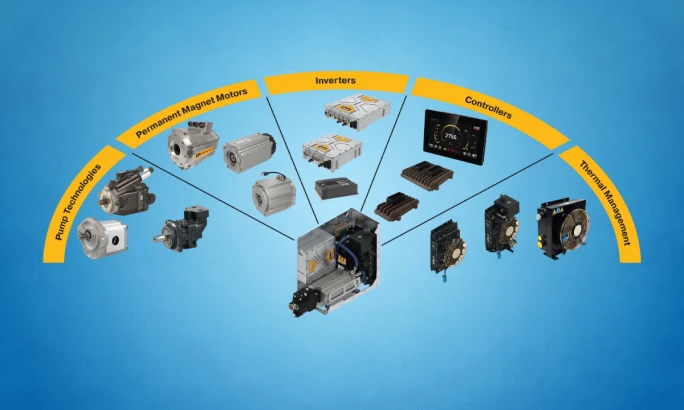
From pumps to power control, high-voltage ePTO systems are built modular, meaning they can be customized to meet your fleet’s exact needs, whether you're after performance, cooling, or quiet efficiency.
Photo: Parker Hannifin | Work Truck
Electric power take-offs (ePTOs) are typically divided into two categories: low voltage modular and high voltage modular. The low-voltage modular ePTO systems operate at nominal DC battery voltages of 24, 48, 80, and 96 volts. These systems are engineered for seamless integration with a vehicle’s existing battery and power distribution infrastructure or as standalone systems containing the batteries and power distribution system.
Relying typically on ambient convection cooling methods, the low-voltage modular ePTOs are designed as a plug-and-play solution to enable engine-off operation. The motor windings, inverter frame sizes, and hydraulic pumps are customizable based on specific application requirements, including hydraulic flow and pressure demands, noise limitations, and battery voltage, enabling the optimization of battery utilization and minimizing operational noise.
The high-voltage modular ePTO systems operate at a nominal DC bus voltage ranging from 120 to 750 volts. Unlike the low-voltage modular systems, these units integrate not only the pump, motor, and inverter, but they also likely require a cooling system, ePTO controller, and housing for simplified vehicle integration. In these high-voltage configurations, the entire system is enclosed within the housing, apart from the directly coupled hydraulic pump.
The cooling and electrical subsystems accompanying the inverter and motor are managed by the ePTO controller, enabling closed-loop control for optimized performance and noise management based on the vehicle’s real-time flow requirements.
Similar to the low-voltage modular ePTO system, the pump, motor, inverter, and cooling components are modular in the high-voltage design. They can be customized to align with specific vehicle specifications and available battery systems.
Work Truck Fleet Considerations for Sizing an ePTO
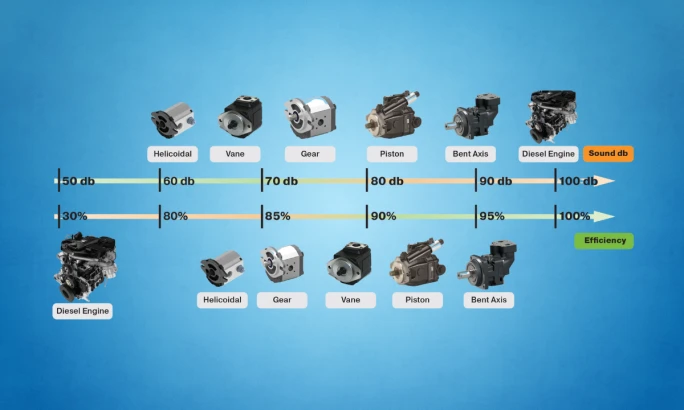
Not all pumps are created equal. Helicoidal and vane pumps run quieter, while piston and bent axis pumps bring high efficiency. Picking the right one depends on your priorities: battery life, noise levels, or somewhere in between.
Photo: Parker Hannifin | Work Truck
When sizing an ePTO system, three primary components must be considered: the pump, motor, and inverter. The process begins with identifying the required flow rate and pressure for the specific function, which then determines the suitable pump displacement. Given the wide variety of hydraulic pump technologies available, two additional critical factors — noise and efficiency — are incorporated into the selection criteria.
While multiple pump technologies may meet the required flow and pressure parameters, the final choice typically depends on whether the system prioritizes maximizing battery runtime (efficiency), minimizing noise, or achieving a balance between the two.
For instance, applications operating in residential areas often prioritize noise reduction to comply with local noise ordinances. In such cases, a helicoidal gear pump or vane pump is commonly preferred. Once the pump technology and displacement are established, the necessary torque and speed parameters can be calculated to size the motor and inverter accurately.
Unlike the hydraulic components, the motor and inverter are characterized by two distinct performance curves: the continuous operation curve and the peak operating curve. Operating within the continuous curve allows the system to run indefinitely at specific speed and torque levels, provided adequate cooling is maintained. Operating points situated between the continuous and peak curves represent torque and speed combinations that the system can sustain only for limited durations before thermal limits are exceeded.
When sizing the motor and inverter, it’s essential to distinguish whether the application demands continuous or intermittent operation. Designing the motor and inverter to operate continuously for functions that require only intermittent use can lead to oversized components that increase system cost, reduce overall efficiency, and require a large physical footprint.
Conversely, undersizing the system risks overheating during operation, potentially resulting in insufficient performance, or even function failure and reduced reliability.
To accurately size the motor and inverter, key parameters (including torque, speed, voltage, current, and duty cycle) must be established. Once the torque and speed requirements are defined, the motor’s magnet stack length, diameter, and winding configuration can be optimized to enhance system performance by the desired flow and pressure demands, considering the system’s battery voltage.
Permanent magnet motors offer multiple winding configurations, enabling performance optimization across a broad voltage range, from low-voltage systems up to 750V. Subsequently, the inverter is sized based on the motor current and battery voltage.
Both low- and high-voltage solutions are available, covering voltage ranges from 24V to 750V. Low-voltage systems typically utilize ambient air or water ethylene glycol (WEG) cooling methods, whereas high-voltage systems commonly employ WEG cooling to ensure peak performance.
The Bottom Line on ePTOs for Work Truck Fleets
There are clear advantages of ePTO systems over traditional mechanical PTO configurations, particularly in applications demanding frequent low-power auxiliary function operation and stringent emissions compliance. By decoupling auxiliary power from the engine’s operational status, ePTO solutions enable significant reductions in fuel consumption, emissions, and engine wear through minimized engine idling and optimized energy use.
The modular design flexibility across the low-voltage and high-voltage architectures allows for tailored integration into a wide range of vehicle platforms, ensuring compatibility with existing electrical systems and operational requirements.
Depending on specific project needs and applications, ePTO systems have been shown to reduce engine runtime by up to 75%, decrease total energy consumption by more than threefold compared to traditional PTOs, and achieve substantial fuel savings. These benefits translate not only into operational cost savings but also into extended equipment longevity and improved emission performance, aligning with evolving regulatory demands and sustainability goals.
As fleet operators and OEMs seek cost-effective pathways toward vehicle electrification, ePTO technology represents a pragmatic and impactful solution. Its ability to enhance operational efficiency, reduce noise pollution, and lower emissions positions the ePTO as a critical enabler in the transition to cleaner, more sustainable commercial vehicle operations.
Subscribe to Our Newsletter
More Upfitting
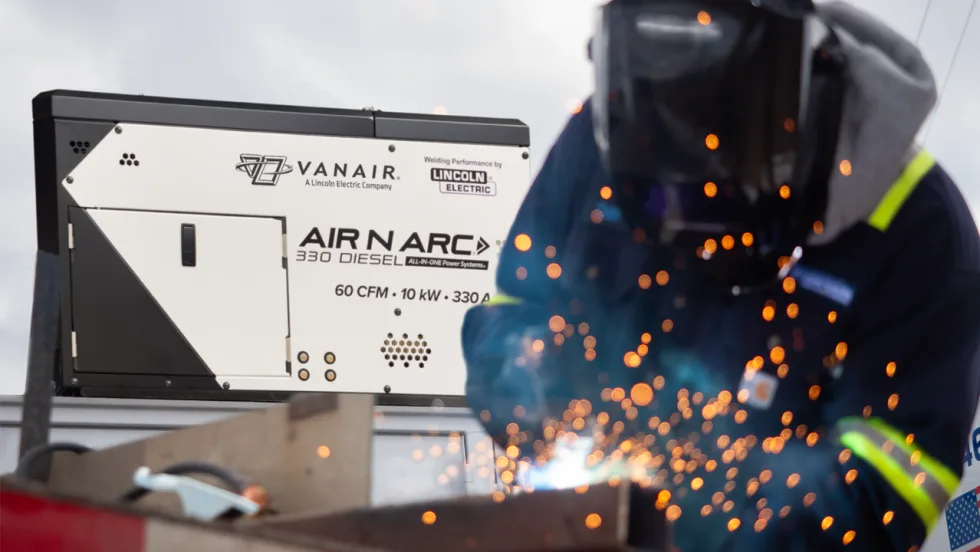
Multitasking: Vanair’s Air N Arc 330 Diesel 60 CFM All-In-One Power System
The Air N Arc 330 Diesel 60 CFM from Vanair consolidates a welder, generator, rotary screw air compressor, battery booster, battery charger, and EV charger into a single 750-pound enclosure driven by one 24.8-horsepower Kubota diesel engine.
Read More →
Buyers Products Awarded Sourcewell Cooperative Purchasing Contract for Snow & Ice Equipment
Buyers Products has been awarded a Sourcewell contract for a wide range of winter maintenance equipment and accessories, including snowplows, municipal plow systems, wing plows, spreaders, and more.
Read More →
Hilltip Introduces the SnowStriker SFT Flex Expandable Box Plow
Hilltip’s new SnowStriker SFT Flex expandable box plow features hydraulically extendable sections that allow operators to adapt the clearing width to changing conditions and applications on the go.
Read More →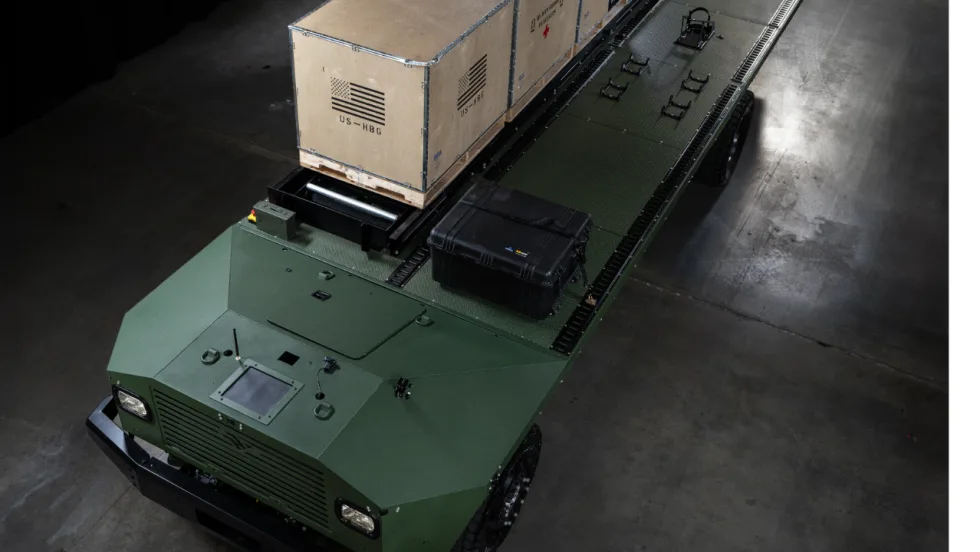
Harbinger Part of Effort to Deliver Autonomous Logistics Capabilities for U.S. Army
American Rheinmetall received an 18-month U.S. Army contract to deliver autonomous, hybrid-powered uncrewed ground vehicles. Harbinger is providing the truck platform for those vehicles.
Read More →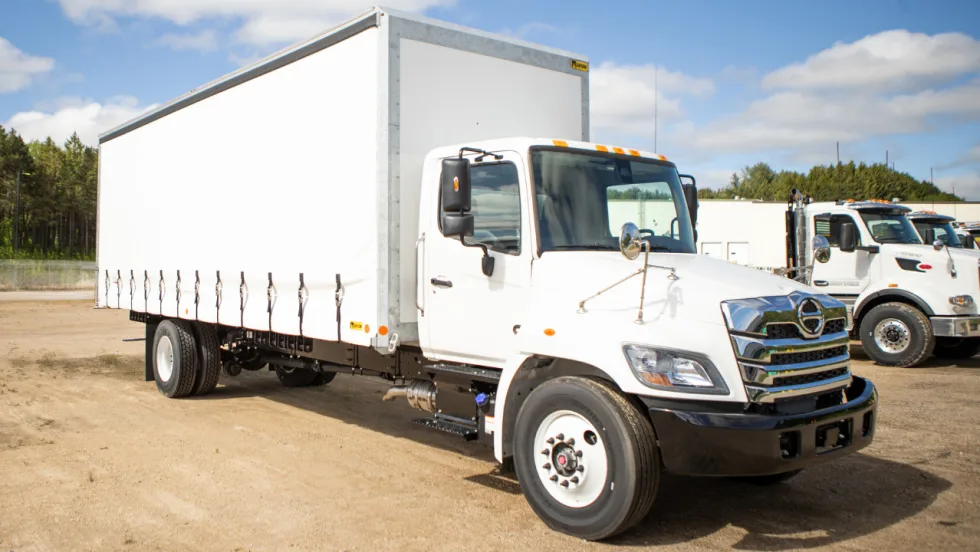
Thinking Outside of the Box: Choosing the Right Truck Body for Your Fleet
Choosing the right truck body can have a major impact on loading efficiency, cargo protection, downtime, and long-term operating costs. Here’s how dry vans, platforms, and curtainsiders compare, plus what fleets should consider before spec’ing their next truck.
Read More →
Fourth Annual Upfit Package of the Year Awards Open for 2027 Entries: One Month Left!
Think your upfit deserves industry recognition? Enter the 2027 Work Truck Upfit Package of the Year Awards before the Sept. 30 deadline. There is less than a month left to get your submissions in!
Read More →
Reading Truck Equipment & Masterack Unite as One of North America's Largest Commercial Vehicle Upfit Networks
Reading Truck Equipment and Masterack have integrated operations to create one of North America's largest and most comprehensive commercial vehicle upfit organizations.
Read More →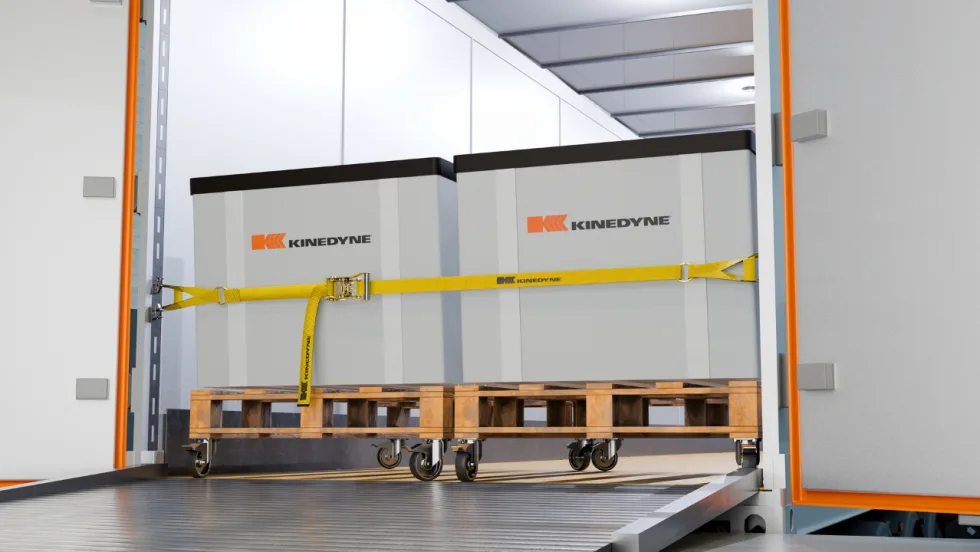
Kinedyne Launches Heavy Duty Logistic Shoring Strap
Kinedyne’s new Heavy Duty Logistic Shoring Strap features a patent-pending four-point design to deliver greater cargo stability, increased strength, and easier handling for rolling and shifting freight.
Read More →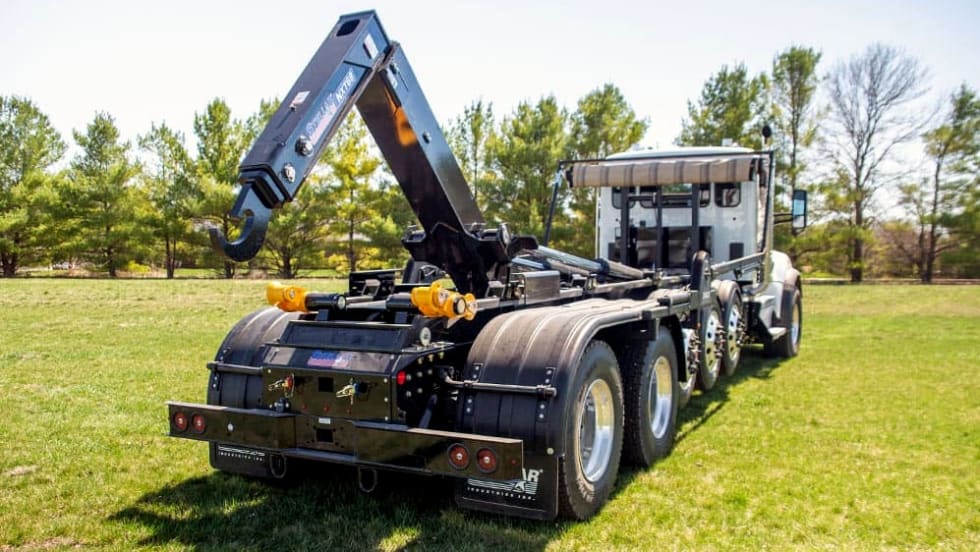
Hooklift Bumper Design from Stellar Showcases Strength & Versatility
Stellar Industries’ new bumper for the NZT Series Hooklifts come in two capacity options: the 20K, designed for Class 3 – 6 chassis with a 20,000-pound pull capacity, and the 90K, built for Class 7 and 8 chassis with a 90,000-pound pull capacity.
Read More →
Maxon Lift Awarded the Wabash Platinum Award for Supply Chain Performance
Maxon Lift, a liftgate manufacturer since 1957, received the Wabash Platinum Award for supply chain performance in 2025. Each year, Wabash presents awards to top suppliers for excellence in supply chain performance.
Read More →