




Tips for Buying Upfits
After spec’ing vocational upfits, the second step is making the purchase. Don’t leave money on the table by making common mistakes.


When planning, also keep in mind the time, cost, and effort to move older components to a new vehicle.
Photo: Gettyimages.com/porcorex
The upfitting process for vocational work trucks or vans involves multiple steps. Once you have finished spec’ing your upfits, the next step is purchasing them.
“Purchasing a fleet vehicle is an important and expensive decision. The buyer must decide on the future of the fleet rather than the present time. This decision should be made on vehicles lasting as long as, or longer than, you need it, maintenance costs remaining low, and that the product will get the job done,” said Mathew Marcussen, director of customer relations for BrandFX.
Avoiding common mistakes can help ensure you don’t overspend or end up with the wrong product for your needs.
Mistakes to Avoid when Buying Upfits
It’s of absolute importance to settle on specs before you place your order.
“Avoid making last-second changes to the build, both from the OEM plant and for the upfitter,” said Nate Eichinger, director of operations, Light Duty Truck, and EV Solutions for Fontaine Modification.
Don’t assume that because a spec worked last time, it will work perfectly again. Take the time to spec effectively before you start the purchasing process.
“Everyone is striving for continuous improvement and making changes to their products; some of these may have downstream impacts on seemingly unrelated aspects of the build. Be sure to re-check the latest spec to ensure everything will go together smoothly,” Eichinger added.
When purchasing an upfit, like during the spec’ing process, don’t make cost the only decision-maker.
“Fleet managers have a great deal of pressure to save money and at times can feel the burden of reduced budgets while growing specs and safety increase the price of the products. One way to combat shrinking budgets is to buy on cost of ownership vs. cost of acquisition. Buying a high-quality product that will last through multiple chassis is going to reduce the spend as the years’ pass,” said Marcussen of BrandFX.
There will be times where it’s possible to buy a great product at a very cost-effective price. But, be sure you can account for how long that vehicle the product is installed on will be in service.
“If you are looking at short-term use, you might be able to get away with a basic, low-cost product that doesn’t meet the longevity or the appearance levels required by many fleets today. Image is everything — fleet owners want a vehicle that will looks as good five years from now as it did the day they bought it. Because of that, you need to have a finish to the product that holds up,” said Craig Bonham, vice president of commercial vehicle at Safe Fleet.
A critical aspect of the acquisition process that can be easily overlooked is order-to-delivery lead times.
Missing the mark on timing and delivery of fleet vehicles is a significant issue.
“Properly forecasting a build cycle can be challenging for fleet managers due to the often-numerous vendors involved that must come together and work in sync to complete an upfit. Speak to your vendors and understand lead times and capabilities. Work with partners who can provide solutions for as much of the upfit process as possible. Most importantly, give yourself plenty of time,” recommended Bill Pruemer, director of sales, southwest for Reading Truck Equipment.
Identify the dates that all units must be delivered by and work backward from there. In general, while each scenario will vary, fleet operators should allow generous lead time for new units.
“Include as much as 10 months for complex builds. This is where seamless collaboration and simplified communication across your entire supply chain becomes even more critical. You, your fleet management provider, and upfit partner need to be aligned on OEM production schedules, upfitter production capacity, delivery scenarios, target in-service dates, etc.,” said Jeff Klinghoffer, regional engineering manager for Holman Enterprises.
Typically, the planning and design process for an all-new specification can require several months.
“Once orders are submitted to the manufacturer, it generally takes three to four months to build the units. Once the upfitter receives the unit from the OEM, it can take another two to three months for upfitting and transportation/delivery to the end-user. It is critical that you discuss order-to-delivery lead times with your supply chain partners to plan your cycling windows accordingly,” Klinghoffer continued.
Another mistake made when purchasing upfits can take place when a fleet management company is involved.
“Customers often assume that once they issue a purchase order to an FMC, the upfitter automatically gets it as well. That is hardly ever the case. The upfitter oftens gets a purchase order two to three weeks after the customer gets it to the FMC. The confusion hits when the customer requests the status of their unit, and the delivery clock is two-three weeks later than a fleet manager thought. This is an example of why up-front communication with the customer helps set realistic expectations,” said Chris Rolsen, national business development manager at Knapheide.
When planning, also keep in mind the time, cost, and effort to move older components to a new vehicle.
“Taking used material off your current trucks for us to install on new trucks is always more challenging than starting with a new product,” said Brad Howard, director of Operations for Fontaine Modification.
When placing your orders, be sure to be as clear and specific as possible.
“Include quantities as that can help you with lead time expectations. Have a forecast up-front so upfitters and manufacturers can be prepared to turn your orders quickly depending on chassis arrivals,” said Patrick Clark, director of fleet sales for Dejana Truck and Utility Equipment.
Additionally, when placing orders, make sure you know exactly what you will be paying for.
“Ask for the itemized fleet price of products based on your unique Fleet Account Number. Also, be aware of excessive administrative markups along the supply chain. Once you know the price of your upfits and accessories, you or your FMC can do a refined analysis of your installation costs with the dealers or upfitters of your choice,” said Andrew Reyntjes, director of fleet and commercial sales for Truck Accessories Group.
Finally, make sure you have the right decision-makers on board from the get-go.
“Too many ordering decision-makers when it comes to spec’ing and choosing equipment for the upfit is a challenge,” said Katie Groves, national fleet sales manager for Adrian Steel. “Additionally, make sure all decisions made ensure each technician or driver gets what he or she needs to do his or her job effectively.”
How to Choose an Upfitter
From the start, gather as much information as possible and take your time to develop your specifications. If you haven’t finalized the spec’ing process, stop now and head back to step 1.
“The best time to gather information is when you are not actively purchasing assets. Listen to your operators and understand how they interact with their vehicles. Proper equipment can influence productivity, morale, safety, and more. Take time to research your industry and understand the specifications your peers are utilizing. There are often specific ergonomic requirements that result in common builds between peers. Finally, talk to your upfitter. Reading has relationships with multiple manufacturers and can provide diverse solutions to fit your needs,” said Pruemer of Reading Truck Equipment.
When it comes to selecting an upfit partner, you’ll benefit greatly by doing your homework ahead of time.
“Consult your fleet management provider. Network with your peers from across the industry to understand why they partner with an upfitter. Visit the upfitters in person to get a better sense of their facilities and their culture. You’ll want to ensure the upfitters capabilities align with the needs of your organization,” said Klinghoffer of Holman Enterprises. “If you have a mixed fleet, does your upfitter have the core competencies and engineering expertise to properly produce those units? If you have a decentralized fleet with a national footprint, an upfit partner with ship-thru capabilities can help minimize delivery costs.”
Communicate with your peers and get feedback on an upfitter before you make a purchase.
“We are a small industry. Usually, you will ‘know someone who knows someone’ that can give you an idea of what the upfitter can do. Asking the upfitter for customer references is another great approach to learning more about them,” said Rolsen of Knapheide.
And don’t forget to consult your techs. “Talk to your maintenance personnel and drivers to hear their common frustrations,” said Howard of Fontaine Modification.
A fleet manager must understand the capabilities of those that will be bidding or quoting the product.
“Is it their core competency? Is it something that they occasionally do? Or is it all they do, and they’ve got it down to a science? That repetitive, systematic installation and service by highly skilled technicians at upfit locations is key. They’re faster, have broader attention to detail because that’s all they do, and at times the finished product comes out at a higher level,” said Bonham of Safe Fleet.
Additionally, build a relationship. A multi-year relationship with an upfit partner can be extremely beneficial for most fleet operators.
“Ideally, you should be looking for a collaborative partnership that will help your overcome supply chain challenges and bring continuity to the entire process. If you find yourself in a cycle of constant change, always looking for the fastest or cheapest option, you’ll likely experience a greater number of disruptions that will certainly impact your fleet stakeholders,” Klinghoffer added.
Additionally, if you have pain points with your current provider, consider splitting the business.
“The gamification that results puts an incentive on both parties to put their best foot forward. So many fleets seem content to live with their pain points under the idea that the devil they know is better than the demon they don’t. If you keep doing what you have always done, you’ll always get what you always got,” said Jonathan Culp, director, fleet and leasing sales for Dejana Truck and Utility Equipment.
Additionally, order your truck cap and accessories as soon as you order your vehicles and have production dates.
“The usual rule of thumb for OTD of a truck cap order is four to six weeks. For a vehicle from an OEM, it is six to 10 weeks. You never want to have a revenue-generating asset like a truck sitting waiting for an upfit to arrive,” said Reyntjes of the Truck Accessories Group. “For vehicles ordered out of stock, make sure you communicate with your sales representative. Generally, out of stock purchases might be an emergency due to a vehicle accident replacement or an unexpected need. In such cases, truck caps can be escalated to as soon as next day production on an exception basis.”
Consider every possibility.
“Think about the problems you experience every day. Think about what keeps you up at night. Think about what your leadership is charging you to accomplish and find a partner that can help you overcome these problems and show forward movement on initiatives,” said Groves of Adrian Steel.
More Upfitting
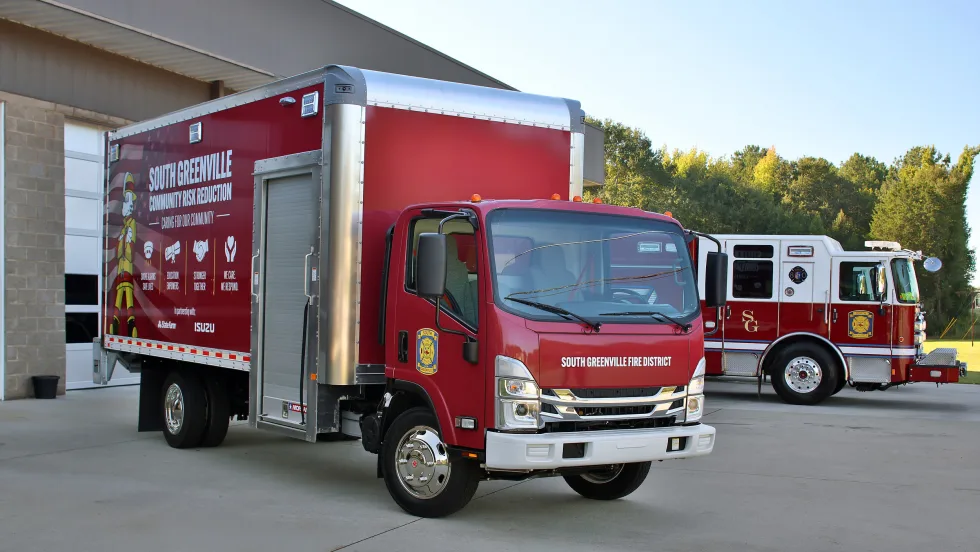
Isuzu Donates New N-Series NRR Truck to South Greenville Fire District to Support Community Outreach
Isuzu North America Corporation donated a new Isuzu N-Series NRR, equipped with a Morgan truck body and a Palfinger liftgate, to support fire safety education, community engagement, and outreach programs throughout Southern Greenville County, South Carolina.
Read More →
M.H. Eby Announces Bostick Truck Center as Michigan Distributor
Bostick Truck Center in Pontiac, Michigan, is now the official distributor for Eby Truck Bodies in Michigan. It will have access to Eby’s Ford, GM, and Ram chassis pool programs.
Read More →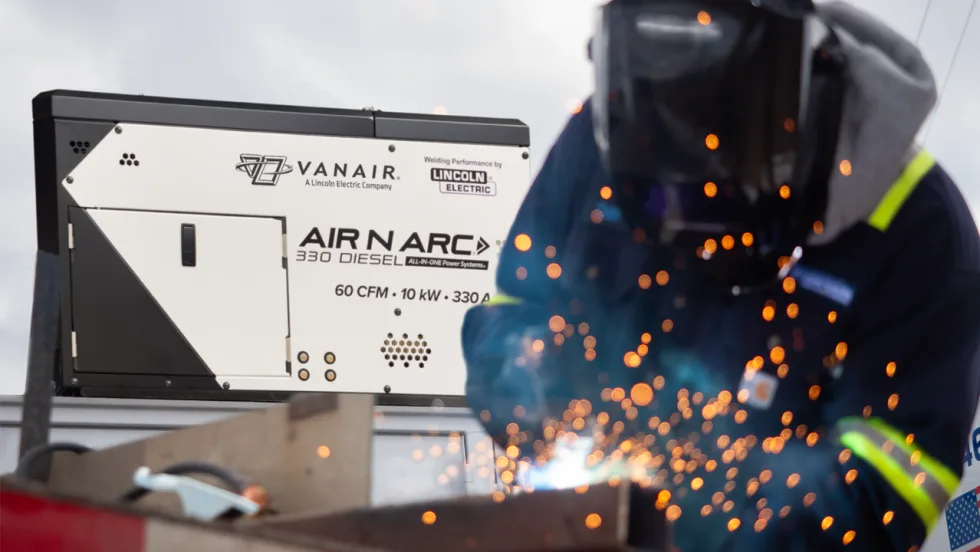
Multitasking: Vanair’s Air N Arc 330 Diesel 60 CFM All-In-One Power System
The Air N Arc 330 Diesel 60 CFM from Vanair consolidates a welder, generator, rotary screw air compressor, battery booster, battery charger, and EV charger into a single 750-pound enclosure driven by one 24.8-horsepower Kubota diesel engine.
Read More →


Buyers Products Awarded Sourcewell Cooperative Purchasing Contract for Snow & Ice Equipment
Buyers Products has been awarded a Sourcewell contract for a wide range of winter maintenance equipment and accessories, including snowplows, municipal plow systems, wing plows, spreaders, and more.
Read More →
Hilltip Introduces the SnowStriker SFT Flex Expandable Box Plow
Hilltip’s new SnowStriker SFT Flex expandable box plow features hydraulically extendable sections that allow operators to adapt the clearing width to changing conditions and applications on the go.
Read More →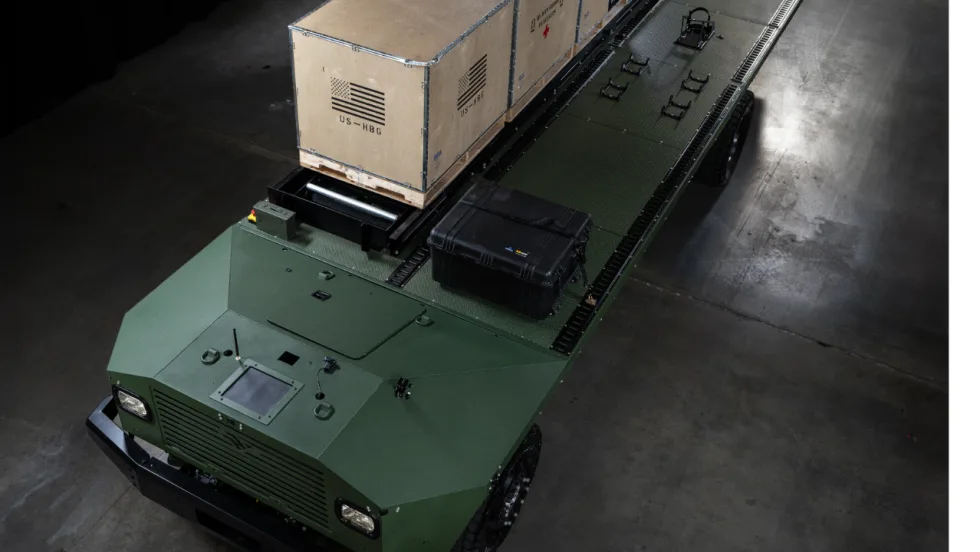
Harbinger Part of Effort to Deliver Autonomous Logistics Capabilities for U.S. Army
American Rheinmetall received an 18-month U.S. Army contract to deliver autonomous, hybrid-powered uncrewed ground vehicles. Harbinger is providing the truck platform for those vehicles.
Read More →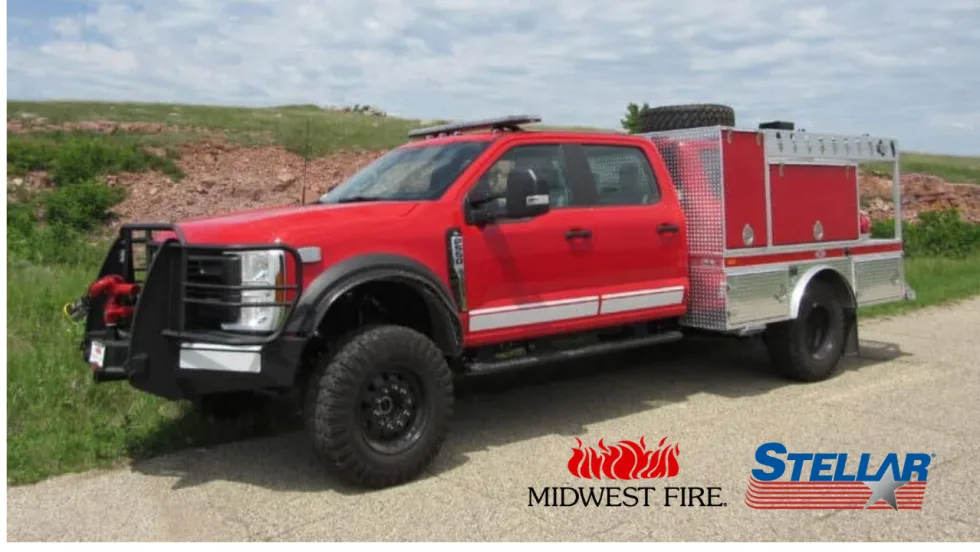
Stellar Expands into Fire Apparatus Market with Acquisition of Midwest Fire
Stellar Industries has acquired Midwest Fire, a custom fire apparatus manufacturer headquartered in Luverne, Minnesota, with nearly four decades of specialized apparatus experience.
Read More →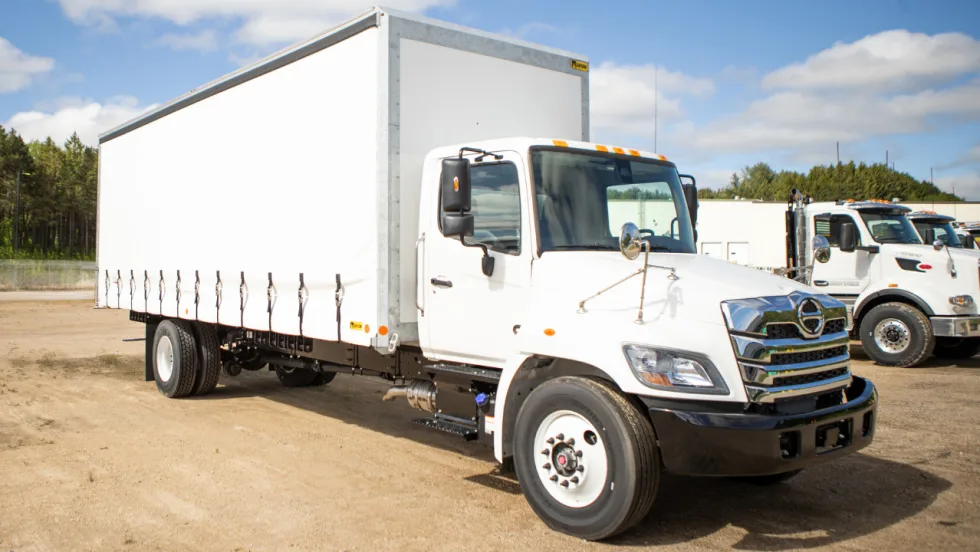
Thinking Outside of the Box: Choosing the Right Truck Body for Your Fleet
Choosing the right truck body can have a major impact on loading efficiency, cargo protection, downtime, and long-term operating costs. Here’s how dry vans, platforms, and curtainsiders compare, plus what fleets should consider before spec’ing their next truck.
Read More →
Fourth Annual Upfit Package of the Year Awards Open for 2027 Entries: One Month Left!
Think your upfit deserves industry recognition? Enter the 2027 Work Truck Upfit Package of the Year Awards before the Sept. 30 deadline. There is less than a month left to get your submissions in!
Read More →
Reading Truck Equipment & Masterack Unite as One of North America's Largest Commercial Vehicle Upfit Networks
Reading Truck Equipment and Masterack have integrated operations to create one of North America's largest and most comprehensive commercial vehicle upfit organizations.
Read More →